

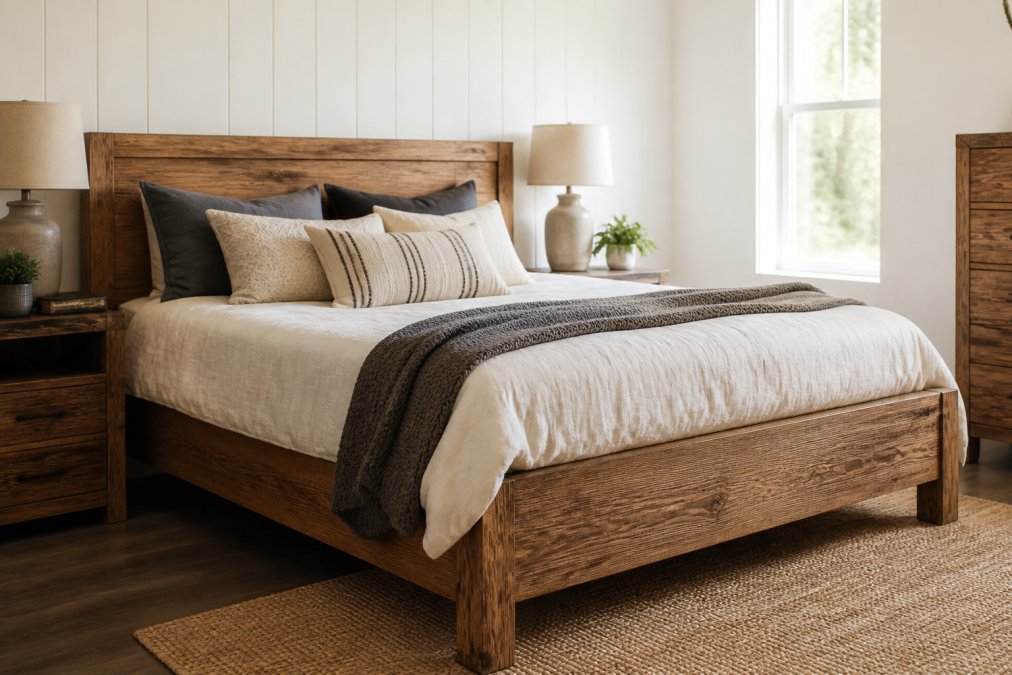
Why Choose Solid Wood Furniture in 2026: A Complete Guide
Table of Contents
- Why Solid Wood Furniture Is Worth the Investment in 2026
- Solid Wood vs Veneer Furniture: What Actually Changes Your Decision
- 2026 Design Trends: Natural Grain, Fluted Details, and Reclaimed Materials
- How to Care for Solid Wood Furniture So It Lasts Decades
- The Benefits of Custom Wood Furniture for Your Space
- Health, Indoor Air Quality, and Structural Integrity
- Conclusion: Making the Right Choice for Your Home
- Frequently Asked Questions
Last Updated: September 7, 2026
Solid wood furniture is crafted from natural hardwood or softwood planks rather than manufactured composites, which is why it remains a preferred choice for homeowners seeking lasting quality. In this guide from Comfort Zone Shop, we break down what makes solid wood furniture a smart investment, how it compares to cheaper alternatives, and what trends are shaping buying decisions in 2026.
Fast furniture made from particleboard and veneers is falling out of favor as people prioritize pieces that can be repaired, refinished, and passed down. Below, we'll walk through the practical reasons to choose solid wood and the care it requires.
Why Solid Wood Furniture Is Worth the Investment in 2026
Solid wood furniture is built entirely from natural timber, with each major component cut from a single piece of wood rather than glued layers or thin veneers over particleboard. This construction method gives it structural integrity that manufactured alternatives cannot match, allowing a well-built piece to last generations.
The investment case comes down to longevity and repairability. When a solid wood surface gets scratched or dented, you can sand it down and refinish it, restoring the original look. Veneer furniture has only a paper-thin layer of real wood over a composite core, so once that surface is damaged, repair options are limited.
Key Takeaway
Solid wood offers two advantages that define its value: structural integrity that resists years of daily use and the ability to be sanded and refinished multiple times over its lifespan.
Solid Wood vs Veneer Furniture: What Actually Changes Your Decision
The real decision hinges on understanding what happens inside each material over time. This is where the price-to-value argument gets concrete.
What Veneer Actually Is (and Why It Fails)
Veneer furniture is not fake wood, it is a thin slice of real hardwood glued onto a substrate, almost always medium-density fiberboard (MDF) or particleboard. The problem is not the veneer itself; it is the substrate and the adhesive.
Particleboard is made from wood chips and sawdust bound with resin. It has almost no structural strength along its edges, so when a veneer piece takes a hit on a corner, the particleboard crushes and the veneer delaminates. MDF is denser and holds screws better, but it is still vulnerable to moisture, if water seeps into an unsealed edge, MDF swells and never returns to its original dimensions, causing the veneer to bubble and crack.
The Real Cost Difference Over 20 Years
A typical solid wood dresser from a mid-range manufacturer might retail for $1,800. A comparable veneer piece might sell for $800. That $1,000 gap feels significant at the register. But consider the 20-year horizon:
- Year 5: The veneer piece shows edge wear on the top drawers where hands grip. The solid wood piece looks nearly new.
- Year 10: The veneer piece has a delaminated corner from a move or a bumped edge. Repair options are limited, you cannot sand through veneer without exposing the substrate. The solid wood piece has a few scratches that you sand out in an afternoon.
- Year 15: The veneer piece's drawer slides are failing because the particleboard screw anchors have stripped. The solid wood piece's dovetail joints are still tight.
- Year 20: The veneer piece is in a landfill or relegated to a basement. The solid wood piece has been refinished once and looks better than it did new.
That $1,000 upfront difference amortizes to $50 per year over two decades. For that $50 per year, you get a piece that can be repaired, refinished, and ultimately resold or passed down. The veneer piece has a useful life of roughly 5-10 years, meaning you will likely buy two or three replacements in the same period, erasing the upfront savings entirely.
The Structural Failure Points You Cannot See
Beyond the surface, the construction differences matter most in furniture that bears weight or has moving parts. Consider a wall bed mechanism: a solid hardwood frame distributes the stress of daily folding and unfolding across joints that are glued and mechanically fastened, while an engineered wood frame concentrates stress at screw points in particleboard, which tends to strip and loosen over time.
The same logic applies to dining chairs, bed frames, and bookshelves. The joints are where furniture fails, and solid wood joints can be repaired, a loose mortise-and-tenon joint can be re-glued and clamped, while a stripped screw hole in particleboard has no good repair.
When Veneer Is a Reasonable Choice
Veneer has its place. For a piece that is purely decorative, rarely touched, and expected to last only a few years (like a trendy accent table in a rental), veneer over MDF is a rational economic choice. The decision is not about snobbery, it is about matching the material to the expected lifespan and use case.
Key Takeaway
Ask yourself one question before buying: "Will this piece still be in my home in 15 years?" If the answer is yes, the math favors solid wood despite the higher sticker price. If the answer is no, veneer may be the pragmatic choice.
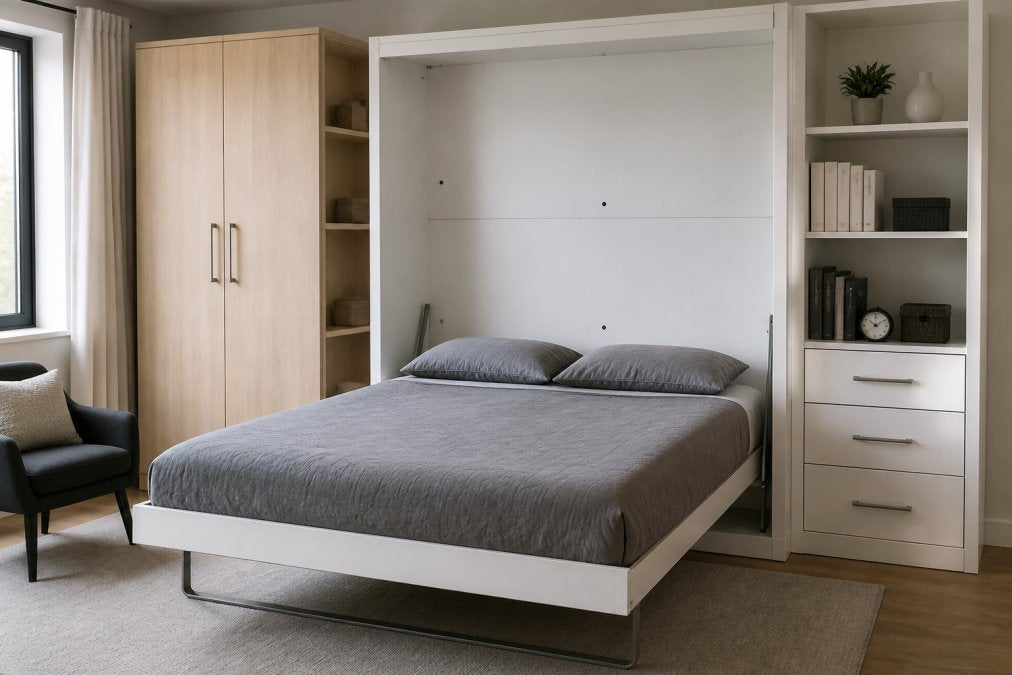
At Comfort Zone Shop, our Sagebrush Murphy Bed Cabinet exemplifies these principles with its solid hardwood construction, built-in power module, and large rolling storage drawer, all designed to maximize your living space without compromising durability.

2026 Design Trends: Natural Grain, Fluted Details, and Reclaimed Materials
Design trends for 2026 are moving away from the cold, uniform look of manufactured surfaces and toward warmth and texture that only natural materials provide. Natural grain is taking center stage, with oak, ash, and walnut chosen specifically for their distinctive figuring rather than painted over.
Reclaimed materials are another defining trend, driven by both environmental sustainability and the unique character that aged wood brings. Each reclaimed board carries its own history of nail holes, mineral streaks, and color variation, what designers call crafted imperfection.
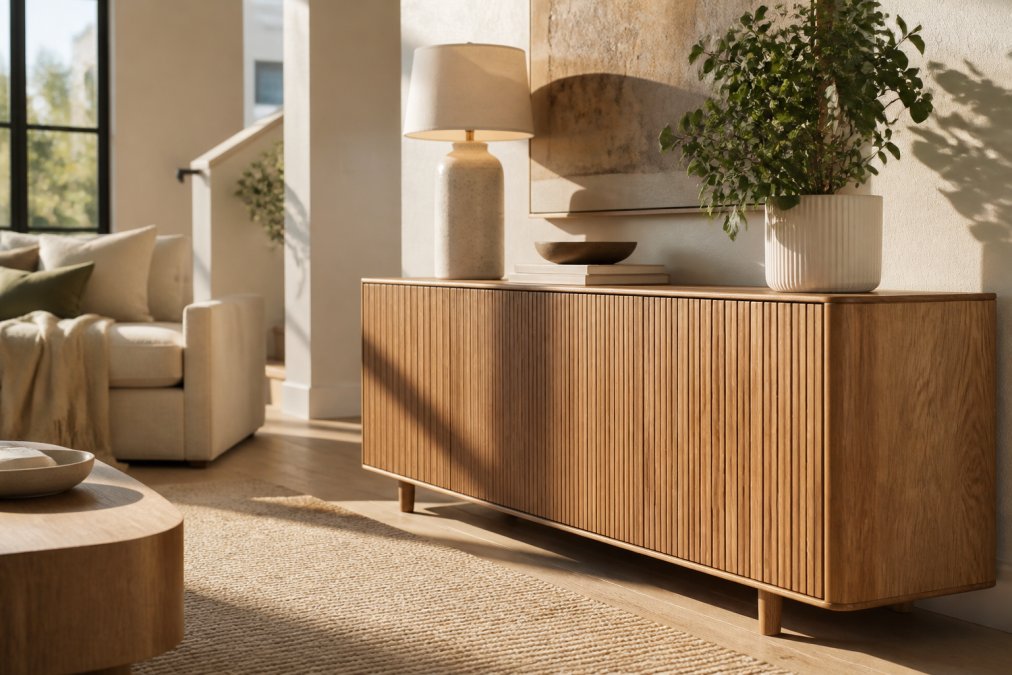
The practical takeaway is that solid wood furniture naturally fits these trends without looking dated in a few years. A piece with honest wood grain and simple, quality construction remains timeless, while trend-driven finishes on composite furniture tend to age poorly.
How to Care for Solid Wood Furniture So It Lasts Decades
Most buying guides stop at 'why solid wood is better' and leave you with vague advice about coasters. This section closes that gap with a practical, season-by-season care protocol. Solid wood is hygroscopic, it absorbs and releases moisture as humidity changes, and understanding that fact is the key to preventing cracks, warps, and finish failure.
The Seasonal Rhythm of Wood Care
Wood moves. In the humid summer months, the fibers swell; in the dry winter months, they contract. A well-built piece is designed to accommodate this movement, but your care routine should adapt to it. During heating season, indoor relative humidity can drop below 30%, which is when wood is most vulnerable to checking and joint loosening.
Winter protocol:
- Run a humidifier in rooms with solid wood furniture if your home's relative humidity falls below 35%. A simple hygrometer costs about $10 and removes the guesswork.
- Apply a paste wax or hard-wax oil (like Osmo Polyx-Oil or Rubio Monocoat) in late fall. This adds a sacrificial layer that slows moisture loss from the surface.
- Keep furniture at least 18 inches away from baseboard heaters and forced-air vents. The constant dry airflow accelerates moisture loss faster than seasonal changes alone.
Summer protocol:
- Use a dehumidifier in basements or ground-level rooms if humidity consistently exceeds 60%. Excess moisture causes wood to swell, which can stress glued joints.
- Wipe up condensation rings immediately. Water that sits on an oiled or lacquered surface will eventually penetrate the finish and leave a white blush mark.
The Right Way to Clean and Condition
Dusting with a dry microfiber cloth is fine for weekly upkeep, but deep cleaning requires a different approach. Most practitioners recommend a solution of mild dish soap (a few drops per quart) and distilled water, since tap water contains minerals that can leave a film on the finish. Dampen the cloth, wring it until barely moist, wipe with the grain, and immediately follow with a dry cloth.
Avoid at all costs:
- Ammonia-based cleaners (like Windex), they strip wax and dull lacquer.
- Silicone-based polishes (like Pledge), they build up a film that attracts dust and makes future refinishing difficult.
- Vinegar solutions, the acidity etches certain finishes over time.
When to Refinish vs. When to Repair
Owners often panic over a scratch or a water ring and reach for a full refinishing kit. In most cases, that is overkill. Here is a practical guide:
| Damage Type | Repair Method | Frequency |
|---|---|---|
| Light surface scratch (does not catch a fingernail) | Rub with a walnut meat or a furniture repair marker matched to the grain | As needed |
| Deeper scratch (catches a fingernail) | Light sanding with 220-grit paper, then reapply finish to the spot | Rarely |
| White water ring (moisture trapped in finish) | Apply a warm iron over a thin cloth for 10-15 seconds to drive out moisture | Once |
| Dull, faded surface (oxidation over years) | Full sanding and reapplication of hard-wax oil or polyurethane | Every 5-10 years |
| Structural wobble in a joint | Tighten with wood glue and clamps; do not use metal brackets | Only when detected |
The Patina Mindset
One of the hardest shifts for owners coming from veneer furniture is accepting patina. Solid wood is a living material. Small dents, ink marks, and color changes from sunlight are not defects, they are the record of the piece's life. A solid wood dining table that hosts family dinners for 20 years will show that history, and that is not a failure of the material; it is the reason the material was chosen in the first place.
Pro Tip
Keep a small bottle of the original finish (or its name and formula) in a drawer or taped under the furniture piece. When you need to spot-repair a scratch or refresh a surface, having the exact match saves hours of color-matching frustration.
By following this protocol, you are not just maintaining furniture, you are preserving the value of the piece. A properly maintained solid wood table can be refinished and passed down. A neglected one may require costly professional restoration.
The Benefits of Custom Wood Furniture for Your Space
Custom wood furniture solves the problem that off-the-shelf pieces cannot: fitting your actual space and your actual needs. Standard sizes rarely align with awkward corners, low ceilings, or multi-functional rooms, but custom pieces are built to your exact dimensions, meaning no wasted space and no gaps that collect dust.
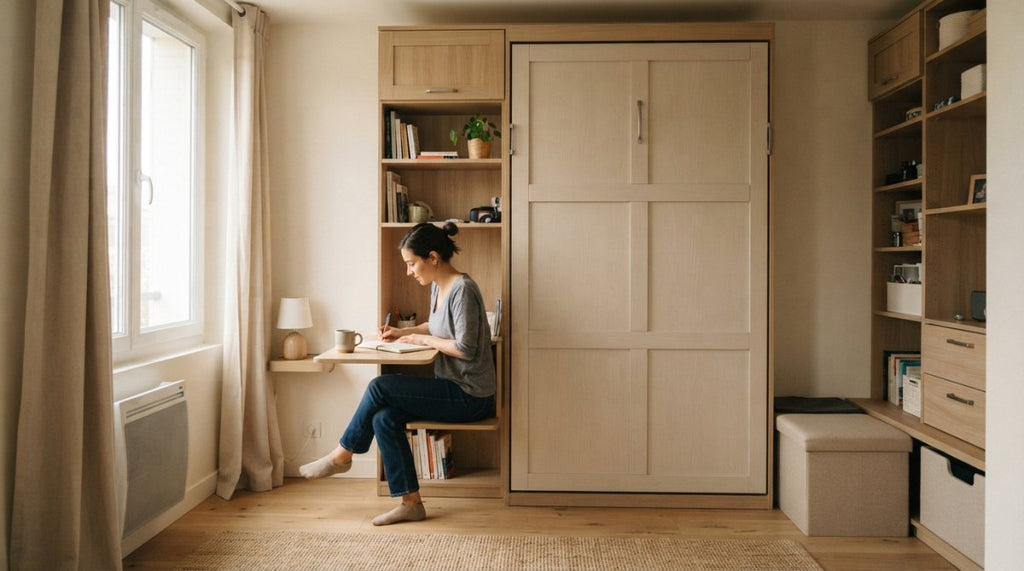
For small apartments and condos, custom pieces earn their keep by serving multiple functions. A custom-built Murphy bed cabinet, for example, integrates a sleeping surface, storage drawers, and potentially a desk into one footprint, with solid hardwood construction ensuring the mechanism handles daily use without failure.
Beyond fit, custom furniture lets you choose the wood species, finish, and hardware that match your existing decor, and you get honest construction with joinery you can inspect before the piece is finished.
Health, Indoor Air Quality, and Structural Integrity
Solid wood furniture contributes to healthier indoor air compared to many manufactured alternatives. Composite wood products like particleboard and MDF are typically bound with adhesives that can off-gas volatile organic compounds, while solid wood finished with natural oils or low-VOC sealants avoids this issue entirely.
Structural integrity is the other health-adjacent concern, particularly for furniture that bears weight or moves. A bed frame that creaks and flexes disrupts sleep. A wall bed mechanism that binds or drops unevenly is a genuine safety hazard. Solid hardwood construction, properly joined, maintains its shape and strength for decades.
Buying solid wood is not just about aesthetics or trend alignment. It is a decision about the air you breathe and whether a piece will still be functional when your children or grandchildren need it.
Conclusion: Making the Right Choice for Your Home
Choosing solid wood furniture in 2026 means prioritizing longevity, repairability, and honest materials over the lower upfront cost of manufactured alternatives. The trends toward natural grain and reclaimed materials only reinforce what careful buyers have known for generations.
At Comfort Zone Shop, our Sagebrush Murphy Bed Cabinet exemplifies these principles with its solid hardwood construction, built-in power module, and large rolling storage drawer, all designed to maximize your living space without compromising durability. We back our pieces with professional delivery and installation, so your investment is set up correctly from day one. Get started with Comfort Zone Shop and bring furniture into your home that will serve you for decades.
Frequently Asked Questions
Is solid wood furniture worth the investment compared to veneers?
Yes, solid wood furniture is worth the investment if you plan to keep pieces for years. Solid wood can be sanded and refinished multiple times, extending its life well beyond veneer alternatives. Veneer furniture has a thin wood layer over cheaper materials, and once that layer wears through or chips, repair is difficult. Solid wood pieces also tend to hold their value and can become heirloom items. For structural integrity and long-term durability, solid wood outperforms veneer in most furniture categories.
What are the trends in wood furniture for 2026?
The 2026 furniture trends favor natural materials and honest craftsmanship. Expect to see fluted detailing and reeded textures on cabinet fronts, reclaimed wood pieces with visible character, and finishes that highlight natural grain rather than hiding it. Hard wax oils are replacing high-gloss lacquers because they protect the wood while keeping it touchable. Design trends also lean toward statement furniture pieces that serve as focal points, using solid wood to bring warmth and biophilic connections into modern interiors.
How do I identify high-quality solid wood furniture?
Check the edges and underside of the piece. Solid wood shows the same grain pattern continuing around edges and corners, while veneer shows a visible seam where the thin layer ends. Look at drawer construction: dovetail joints indicate quality craftsmanship. Check the weight, solid wood is noticeably heavier than particleboard or MDF. Ask about the wood species, hardwoods like oak and ash offer better durability than softwoods like pine. Quality solid wood furniture should also have a smooth finish with no rough patches or visible glue lines.
Related post
27
Sep
23
Sep

