
7 Durable Wood Finishes for Custom Murphy Beds
Last Updated: November 9, 2026
Quick Summary
Polyurethane is the most durable wood finish for custom Murphy beds used daily, forming a tough, flexible film that resists scratches, moisture, and repeated handling. For guest rooms where the bed stays closed, lacquer offers a glassy sheen worth its gentler handling. Match durable wood finishes to how often the bed actually gets used.
- Guest beds face dust, sunlight, and humidity; daily-use beds face repeated handling and scuffs.
- Solid hardwood takes a finish deeply and can be sanded and refinished if the surface wears through.
- Alkyd paint cures harder than standard latex and holds up better on high-touch edges.
- Keep indoor relative humidity between roughly 30% and 50% year-round to limit seasonal wood movement.
- Polyurethane does not blend into itself after curing, so touched-up spots often show as dull patches.
Which finish suits a bed you open daily?We build custom wall beds in solid hardwood with finishes matched to how you use the room.
Browse Murphy Bed Finishes
Table of Contents
- Why Durable Wood Finishes Decide How Long a Murphy Bed Lasts
- Solid Wood Murphy Bed Durability: What the Substrate Contributes
- Finish-by-Finish Comparison: Wear, Scratch, and Dent Resistance
- Polyurethane vs Lacquer for Cabinets: Which Holds Up Better
- Humidity, Temperature, and Seasonal Wood Movement in Florida Rooms
- Murphy Bed Maintenance Tips That Protect the Finish
- Custom Finish Specification, Color Selection, and Sample Approval
- Choose Your Finish With Comfort Zone Shop
- Frequently Asked Questions
Why Durable Wood Finishes Decide How Long a Murphy Bed Lasts
A Murphy bed lives a harder life than almost any other piece of furniture in your home. It folds, unfolds, gets leaned on, gets bumped by luggage, and spends most of its life as a wall panel rather than a bed. That is why durable wood finishes for custom Murphy beds matter more than most buyers expect.
The finish is the only part of the cabinet you actually touch. It takes every scuff, every cleaning wipe, and every shift in humidity before the wood underneath ever feels stress. Choose it badly and the structure can be perfectly sound while the surface looks worn out.
Below, we break down how each finish family performs, where it fails, and how to pick one that matches how often the bed actually gets used.
Daily Use vs. Guest Use: Two Different Finish Problems
A guest-room wall bed and a studio-apartment wall bed face completely different wear patterns. Guest beds mostly sit closed, so their enemy is dust, sunlight, and seasonal humidity. Daily-use beds face repeated handling: the pull-down mechanism, hands on the frame, bedding dragged across edges, and objects set down on the closed cabinet face.
For daily use, prioritize scratch and scuff resistance on high-touch edges. For guest use, prioritize color stability and easy cleaning. Getting this backwards is a common mistake: homeowners buy a beautiful low-sheen finish for a bed they open every night, then watch it dull within a year.
Solid Wood Murphy Bed Durability: What the Substrate Contributes
Solid wood Murphy bed durability starts with the material under the finish, not the finish itself. A premium coating over a soft, unstable panel will still crack and dent, while a stable hardwood face gives any finish a stronger base.
Three substrate families dominate custom wall beds:
- Hardwood: Stable, repairable, and takes a finish deeply. Heavier and more expensive, but the gold standard for long-term wear.
- Furniture-grade plywood: Layered construction resists warping better than solid stock in humid rooms, and the face veneer accepts stain and paint cleanly.
- Engineered substrates: Composite panels with wood veneer or laminate faces. Consistent and budget-friendly, though edges need careful sealing.
Hardwood, Furniture-Grade Plywood, and Engineered Substrates
Think of the substrate as the foundation and the finish as the roof. A solid wood cabinet can generally be sanded and refinished if the surface ever wears through. For a deeper look at how construction affects lifespan, our guide on how long a Murphy bed lasts walks through the full durability picture.
Finish-by-Finish Comparison: Wear, Scratch, and Dent Resistance
The finish families below each behave differently under daily handling, and the right pick depends on your room and routine.
Finish |
Scratch Resistance |
Dent Resistance |
Best For |
Maintenance |
|---|---|---|---|---|
Melamine |
Moderate |
High |
Budget guest rooms |
Wipe with damp cloth |
Thermally fused laminate (TFL) |
High |
High |
High-traffic daily use |
Damp cloth, mild soap |
Painted (cabinet-grade) |
Moderate |
Moderate |
Custom color matching |
Touch-up paint |
Alkyd paint |
High |
Moderate |
Hard-wearing painted looks |
Occasional touch-up |
Clear coat over stain |
High |
Moderate |
Showing wood grain |
Polish occasionally |
Polyurethane |
High |
High |
Heavy daily use |
Damp cloth |
Lacquer |
Moderate |
Low |
Fine furniture look |
Gentle dusting only |
Melamine, TFL, and Painted Finishes Side by Side
Painted finishes sit at the other end of the spectrum. Cabinet-grade paint gives you any color you want and a smooth, furniture-like surface, but it shows scuffs more readily than laminate. Alkyd paint, an oil-modified formula, cures harder than standard latex and holds up better on high-touch edges. For painted cabinets, touch up chips within a few weeks using the manufacturer's touch-up paint; feathered edges and a light sanding between coats help the repair blend. If you are weighing finish durability against the material underneath, our guide on why solid wood furniture is worth choosing explains how the two interact.
Clear Coat, Polyurethane, and Lacquer: Care and Repair Differences
Clear coat over stain, often a catalyzed or conversion varnish in custom shops, offers high scratch resistance and shows wood grain. Clean it with a damp cloth and occasional furniture polish; avoid silicone-based polishes, which can interfere with future refinishing. Small scratches can sometimes be hidden with a touch-up marker or by lightly buffing with a fine abrasive pad followed by polish, but deep scratches require professional repair.
Polyurethane forms a tough, flexible film that resists scratches, moisture, and repeated handling. It cleans with a damp cloth and mild soap. Repair is the weak point: polyurethane does not blend into itself after curing, so a touched-up spot often shows as a dull patch. For small scratches, a wax fill stick can hide the mark; for larger damage, a professional must sand and recoat the affected area.
Lacquer dries fast and produces a deep, glassy sheen that showcases wood grain beautifully, but that film is thinner and more fragile. Dust gently with a microfiber cloth; avoid wet cloths and ammonia-based cleaners, which can cloud the finish. The advantage is repairability: lacquer can be reflowed and blended by a skilled finisher, so small marks sometimes disappear without a full refinish. If you choose lacquer for a daily-use bed, plan on gentler handling and accept that the surface will show wear sooner than polyurethane or TFL.
Polyurethane vs Lacquer for Cabinets: Which Holds Up Better
Polyurethane wins on durability for a Murphy bed cabinet; lacquer wins on appearance. Polyurethane forms a tough, flexible film that resists scratches, moisture, and repeated handling, which suits a bed that folds up and down daily. Lacquer dries fast and produces a deep, glassy sheen that showcases wood grain beautifully, but that film is thinner and more fragile.
The trade-off is repairability. Lacquer can be reflowed and blended by a skilled finisher, so small marks sometimes disappear without a full refinish. Polyurethane repairs are harder to blend invisibly, but you will need them far less often.
For a family room or studio where the bed is in constant motion, we recommend polyurethane. For a formal guest room where the bed stays closed most of the year, lacquer's finish quality is worth the gentler handling it demands.
Humidity, Temperature, and Seasonal Wood Movement in Florida Rooms
Wood moves. In a humid climate, panels absorb moisture and swell slightly; when the air dries out, they shrink back. A finish that stays flexible through those cycles protects the wood far better than a brittle one that cracks under the stress. The finish is not a perfect moisture barrier, it slows moisture exchange but does not stop it, so the goal is to keep the wood's moisture content as stable as possible and choose a finish that can flex with normal seasonal movement.
This matters most in rooms that go from air-conditioned comfort to closed-up heat, like a spare bedroom or a converted garage office. A few practical habits help:
- Keep indoor relative humidity between roughly 30% and 50% year-round where possible; a hygrometer costs little and takes the guesswork out of it.
- Avoid pushing the cabinet tight against an exterior wall with no air gap; leave at least a small gap so air can circulate behind the bed.
- Let the bed air out occasionally rather than leaving it sealed shut for months.
- In rooms that swing widely, choose a finish with more flexibility, polyurethane and alkyd paint tolerate movement better than brittle lacquer or thick conversion varnish.
Murphy Bed Maintenance Tips That Protect the Finish
Murphy bed maintenance tips come down to three habits: dust often, clean gently, and fix small damage early.
For the full picture on hardware and structural wear, our guide on Murphy bed durability and safety covers what lasts and what to inspect.
Custom Finish Specification, Color Selection, and Sample Approval
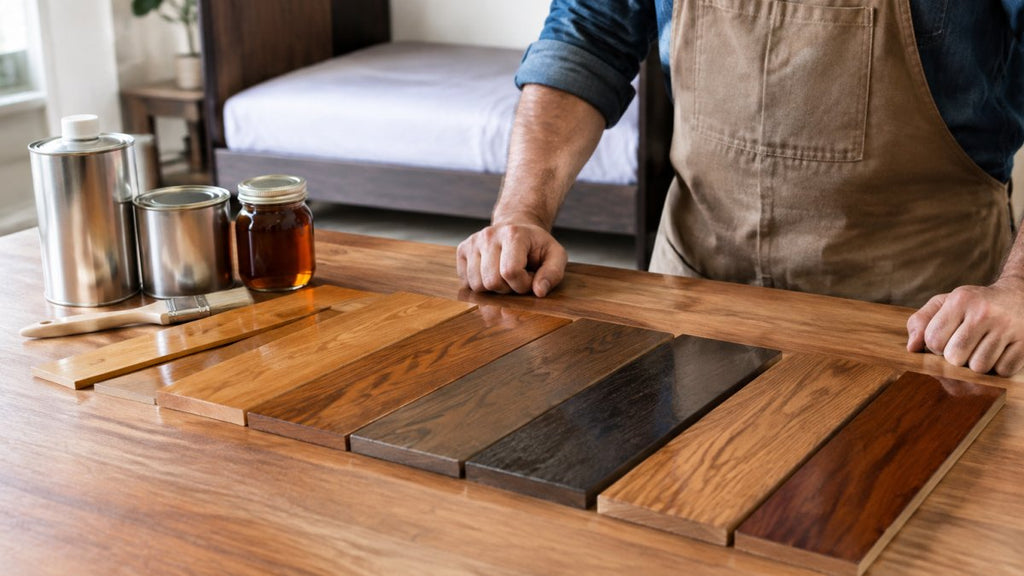
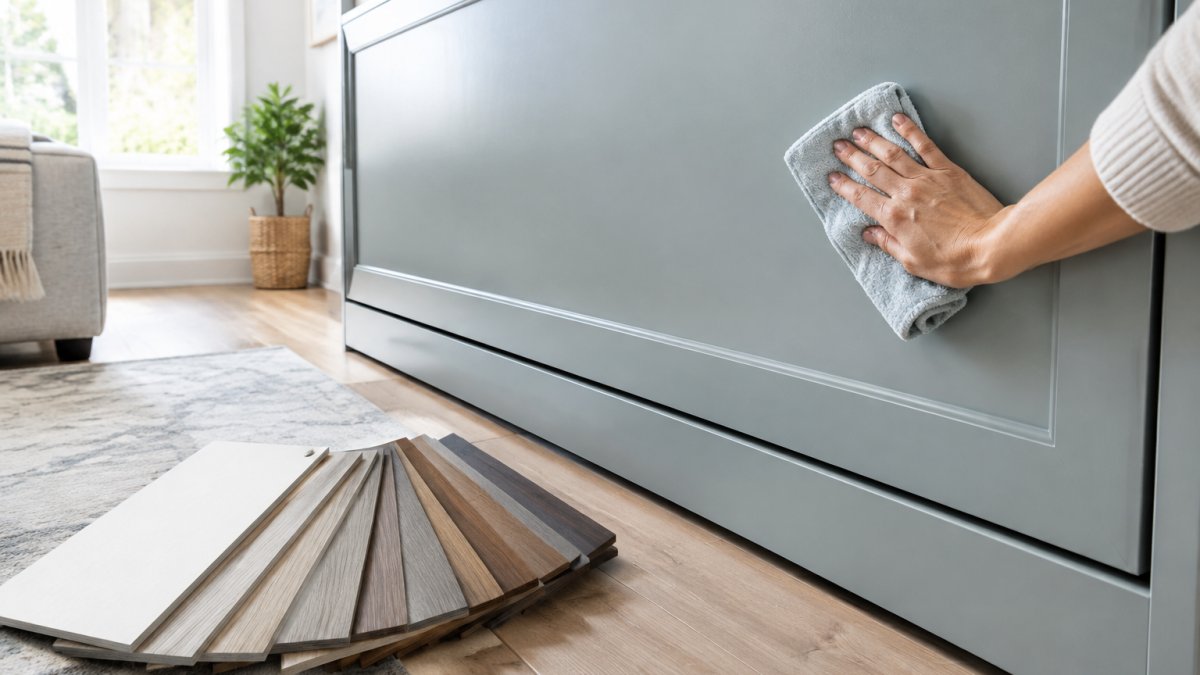
Our cabinetry comes in multiple shades of brown, white, gray, and white, along with a range of woods, knobs, handles, and finishes.
When you approve a sample, note the sheen level as well as the color. A matte finish hides fingerprints; a satin or gloss finish shows them more but cleans up easily. If you want to see the real thing before committing, you can browse our Murphy bed cabinets and compare finish options in person.

Choose Your Finish With Comfort Zone Shop
We build our wall beds and cabinetry with solid hardwood construction and locally handcrafted detail. Our team handles professional delivery and installation, and we offer instant rebate offers on wall beds. If you are ready to see the options for yourself, explore our custom home office and cabinetry and let our representatives help you choose the finish that fits your space.

The real challenge is not picking a color you like today; it is picking a surface that still looks right after years of folding, cleaning, and Florida humidity. Comfort Zone Shop builds custom wall beds with solid hardwood construction, a wide selection of woods, colors, and finishes, and professional delivery and installation to get it right the first time. Get started with Comfort Zone Shop and choose a finish built to last.
Frequently Asked Questions
What is the most durable wood finish for high-traffic furniture like a Murphy bed?
The right finish depends on whether your cabinet is solid wood or a composite panel, and on how often the bed moves.
Is polyurethane or lacquer better for a Murphy bed cabinet?
For a custom bed built to order, ask which finish system is used and how the finish can be repaired later.
How does humidity affect wood finishes on Murphy beds?
Wood takes on and releases moisture as indoor humidity shifts, so panels swell in summer and shrink in winter. A finish slows that exchange but does not stop it, and a rigid film on a panel that moves can crack along seams.
Can I refinish a Murphy bed cabinet after years of use?
Before sanding any finished cabinet, confirm the existing coating type, because different finishes need different prep, and a test patch on an unseen panel is a sensible precaution.