
How Long Does a Murphy Bed Last: Durability Guide
Table of Contents
- How Long Does a Murphy Bed Last: What to Expect
- Wall Bed Mechanism Durability: The Heart of Longevity
- Materials That Determine Durability: Solid Wood vs. Particle Board
- Murphy Bed Weight Capacity and Long-Term Structural Integrity
- Murphy Bed Maintenance Tips for Extended Lifespan
- Signs of Wear and When to Repair vs. Replace
- Real-World Durability: What Owners Actually Experience
- Frequently Asked Questions
Last Updated: October 6, 2026
How Long Does a Murphy Bed Last: What to Expect
A well-made how long does a murphy bed last depends on three critical factors: the quality of materials, the durability of the mechanical system, and how consistently you maintain it. Most solid wood Murphy beds built with quality hardware can reliably function for 10-15 years with proper care, though some exceed 20 years. The difference between a bed that fails after five years and one that lasts two decades comes down to construction choices and maintenance discipline.
At Comfort Zone Shop, we've seen firsthand how these beds perform in real homes. Solid hardwood construction with reinforced hydraulic systems outlasts particle board alternatives by a significant margin. The mechanical components, pistons, counterbalance systems, and fasteners, are where durability truly gets tested. These parts experience thousands of open-and-close cycles, and inferior hardware degrades quickly under daily use.
Understanding what determines longevity helps you make the right choice upfront and avoid costly repairs down the road.
Key TakeawayThe lifespan of a Murphy bed is determined by material quality (solid wood vs. particle board), the strength of its hydraulic or spring-loaded mechanism, and your maintenance routine. Beds that last 15+ years typically combine solid hardwood frames, heavy-duty piston systems, and regular upkeep.
Wall Bed Mechanism Durability: The Heart of Longevity
The mechanical system inside your wall bed is where durability truly lives or dies. Every time you open and close the bed, the hydraulic lift system or spring-loaded mechanism bears the full weight of the mattress and frame. Over months and years, this repeated stress reveals weaknesses in design and materials.
Hydraulic Lift Systems vs. Spring-Loaded Designs
Hydraulic lift systems use pressurized pistons to counterbalance the bed's weight, making it easy to raise and lower with minimal effort. These systems are smoother and more controlled than spring-loaded alternatives. A quality hydraulic piston can handle thousands of cycles without significant degradation.
Spring-loaded designs rely on metal springs to support the bed's weight. They're simpler mechanically and have fewer moving parts prone to failure. However, springs lose tension gradually, making the bed harder to operate over time. Many owners report that spring-loaded beds become noticeably more difficult to use after 5-7 years of daily operation.
The real difference: hydraulic systems maintain consistent performance longer, but they require occasional maintenance to keep seals intact. Spring systems degrade predictably but are cheaper. For long-term durability, hydraulic systems edge ahead when properly maintained.
American Furniture Manufacturers Association guidelines on furniture durability standards
Piston Counterbalance and Hardware Wear
Pistons are the workhorses of wall bed systems. Quality pistons use reinforced seals and precision-engineered cylinders to maintain pressure consistency.
The fasteners holding everything together matter just as much. Bolts, screws, and hinges experience constant micro-movements every time the bed cycles. Cheap fasteners loosen and corrode. Premium fasteners stay tight and resist rust, extending the operational lifespan significantly.
Materials That Determine Durability: Solid Wood vs. Particle Board
The frame material you choose determines whether your Murphy bed is a 10-year investment or a 20-year fixture in your home.
Solid hardwood construction provides structural integrity that particle board cannot match. Hardwood resists warping, maintains its strength under repeated stress, and actually improves with age. The wood fibers remain stable through humidity changes and temperature fluctuations common in homes. When fasteners loosen in solid wood, you can re-tighten them and they hold.
Particle board and MDF (medium-density fiberboard) are cheaper to manufacture and lighter to ship, but they degrade predictably. Particle board absorbs moisture, swells, and loses structural integrity within 5-8 years in humid environments.
The cost difference at purchase is often 20-40%, but the durability gap is 2-to-1 or better. A solid wood Murphy bed from Comfort Zone Shop costs more upfront because it's built to last, using locally handcrafted solid hardwood construction that resists the wear patterns that destroy cheaper alternatives.
Wood Products Council standards for furniture frame durability
Murphy Bed Weight Capacity and Long-Term Structural Integrity
Weight capacity isn't just about how much the bed can hold today, it's about how that capacity degrades over time.
A Murphy bed rated for 600 pounds performs reliably at that limit for the first 10-20 years.
The structural integrity of the frame determines how much this degradation matters. Beds built with reinforced corner bracing and thick hardwood sections maintain their load-bearing ability longer. Beds with minimal internal bracing show visible flex and sagging much sooner.
This matters for daily comfort and safety. A bed that sags or feels unstable becomes uncomfortable to use, and users often stop using it regularly, defeating the purpose of having a space-saving solution. Structural issues also cascade: a sagging frame puts uneven stress on the hydraulic system, accelerating piston wear.
Comfort Zone Shop's wall beds are engineered with load-bearing considerations built into the frame design, ensuring that weight capacity remains stable through years of use.
Murphy Bed Maintenance Tips for Extended Lifespan
Maintenance separates beds that last 8 years from beds that last 15. The difference isn't dramatic, it's consistent, preventive care applied on a schedule.
Daily Operation and Wear Prevention
How you use your Murphy bed every day determines how long the mechanical system lasts. Smooth, controlled movements put less stress on pistons and hinges than jerky, forceful ones.
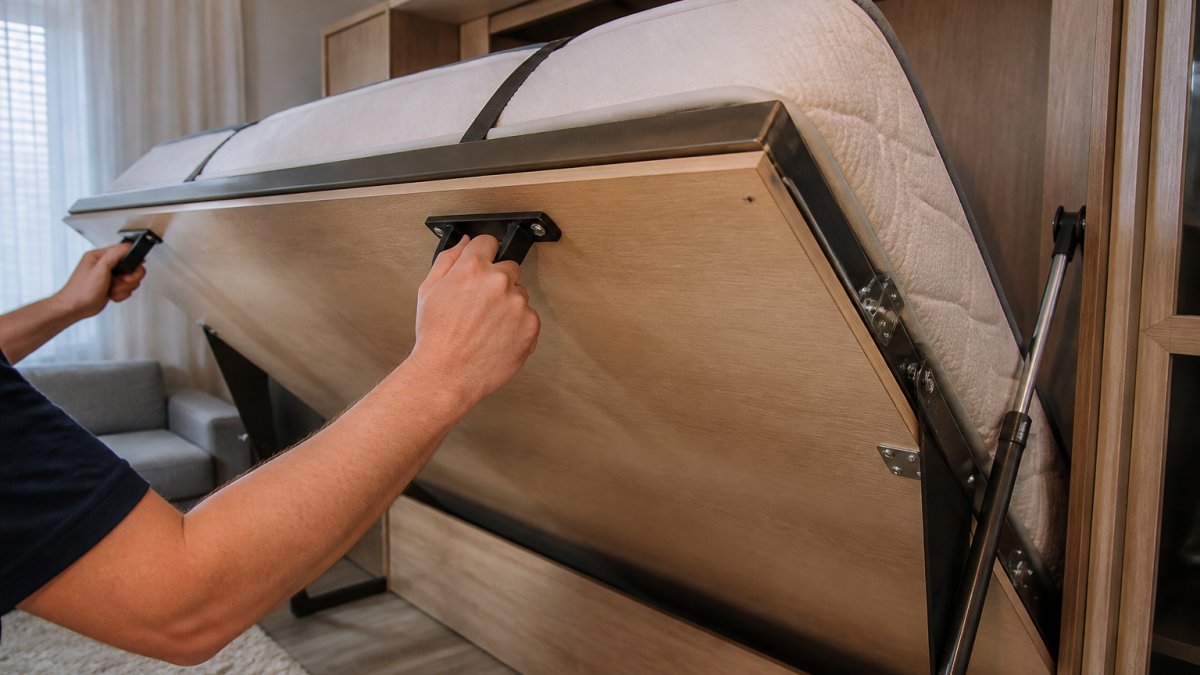
Avoid slamming the bed closed or dropping it abruptly. These habits wear out pistons faster and loosen fasteners through repeated impact. The bed is designed to move smoothly, let it. A gentle, steady motion reduces stress on every component.
Daisy Murphy Cabinet Bed – A Stylish, Custom-Built Space-Saving Solution →
Check that the bed closes evenly on both sides. If one side closes faster than the other, the hydraulic system is unbalanced, and one piston is doing more work than it should.
Keep the area around hinges and pistons clean and free of debris. Dust and dirt accumulate in mechanical joints, increasing friction and wear. A quick wipe-down with a dry cloth monthly prevents buildup.
Seasonal and Annual Maintenance Schedules
Monthly: Visually inspect hinges and piston connections for signs of loosening or corrosion. Tighten any bolts that have worked loose. Listen for squeaking or grinding sounds during operation, these signal friction that needs attention.
Quarterly: Check that all fasteners remain tight. Use a wrench to verify bolts at frame corners, hinge connections, and piston mounting points. Loose fasteners are the fastest path to structural problems.
Annually: Lubricate hinges and moving parts with a light machine oil or silicone spray. Do not use heavy grease, it attracts dust and makes the mechanism harder to operate.
Inspect the mattress for sagging or uneven wear. A sagging mattress transfers uneven weight to the frame, creating stress points that wear faster. Rotating the mattress or replacing it when it begins to sag maintains balanced loading.
Check hydraulic seals for signs of leaking fluid. A small spot of fluid under the bed indicates seal wear.
Watch OutIgnoring loose fasteners is the most common mistake. A bolt that works loose by 1/8 inch creates micro-movements in the frame. These movements loosen adjacent bolts and create stress concentrations that lead to cracking or warping. Catching and re-tightening loose fasteners during monthly checks prevents this cascade of failures.
Signs of Wear and When to Repair vs. Replace
Knowing what's normal wear and what signals a problem worth fixing helps you make smart repair decisions.
Normal wear signs (maintenance, not replacement):
- Squeaking or creaking sounds during operation (lubricate hinges and pistons)
- Slight resistance when opening or closing (clean debris, adjust hydraulic balance)
- Minor surface scratches or dents in the cabinetry (cosmetic only, no structural impact)
- Mattress sagging or visible wear (replace the mattress, keep the bed frame)
Repair-worthy signs (fix now, before cascading damage):
- Bolts that repeatedly loosen despite re-tightening (indicates frame flex; tighten and monitor closely)
- One side of the bed closing noticeably faster than the other (hydraulic imbalance; adjust or service the piston system)
- Visible gaps opening between frame sections (structural movement; professional inspection recommended)
- Hydraulic fluid pooling under the bed (seal failure; piston replacement needed within months)
Replace-worthy signs (repair costs approach bed replacement):
- The bed won't stay in the up position or falls slowly when latched (hydraulic system failure; replacement required)
- Visible cracking in the wooden frame or MDF panels (structural compromise; frame replacement necessary)
- Multiple pistons leaking simultaneously (system-wide failure; new bed often more economical than replacing all pistons)
- The bed wobbles or feels unstable even after tightening all visible fasteners (internal frame damage; professional assessment needed)
The threshold for repair vs. replacement depends on the original quality and your timeline. A solid wood bed with a failed hydraulic system is worth repairing, piston replacement costs $300-600 and adds another 5-10 years of life. A particle board bed with the same failure is often better replaced, since the rest of the structure is already degrading.
Consumer Reports guide to furniture repair vs. replacement decisions
Real-World Durability: What Owners Actually Experience
Actual owner experience reveals patterns that manufacturers' specs don't always capture.
Owners of solid wood Murphy beds with quality hydraulic systems consistently report 12-18 years of reliable daily use before major repairs become necessary.
Owners of particle board beds report noticeable degradation by year 5-6. Sagging becomes visible, hinges loosen repeatedly, and the bed begins to feel less stable.
The difference in real-world satisfaction is stark. Owners who invested in quality construction report that their Murphy beds became invisible, they just work every day without thought.
One consistent pattern: owners who maintain their beds (tightening fasteners, lubricating hinges, checking hydraulic seals) report 3-5 extra years of reliable use compared to owners who don't maintain them.
Comfort Zone Shop's Murphy beds, like the Daisy Murphy Cabinet Bed, come with a 10-year warranty and solid hardwood construction that reflects this real-world durability pattern.

Pro TipTrack your maintenance schedule in a phone calendar with reminders. Set alerts for monthly bolt checks, quarterly inspections, and annual lubrication. This habit takes 15 minutes per month and adds years to your bed's operational life. Owners who maintain on schedule report significantly fewer surprise failures.
A Murphy bed that lasts 15 years isn't lucky, it's the result of choosing quality materials upfront and maintaining the mechanical system consistently.
Frequently Asked Questions
Can you sleep on a Murphy bed every day without damaging it?
Yes, quality Murphy beds are designed for daily use. Beds with solid wood construction and hydraulic lift systems handle frequent operation well. The key is choosing a bed built to last—models with a 10-year warranty, like those from Comfort Zone Shop, are engineered for residential daily use. Proper mattress support and regular hardware maintenance ensure comfort and longevity even with nightly use.
What are the most common signs of wear and tear on a Murphy bed?
Watch for slow-release issues where the bed doesn't open or close smoothly, visible gaps between the frame and cabinet, mattress sag or sagging in the middle, squeaking sounds during operation, and difficulty latching when closed. Hardware corrosion, loose fasteners, and worn hinges also indicate aging. These issues often develop after 5-7 years of heavy use, though solid wood beds with quality mechanisms last much longer.
How often should you perform maintenance on a wall bed to extend its life?
Check and tighten fasteners monthly, lubricate the hydraulic pistons and hinges quarterly, and inspect the mattress support frame for damage every six months. Annual deep maintenance includes checking all anchor points, testing the counterbalance mechanism, and ensuring the bed opens and closes smoothly. This maintenance schedule prevents small issues from becoming costly repairs and can add years to your bed's operational lifespan.
What factors influence how long a Murphy bed lasts?
Material quality (solid wood outlasts particle board), the hydraulic lift system design, daily usage frequency, weight capacity adherence, installation quality, and maintenance consistency all affect lifespan. Environmental factors like humidity and temperature fluctuations impact wood and hardware durability. Beds installed professionally with proper wall anchoring and regular care typically last 10-15 years or longer, while neglected beds may fail within 5 years.
Related post
08
Oct
30
Sep