
How to Inspect Furniture for Damage on Delivery Day
Quick Summary
To inspect furniture on delivery day, check each piece before the crew leaves, starting with the outer packaging and corners, then surfaces, joints, drawers, doors, and moving hardware. Photograph any damage and have the driver note it on the receipt before you sign.
- Inspect furniture before the delivery crew drives away, since proving transit damage later is much harder.
- Allow about 30 minutes for a thorough check of a large piece.
- Check packaging corners for crushing and look for water stains that can signal moisture damage.
- Take wide-angle and close-up photos, and ask the driver to sign or initial your damage notes.
- Do not sign the delivery receipt until your inspection is finished and any damage is written on it.
Table of Contents
- Why Inspecting Furniture Before the Crew Leaves Matters
- Prepare Your Space and Schedule for Delivery Day
- Furniture Delivery Inspection Checklist, Piece by Piece
- How to Document Furniture Damage with Photos and Notes
- Inspect Furniture Before Signing the Delivery Receipt
- What to Do If Furniture Arrives Damaged After the Crew Leaves
- Scheduling Your Wall Bed or Custom Mattress Delivery with Comfort Zone Shop
- Frequently Asked Questions
Why Inspecting Furniture Before the Crew Leaves Matters
Inspect furniture before the delivery crew drives away. Once they leave, proving that damage happened during transit gets much harder. A quick check at the door can save weeks of back-and-forth with the seller.
Most damage shows up in the first few minutes of unloading. Corners get dented, panels crack, and mechanisms arrive out of alignment.
Here is why the timing matters:
- The crew can witness the damage. A driver who sees a dent on the delivery receipt is much more likely to back up your claim.
- Packaging evidence is fresh. Torn boxes and crushed corners are easy to photograph before anyone moves them.
- Your rights are easier to protect. Many sellers ask for prompt reporting, so an early note keeps your claim on track.
A full inspection at the door is recommended whenever possible, especially for wall beds, Murphy cabinets, and storage beds with moving parts.
Prepare Your Space and Schedule for Delivery Day
A little planning makes the inspection faster and more accurate. Clear a path before the truck arrives, and set aside time to check each piece.
Here is a simple sequence to follow:
- Clear the path. Move rugs, furniture, and loose items out of the way.
- Find good light. Use a bright room or bring a flashlight to check dark corners and undersides.
- Keep your phone charged. You will need it for photos and video.
- Have your paperwork ready. Keep the order confirmation and delivery receipt handy.
- Plan extra time. Allow about 30 minutes for a thorough check of a large piece.
Many people schedule delivery during a window when they are home and free. If you are deciding between a same-day drop-off and a scheduled window, this guide to choosing between same-day and scheduled furniture delivery explains the tradeoffs. If you need to schedule your wall bed or custom mattress delivery, Comfort Zone Shop offers delivery and installation services to help.
Use this quick reference to see what to set up before the crew arrives and how long each step takes.
| Step | What to do | Time |
|---|---|---|
| Clear the path | Move rugs, furniture, and loose items out of the way | Before arrival |
| Find good light | Use a bright room or bring a flashlight | Before arrival |
| Keep your phone charged | Needed for photos and video | Before arrival |
| Have your paperwork ready | Keep the order confirmation and delivery receipt handy | Before arrival |
| Plan extra time | Thorough check of a large piece | About 30 minutes |
Furniture Delivery Inspection Checklist, Piece by Piece
Check each item one at a time, in the same order every time. A piece-by-piece approach helps you catch problems that are easy to miss when you look at the whole delivery at once. Start with the largest items, such as wall bed cabinets and mattresses, then move to smaller pieces like nightstands, shelves, and accessories.
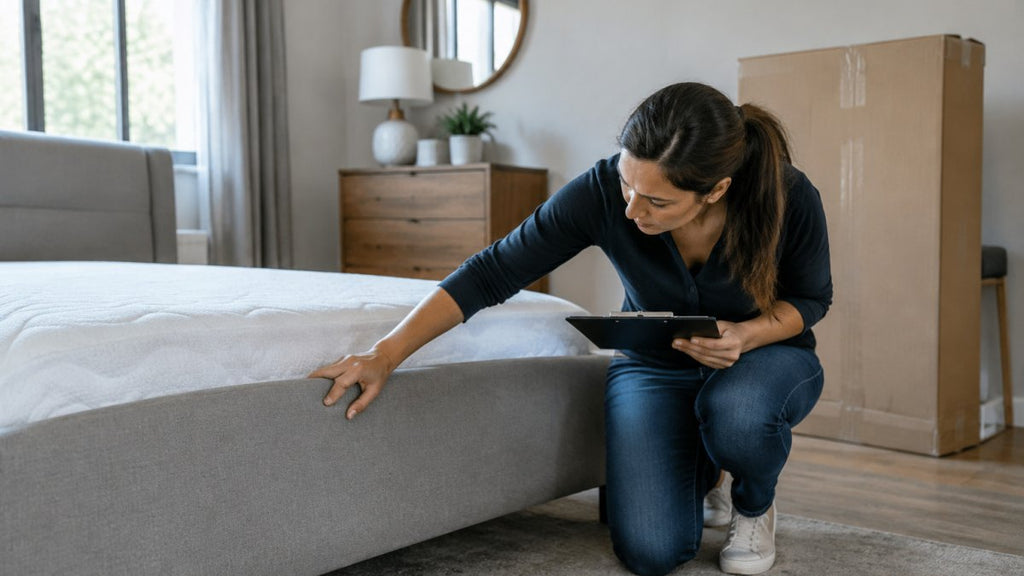
Checking Outer Packaging and Corners
Look at the packaging before you open it. Crushed or torn boxes often point to damage inside.
- Look for dents, tears, or punctures in the outer wrap.
- Check all four corners for crushing.
- Look for water stains, which can signal moisture damage.
- Run your hand along the edges to feel for soft spots.
Once the packaging is open, check the furniture surface. Look for scratches, chips, cracks, and impact marks. Pay special attention to the corners and the underside, where damage often hides.
Furniture-Specific Inspection Points
Different pieces fail in different ways during transit. Use these checks for each furniture type.
Sofas and upholstered pieces
- Run your hand along every seam, including the back and under the seat cushions.
- Press the cushions to feel for broken springs or collapsed foam.
- Check the frame by lifting one corner slightly; a creak or flex can signal a cracked rail.
- Look for pulls, snags, or stains on the fabric, especially on the arms and back.
Tables and desks
- Check the tabletop for scratches, dents, and chips, especially along the edges.
- Rock the table gently to confirm the legs are level and the joints are tight.
- Look underneath for cracked aprons or loose corner blocks.
- Test any leaves or extensions to confirm they slide and lock properly.
Beds and headboards
- Inspect the headboard and footboard for cracks at the joints.
- Check the side rails and slats for splits or missing pieces.
- Confirm all hardware bags are present and match the parts list.
Cabinets and storage pieces
- Open and close every door and drawer to check alignment and smooth operation.
- Look inside for cracked shelves or loose shelf pins.
- Check the back panel for punctures or separation.
Glass and mirrored pieces
- Inspect glass tops and mirrors for chips, cracks, and edge damage.
- Look for scratches in the reflection under bright light.
- Confirm the glass is seated evenly in its frame.
Testing Drawers, Doors, and Hardware
Moving parts take the most abuse during transit. Test them before the crew leaves.
- Open and close drawers to check that they slide smoothly.
- Swing doors to confirm they line up and latch properly.
- Check hinges and handles for looseness or missing screws.
- Operate any wall bed mechanism slowly to confirm it moves without catching.
If a mechanism feels stiff or makes a grinding noise, note it right away. Do not force it open or closed, because that can make a problem worse.
Watch out: inspecting a large piece alone can be unsafe. Ask the crew to hold the item steady while you check the underside and back, and avoid lifting a heavy piece by yourself.
How to Document Furniture Damage with Photos and Notes
Good documentation is your strongest tool if you need to file a claim. Take photos before you move anything, and write down what you see.
Use both close-up and wide-angle shots:
- Wide shots show the whole piece and where the damage sits.
- Close-up shots show the exact scratch, dent, or crack.
- Packaging shots show torn boxes or crushed corners.
Write notes on the delivery receipt or a separate sheet. Include the item name, the type of damage, and the location on the piece.
Ask the driver to sign or initial your notes. A signed note from the crew carries more weight than one you wrote alone.
Inspect Furniture Before Signing the Delivery Receipt
Do not sign the delivery receipt until you finish your inspection. Your signature usually confirms that the items arrived in acceptable condition.
Before signing, confirm the following:
- Every item on the receipt was delivered.
- The quantity matches your order.
- Any damage you found is written on the receipt.
- The driver has noted the damage and initialed it.
If you sign a clean receipt and damage appears later, the seller may argue that it happened after delivery. Writing damage on the receipt at the door protects your claim.
What to Do If Furniture Arrives Damaged After the Crew Leaves
Sometimes damage is not visible until you unpack more of the item or move it into place. If you find something after the crew is gone, act quickly and follow a clear sequence.
Immediate Steps (First 24 Hours)
- Stop and document. Take photos and notes before you try any repairs or move the piece further.
- Keep the packaging. Save boxes, wrap, and corner protectors until the claim is resolved.
- Contact the seller promptly. Send your photos and a short description of the damage the same day.
- Ask about next steps. The seller may offer a repair, replacement, or refund.
Evidence Checklist
Gather the following before you contact the seller:
- Wide-angle and close-up photos of the damage.
- Photos of the packaging, including any crushed corners or tears.
- A copy of the delivery receipt and order confirmation.
- The item name, model number, and location of the damage on the piece.
- A short written timeline of when you noticed the damage and what you did next.
Sample Wording for Your Claim
Use clear, factual language. For example:
- Visible damage: "The left cabinet panel has a 4-inch crack along the lower edge, visible in the attached photos. The packaging corner was crushed on arrival."
- Concealed damage: "The damage was not visible until I removed the protective wrap after delivery. Photos of the packaging and the damaged area are attached."
- Missing parts: "The hardware bag for the wall bed mechanism was missing from the box. The parts list shows it should be included."
- Refusal of delivery: "I refused delivery because the packaging was crushed and the tabletop was cracked. Please advise on a replacement."
Escalation Timeline
- Day 1: Contact the seller with photos and a written description.
- Days 2-3: Follow up if you have not received a response. Ask for a claim number.
- Days 4-7: If the seller does not resolve the issue, request a written resolution plan. Keep all emails and messages.
- After one week: If progress stalls, ask to speak with a supervisor and reference your delivery receipt notes.
Distinguishing Transit Damage from Other Issues
Be careful about telling transit damage apart from a manufacturing defect or wear that was already there. Transit damage usually shows sharp impact marks, crushed packaging, or fresh breaks. Manufacturing defects tend to show uneven finishes, loose joints, or problems that appear during normal use.
Watch out: waiting more than a few days to report damage can weaken your claim. Most sellers ask for prompt reporting, so send your photos and notes as soon as you notice the problem.
Scheduling Your Wall Bed or Custom Mattress Delivery with Comfort Zone Shop
Comfort Zone Shop is a specialty sleep shop serving the Tampa, Clearwater, St. Petersburg, and New Port Richey areas. Our product line includes Murphy bed cabinets, wall beds, storage beds, and custom-sized mattresses.
When you book delivery, ask about the inspection process before the crew arrives. You can also browse our wall bed and Murphy cabinet options to plan your purchase.
Pricing depends on the product, quantity, delivery date, and location, so please contact Comfort Zone Shop directly for a current quote. If you are ordering a custom mattress for a wall bed, this guide to custom mattresses for wall beds covers how to match the mattress to the frame before delivery.
Frequently Asked Questions
What should I check when furniture is delivered?
Start with the outer packaging for tears, crushed corners, or water staining, then unwrap the piece and inspect surfaces, corners, legs, and the underside for scratches, dents, chips, and cracks. Open and close every drawer, door, and moving mechanism to confirm it works smoothly. Check upholstery seams and cushions, and confirm that all hardware and parts listed on the packing slip are present. Do this before the driver leaves so the seller can respond quickly to any issue you find.
Should I inspect furniture before signing for delivery?
Yes. Signing the delivery receipt usually confirms that the goods arrived in acceptable condition, which can make a later damage claim harder to support. Inspect the packaging and the furniture itself first, note any visible damage in writing on the receipt, and take photos. If you find damage and the carrier will not wait, you can ask for the damage to be noted on the paperwork before you sign.
What should I do if my furniture arrives damaged?
Note the damage on the delivery receipt, photograph it from wide and close angles, and keep the packaging. Contact the retailer or seller promptly, usually the same day, with your photos and order number. Ask for a repair, replacement, or refund, and keep a written record of every conversation. If the seller does not respond, you can file a claim with the shipping carrier.
How do I document furniture damage during delivery?
Take wide-angle photos of the piece in its packaging and close-up photos of each defect, with a common object such as a coin nearby for scale when helpful. Record a short video that shows the whole piece and any damage. Write a description of each problem on the delivery receipt and date it. Save all files in one folder so you can send them to the seller together.