

Durable Wall Bed Mechanisms for Home: A Technical Guide
Table of Contents
- How Wall Bed Mechanisms Work
- Piston vs Spring Murphy Bed Mechanism: Which Lasts Longer
- Load Capacity and Weight Distribution
- Maintenance Tips for Wall Bed Hardware
- How to Install a Wall Bed Mechanism Safely
- Safety Features and Locking Systems
- Why Quality Wall Bed Mechanisms Matter for Your Home
- Conclusion
Last Updated: August 23, 2026
How Wall Bed Mechanisms Work
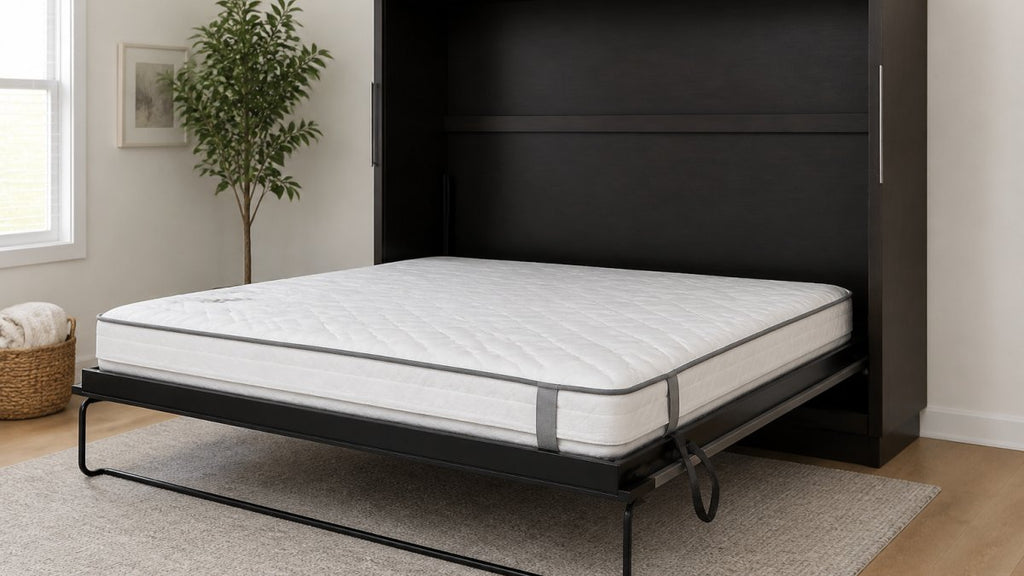
A wall bed mechanism is the engineered system that allows a bed frame to fold up into a cabinet, transforming a bedroom with a single motion. These mechanisms use either gas-strut pistons or spring-loaded tension systems to counterbalance the weight of the mattress and frame, making the bed easy to raise and lower by hand.
The basic principle involves pivot hardware mounted to the wall and a counterbalance system that supports the bed's weight. When you lower the bed, the mechanism guides it smoothly into a horizontal sleeping position. When you raise it, the counterbalance system does most of the heavy lifting, so you're not straining to hoist a full mattress and frame back up into the cabinet.
The quality of these mechanisms directly impacts durability and reliability. Poor mechanisms wear out quickly, develop squeaks, or fail to hold the bed securely in the raised position. Quality mechanisms use heavy-duty steel frames and precision-engineered pivot points designed to handle thousands of cycles without degradation.
Piston vs Spring Murphy Bed Mechanism: Which Lasts Longer
The two dominant mechanism types are gas-strut pistons and spring-loaded tension systems, each affecting durability, ease of use, and maintenance requirements.
Gas-Strut Piston Systems
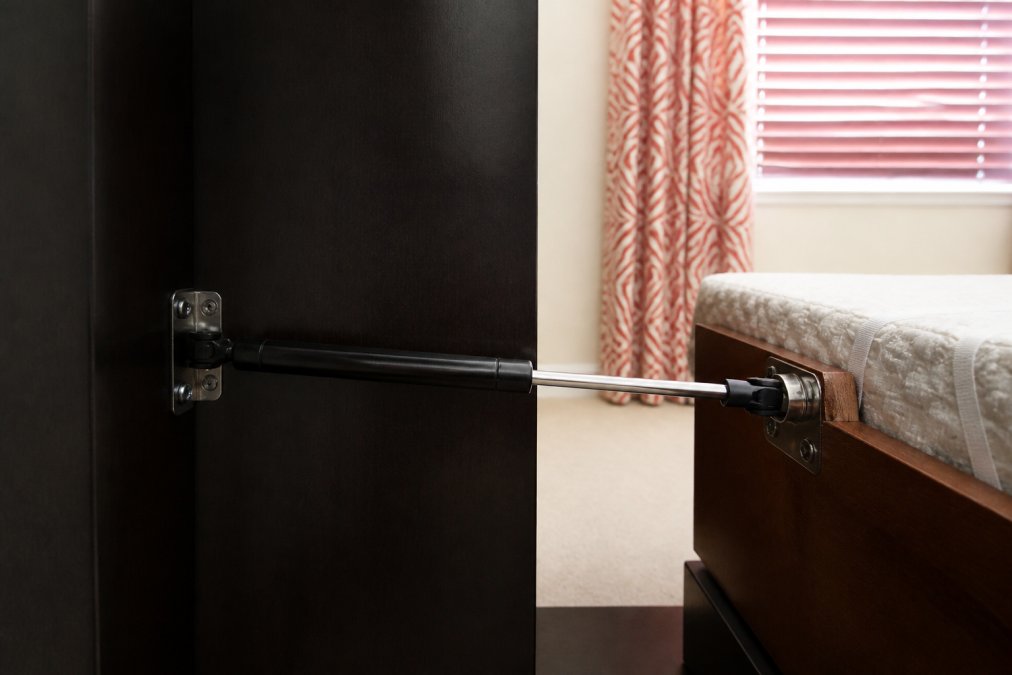
Gas-strut piston mechanisms use hydraulic cylinders filled with pressurized nitrogen gas to support the bed's weight. When you lower the bed, you compress the gas inside the piston. When you release it, the gas pushes back, counteracting the weight of the mattress and frame. This system is smooth, predictable, and requires minimal effort to operate.
Gas pistons are a durable choice for long-term use. The sealed nitrogen chamber doesn't degrade significantly over time, and the mechanism remains consistent through thousands of cycles. Most quality gas-strut systems are rated for 10,000 to 15,000 cycles, translating to years of reliable daily use (peer-reviewed research). The Clover Murphy Cabinet Bed from Comfortzoneshop uses professional-grade gas-strut mechanisms paired with solid hardwood construction, backed by a 10-year warranty.

The main advantage is minimal maintenance, you don't need to adjust tension or lubricate moving parts regularly. Over time, gas pistons can develop small leaks where the rod enters the cylinder, causing gradual pressure loss. When this happens, the piston needs replacement rather than repair.
Spring-Loaded Tension Systems
Spring-loaded mechanisms use heavy-duty coil springs or torsion bars to counterbalance the bed's weight. These springs are typically mounted along the top of the bed frame or integrated into the pivot hardware. When you lower the bed, the springs compress. When you release it, the springs push back to help raise the bed.
Spring systems are generally less expensive to manufacture, which is why they appear on budget-friendly wall beds. However, they come with trade-offs in durability and ease of use. Springs lose tension over time, especially with frequent cycling. After a year or two of regular use, you'll notice the bed becoming harder to raise because the springs no longer provide adequate counterbalance. This requires periodic tension adjustment by tightening bolts or adding shims.
Springs also require regular lubrication to prevent rust and squeaking. Without proper maintenance, the metal can corrode, especially in humid environments, and springs may eventually fail completely. A broken spring means the entire mechanism needs replacement. For homeowners who want a wall bed that works reliably without ongoing maintenance, spring systems require more attention than gas pistons.
| Mechanism Type | Durability | Maintenance | Ease of Use | Best For |
|---|---|---|---|---|
| Gas-Strut Piston | 10+ years, minimal degradation | Minimal; occasional piston replacement | Consistent, light effort | Daily use, long-term reliability |
| Spring-Loaded Tension | 5-7 years before tension loss | Regular lubrication, periodic adjustment | Becomes harder over time | Budget-conscious buyers, occasional use |
Load Capacity and Weight Distribution
A wall bed mechanism must safely support the mattress, frame, and occupants. A typical queen-size mattress weighs 60-90 pounds, the bed frame adds 40-80 pounds, and a 200-pound person brings total load to 300-370 pounds distributed across pivot points and mounting hardware (the FDA).
Wall bed mechanisms are not interchangeable. A mechanism designed for a twin bed cannot safely support a queen mattress. The pivot hardware, mounting brackets, and counterbalance system must all be engineered for the specific bed size and weight. Professional-grade mechanisms specify maximum load capacity clearly, and exceeding that capacity voids warranties and creates safety risks.
Quality mechanisms distribute weight across multiple pivot points rather than concentrating it on a single hinge. The mounting brackets must be anchored directly into wall studs, not just drywall, to handle the concentrated force when the bed is raised (the CDC). A wall bed mechanism that isn't properly anchored will eventually pull away from the wall, creating a dangerous situation.
Comfortzoneshop's custom wall beds are engineered with load distribution in mind, using solid hardwood construction and professional-grade hardware to ensure weight is distributed safely and the mechanism remains stable through years of use.
Maintenance Tips for Wall Bed Hardware
Proper maintenance extends the life of your wall bed mechanism significantly. Even high-quality gas-strut systems benefit from regular attention.

For gas-strut mechanisms, inspect the piston rod periodically for signs of oil leakage. A small amount of moisture is normal, but visible oil pooling at the rod's base indicates a developing leak. The piston should be replaced before it loses enough pressure to make the bed difficult to operate.
For spring-loaded mechanisms, lubricate all pivot points and spring connections twice a year with machine oil or silicone spray. Pay special attention to areas where metal meets metal. Check the tension of the springs by attempting to raise the bed; if it becomes noticeably harder, tighten the bolts holding the springs in place according to manufacturer's instructions.
All mechanisms benefit from regular cleaning of the pivot area. Dust and debris can accumulate where the bed meets the cabinet when raised, potentially interfering with smooth operation. Use a soft brush to clean these areas monthly. Avoid water or harsh cleaners, which can cause rust on steel components.
Store bedding in a cool, dry location when the bed is raised. Moisture trapped between the mattress and cabinet can damage both over time.
How to Install a Wall Bed Mechanism Safely
Proper installation is non-negotiable for safety and durability. A wall bed mechanism installed incorrectly will fail prematurely and create a hazard. Professional installation is worth the investment.
Pre-Installation Checklist
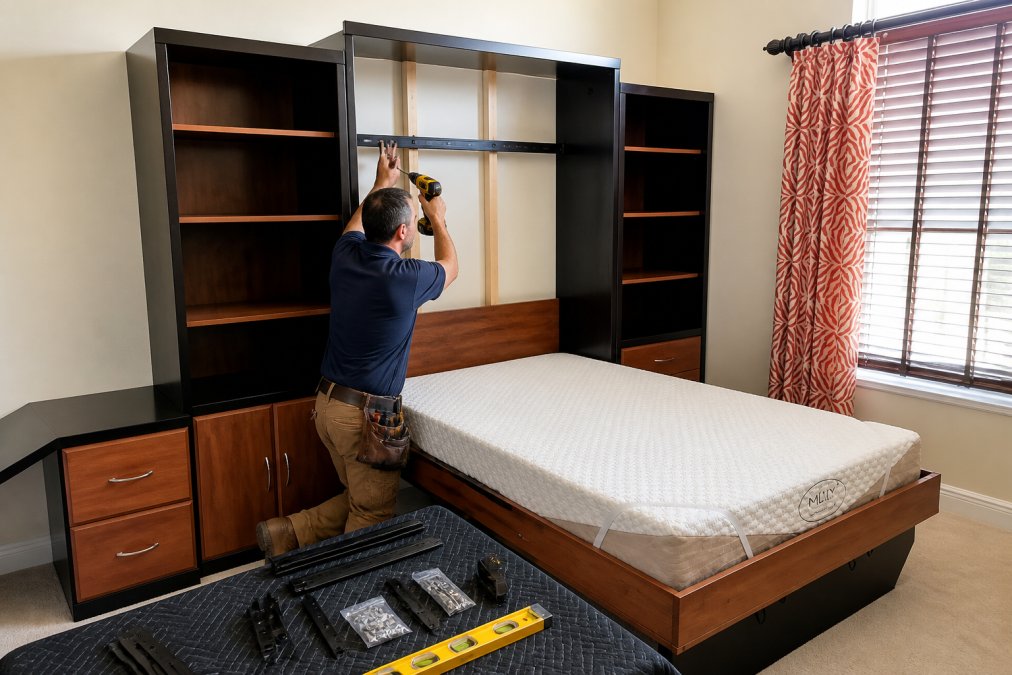
Before beginning installation, gather these essentials: a stud finder, a drill with appropriate bits, a level, a measuring tape, and the installation template provided by the manufacturer. Read the entire installation guide before starting.
Check that your walls are suitable for mounting. Drywall alone cannot support a wall bed mechanism; mounting brackets must anchor directly into wall studs. Use a stud finder to locate studs and mark them clearly. If studs aren't positioned where needed, you may need to install additional blocking or consider a different wall location.
Verify adequate clearance in front of the bed. When lowered, the bed extends into the room. Measure the bed's depth when horizontal and ensure you have at least that much clear floor space. Account for swing radius if the bed uses a horizontal pivot design.
Confirm your mattress matches the bed frame dimensions exactly. A mattress that's too large will interfere with the mechanism when raising. A mattress that's too small will shift inside the frame. Comfortzoneshop offers custom-sized mattress manufacturing to ensure a perfect fit.
Step-by-Step Installation Process
-
Locate and mark wall studs. Use a stud finder to identify studs along the wall where the bed will mount. Mark them with a pencil. Mounting brackets must attach to studs for safety.
-
Use the installation template. Tape the manufacturer's template to the wall, aligned with marked studs. Use a level to ensure the template is perfectly horizontal.
-
Drill pilot holes. Using the template as a guide, drill pilot holes at each marked location. Pilot holes prevent wall cracking and help mounting bolts seat properly.
-
Install mounting brackets. Attach mounting brackets to wall studs using provided bolts and washers. Tighten firmly; they're carrying the entire bed weight. Use a level to verify brackets are perfectly horizontal and aligned.
-
Attach the mechanism to the frame. Bolt the mechanism components to the frame according to manufacturer's instructions. Verify all bolts are tight before proceeding.
-
Attach the frame to the brackets. Connect the bed frame to wall-mounted brackets using heavy-duty bolts tightened to manufacturer's specified torque. Under-tightening creates play; over-tightening can strip threads or crack the frame.
-
Test the mechanism. With mattress and base in place, test raising and lowering the bed several times. Motion should be smooth and consistent. The bed should hold firmly in both positions with no drift.
-
Make final adjustments. If the mechanism feels stiff or doesn't operate smoothly, check that all bolts are tight and the frame is properly aligned with brackets. Minor bolt adjustments can significantly improve operation.
If you're uncertain about any step, consult the manufacturer or hire a professional. A poorly installed wall bed mechanism is a safety liability.
Safety Features and Locking Systems
A wall bed mechanism must hold the bed securely in both raised and lowered positions. The safety locking system engages when the bed is fully raised, preventing accidental descent. This typically involves a mechanical latch or catch that prevents descent unless intentionally released. Test this latch regularly to ensure it engages fully and holds firmly.
Some mechanisms include a secondary safety feature: a stop or bumper that prevents the bed from being raised too far, which could damage the frame or mechanism. This is especially important if children might use the bed.
The mattress should be secured to the frame to prevent shifting during sleep or when raising and lowering. Most quality wall beds use a fitted sheet combined with corner straps or adhesive pads. Comfortzoneshop's Murphy bed cabinets include higher sleep platforms designed to keep the mattress stable and secure.

Check all safety features monthly. A latch that worked fine last month might be developing play or corrosion. Catching problems early prevents accidents and extends mechanism life.
Why Quality Wall Bed Mechanisms Matter for Your Home
A wall bed mechanism is an investment in space efficiency and functionality. A cheap mechanism might save money upfront but will frustrate you daily and fail within a few years. A quality mechanism works reliably for a decade or more, making the bed a tool you actually want to use.
The difference between a mechanism lasting five years versus fifteen comes down to engineering, materials, and manufacturing precision. Professional-grade mechanisms use heavy-duty steel, precision-machined pivot points, and counterbalance systems tested for thousands of cycles before reaching your home.
For homeowners in small apartments or condos who depend on a wall bed to create flexible living space, reliability is crucial. You need a system that works smoothly every time you use it.
Comfortzoneshop specializes in durable wall bed solutions with solid hardwood construction and professional-grade mechanisms. The Clover Murphy Cabinet Bed features a 10-year warranty. The solid hardwood construction and higher sleep platform provide both durability and comfort, backed by a mechanism engineered for years of reliable use. For homeowners seeking a wall bed that will serve reliably for a decade or more, investing in quality mechanisms is the only practical choice.
A durable wall bed mechanism is the foundation of a space-saving solution that actually works. Whether furnishing a small condo or creating a multi-purpose guest bedroom, the mechanism you choose determines whether your wall bed becomes a trusted tool or a source of frustration. Comfortzoneshop offers custom-built wall beds with professional-grade mechanisms, solid hardwood frames, and personalized mattress manufacturing to ensure your bed fits perfectly and performs reliably. Contact Comfortzoneshop today to explore wall bed options engineered for long-term durability and comfort.
Frequently Asked Questions
Q: What is the difference between piston-lift and spring-lift wall bed mechanisms?
A: Piston-lift systems use gas-strut cylinders filled with pressurized gas to smoothly raise and lower the bed with minimal effort. Spring-lift mechanisms rely on metal springs for tension and counterbalance. Piston systems generally offer smoother operation and longer durability, typically lasting 10+ years with proper maintenance, while spring systems may require replacement every 5-7 years as springs lose tension over time.
Q: How much weight can a standard wall bed mechanism support?
A: Most professional-grade wall bed mechanisms support 300 to 500 pounds, depending on the system design and quality. This weight limit includes the mattress, bedding, and occupants. Always verify the load-bearing capacity of your specific mechanism before installation. Exceeding the rated capacity can damage the hardware, compromise safety, and void your warranty.
Q: What maintenance tips for wall bed hardware keep it working smoothly?
A: Inspect pivot points and articulating legs every 6 months for dust and debris. Lubricate gas-strut cylinders and spring mechanisms annually with a silicone-based lubricant, avoid oil-based products that attract dirt. Check all mounting brackets and bolts for tightness, and test the locking mechanism regularly. Keep the bed track clean and dry to prevent corrosion, especially in humid climates.
Q: Are DIY wall bed kits as durable as professional installations?
A: Professional installations typically outlast DIY kits because trained installers ensure proper wall anchoring, correct mechanism calibration, and appropriate load distribution. DIY kits often fail prematurely due to incorrect mounting, inadequate wall support, or improper tension adjustment. Professional-grade systems from Comfortzoneshop come with 10-year warranties, providing long-term reliability that DIY options rarely match.
This article was written using GrandRanker
Related post


08
Oct


30
Sep