


Tips for Buying Custom Furniture in 2026: A Complete Guide
Table of Contents
- Why Custom Furniture Is Worth the Investment in 2026
- Measuring Your Space and Planning for Delivery
- Questions to Ask Custom Furniture Makers Before You Order
- Murphy Bed vs Woodworking: Which Custom Route Fits?
- Understanding Materials and Construction Quality
- The Benefits of Custom-Sized Mattresses for Built-In Beds
- Contract Red Flags, Warranties, and Lead Times
- Making Your Final Decision and Placing the Order
- Frequently Asked Questions
Last Updated: September 4, 2026
Custom furniture is the single best way to turn an awkward, underused room into the most functional space in your home, and the buying process in 2026 rewards buyers who come prepared. This guide from Comfort Zone Shop walks through the essential tips for buying custom furniture 2026, from measuring correctly to asking the right questions before you sign.
The most common mistake buyers make is treating custom furniture like a retail purchase. Getting the measurements, materials, and logistics right on the front end separates a smooth project from a stressful one.
Why Custom Furniture Is Worth the Investment in 2026
Custom furniture is designed and built to your exact specifications rather than selected from mass-produced inventory. With square footage at a premium in many urban apartments and condos, a piece that fits your precise wall dimensions and serves multiple functions often justifies its higher upfront cost.
A well-built custom piece uses solid hardwood, proper joinery, and quality hardware, contributing to furniture longevity that outlasts several cycles of cheaper replacements.
Key TakeawayCustom furniture earns its investment when it solves a spatial problem mass-produced pieces cannot, such as fitting an exact alcove or converting a single room into two functional spaces.
Measuring Your Space and Planning for Delivery
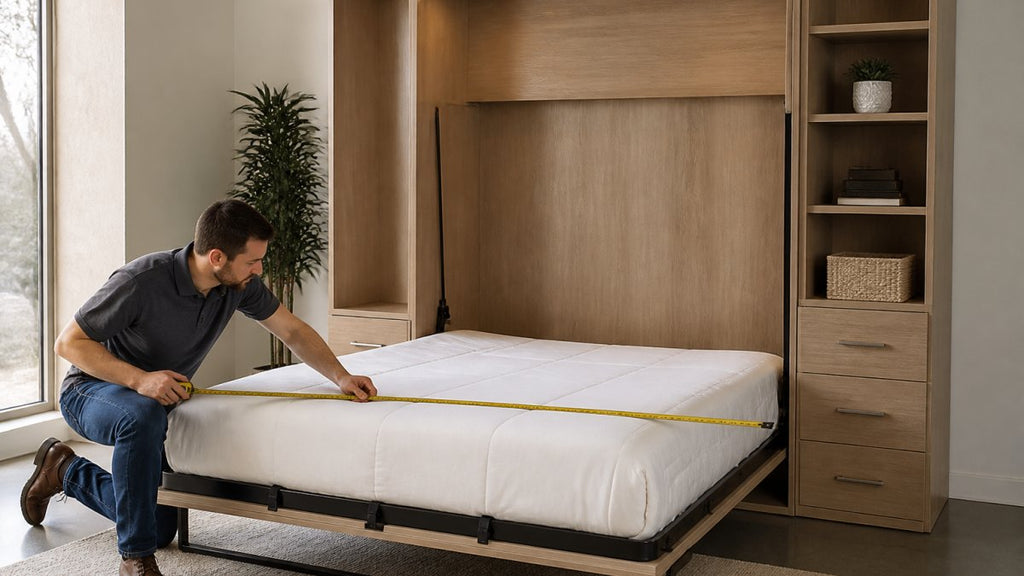
Measure everything before you contact a maker, and measure twice. You need the width, height, and depth of the intended space, plus ceiling height and the location of baseboards, outlets, and light switches. Doorway clearance matters just as much as the final placement.

The 2/3 Rule for Furniture Placement
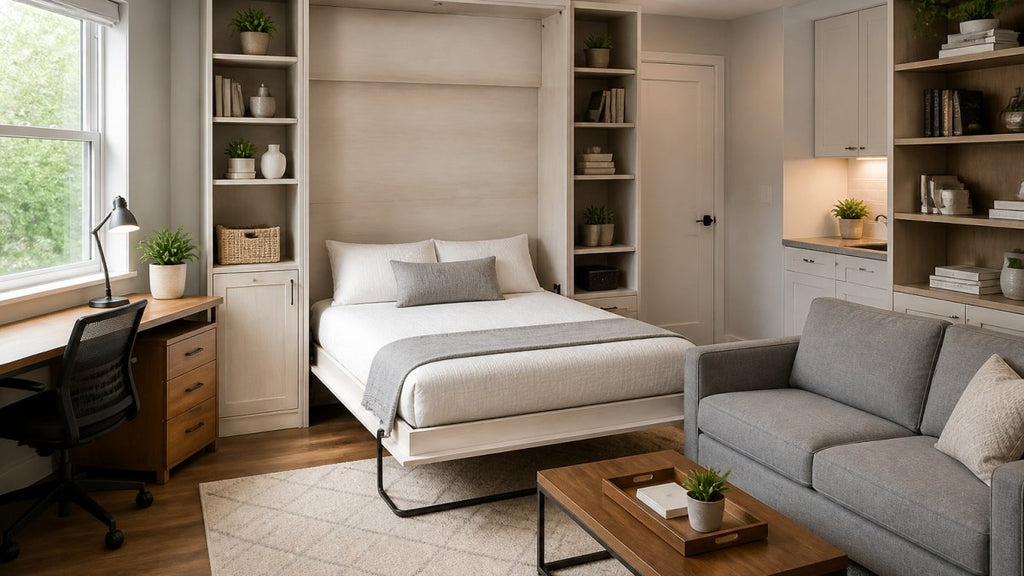
A practical guideline is the 2/3 rule: the furniture piece should occupy roughly two-thirds of the wall or floor area you are furnishing. For a Murphy bed cabinet in a small condo, this rule helps confirm the closed cabinet will not dominate the space.
Questions to Ask Custom Furniture Makers Before You Order
Start with construction specifics: What type of frame construction and joinery do you use? Is the frame solid hardwood or engineered wood? What is the hardware rating and warranty on moving parts like a wall bed mechanism? Ask for wood finish samples and, if upholstery is involved, the fabric durability measured in rub count.
Request a design consultation to review bespoke specifications and a detailed quote that itemizes materials, labor, and delivery. Ask how revisions are handled during the design phase and what happens if the finished piece does not match the approved drawings.
Watch OutFailing to ask about frame construction and hardware quality is the most common mistake buyers make. Cheap [wall beds](/products/wallbeds-and-custom-cabinetry) break or get stuck precisely because the mechanism and frame were not built for daily use.
Murphy Bed vs Woodworking: Which Custom Route Fits?
When comparing a Murphy bed from a specialty sleep shop against commissioning a general woodworking shop, the deciding factor is specialization. A Murphy bed involves springs, pistons, hinges, and a folding mattress mechanism that must operate smoothly for decades.
Specialty providers also understand the mattress component: a wall bed requires a mattress that folds correctly and maintains comfort. General woodworking shops build the cabinet; they rarely engineer the complete sleep system.
Understanding Materials and Construction Quality
Materials and construction quality are the difference between a piece that lasts decades and one that fails in years. Do not rely on a finish alone to judge quality; look underneath at the frame and joinery.
Hardwood Choices and Wood Finish Options
Solid hardwood is the benchmark for custom furniture, but the choice of species involves real trade-offs beyond appearance. Here is how the most common options compare for different uses:
Wood Species |
Hardness (Janka Scale) |
Grain Character |
Best For |
Watch Out For |
|---|---|---|---|---|
White Oak |
1,360 |
Prominent, open grain |
Modern and rustic styles; high-traffic pieces |
Can yellow slightly with clear finishes |
Hard Maple |
1,450 |
Subtle, tight grain |
Contemporary, painted or light-stained pieces |
Takes stain unevenly; use toner or paint |
Black Walnut |
1,010 |
Rich, dark, straight |
Statement pieces, desks, dining tables |
Expensive; can be prone to light fading |
Cherry |
950 |
Smooth, fine grain |
Traditional, heirloom pieces |
Darkens significantly with age and UV exposure |
Red Oak |
1,290 |
Bold, porous |
Budget-conscious hardwood projects |
Porous surface can trap dirt if not sealed well |
A common pattern among experienced makers is to use a less expensive hardwood like poplar or soft maple for interior structural components and a premium face wood for visible surfaces. This is legitimate as long as the contract specifies which wood goes where.
Engineered woods like Baltic birch plywood are not automatically inferior. For large cabinet panels, a high-grade plywood is dimensionally more stable than solid wood. The rule of thumb: solid wood for frames, doors, and visible structure; high-quality plywood for large flat panels and interior shelving.
Wood finish options range from clear coats that highlight the natural grain to stained finishes that alter the color. Oil-based polyurethane finishes amber over time and are more durable; water-based finishes stay clear and have lower VOCs. A third option, hardwax oil, is popular in 2026 for its repairability, you can spot-repair a scratch without refinishing the entire piece.
Frame Construction and Joinery
Frame construction determines structural integrity. Look for joinery methods that mechanically lock pieces together rather than relying on adhesives alone:
- Mortise-and-tenon joints: The gold standard for chairs, tables, and bed frames. The tenon (a projecting piece) fits into the mortise (a hole), creating a joint that resists twisting and pulling apart. A well-executed mortise-and-tenon joint should be nearly invisible once assembled.
- Dovetail joints: Primarily used for drawer construction. The interlocking pins and tails resist pulling forces, this is why quality dressers use dovetailed drawers. Through-dovetails (visible on the drawer side) are generally stronger than half-blind dovetails.
- Dowel or biscuit joints: Acceptable for less-stressed connections like attaching a face frame to a cabinet box, but not sufficient for load-bearing joints on their own.
- Staples, nails, and glue-only construction: A red flag for any structural component. These fail over time as the wood expands and contracts or as the joint is stressed.
For wall beds, the frame must handle the dynamic stress of folding and unfolding daily. A quality mechanism uses a spring-and-piston counterbalance system rated for a specific mattress weight range. Ask for the cycle rating, the number of open-and-close operations the mechanism is tested to withstand.
The counterbalance system is what lets one person operate the bed safely. Inferior systems use a single heavy spring that is difficult to control and can slam shut. Quality systems use a calibrated torsion spring or gas piston system that provides resistance throughout the entire motion.
Upholstery and Fabric Durability
If your custom piece includes upholstery, the fabric's rub count is the single most important specification. For residential use, look for a minimum of 15,000 rubs; for heavy daily use or homes with pets and children, aim for 30,000 rubs or higher.
Also ask about the cushion core. High-resiliency (HR) foam with a density of at least 1.8 pounds per cubic foot is the minimum for a piece that will hold its shape. Better yet, look for a wrapped cushion, an HR foam core wrapped in down or a down-alternative fiber.
Pro TipWhen comparing wood species, ask the maker for a "finish board", a sample of each wood with the actual finish you are considering applied. View it in morning, afternoon, and evening light. A finish that looks great in a bright showroom can look flat or orange in your home's lighting.
The Benefits of Custom-Sized Mattresses for Built-In Beds
A custom-sized mattress is manufactured to the exact dimensions of your bed frame rather than a standard retail size. This matters most for built-in and Murphy beds, where the mattress must fit a precisely engineered cavity.
You can select the firmness, material, and comfort layer that suits your sleep preferences. When the mattress is made to match the frame's folding mechanism, it maintains its shape and support over years of use.
Contract Red Flags, Warranties, and Lead Times
Review the contract for warranty terms, lead times, and delivery expectations before paying a deposit. A reputable maker offers a written warranty covering both materials and workmanship; for a Murphy bed, the warranty should explicitly cover the folding mechanism and hardware.
Contract red flags include vague language about materials, missing itemization, large upfront payments without a written agreement, and reluctance to provide references. Confirm the delivery scope in writing, including whether installation is included and who is responsible for damage during transit.
Making Your Final Decision and Placing the Order
By the time you are ready to order, you should have verified measurements, approved drawings, confirmed materials, and a written contract with clear lead times. Trust your preparation: if the maker has answered your questions thoroughly and the contract is transparent, you are in good hands.
The Maintenance Reality Check
How you maintain your custom furniture determines whether it delivers on its lifespan promise. Before you order, ask the maker for a written care guide specific to your piece:
- Wood finish care: Most quality finishes require nothing more than dusting with a soft cloth and occasional cleaning with a damp cloth and mild soap. Avoid silicone-based polishes, which build up a residue that complicates future refinishing. If you chose a hardwax oil finish, plan to reapply the oil annually in high-wear areas.
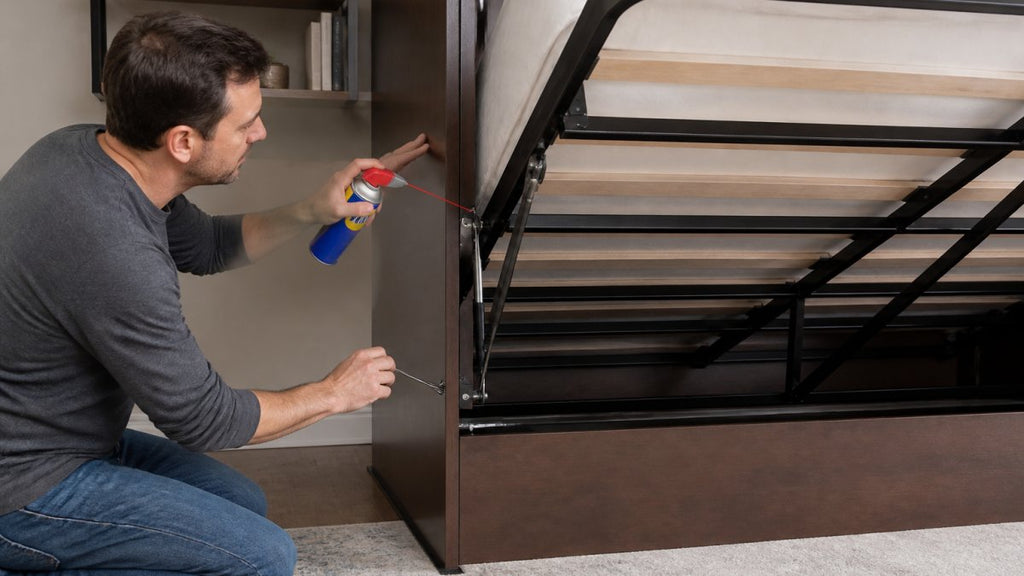
- Hardware and mechanism maintenance: For a Murphy bed or any piece with moving parts, ask about the lubrication schedule for the mechanism. Quality gas pistons and torsion springs are sealed and require no maintenance, but the pivot points and hinges may need periodic attention. A reputable maker will tell you what to check annually and what to leave to a professional.
- Upholstery care: If your piece includes upholstered panels or cushions, vacuum regularly and address spills immediately. Ask whether the fabric is treated with a stain repellent and whether that treatment needs reapplication.
- Environmental factors: Wood expands and contracts with humidity changes. Maintain a consistent indoor humidity level between 35% and 45% year-round to minimize movement. In climates with seasonal humidity swings, this is not optional, it is the difference between a piece that stays tight for decades and one that develops cracks or loose joints.
The Resale Value Question
Most buyers never consider whether a custom piece will hold value, but the answer affects how much you should spend:
- Custom pieces generally do not hold resale value like branded luxury furniture. A custom piece is built to fit your specific space and your aesthetic preferences, which limits its appeal to a future buyer. A mass-produced luxury piece from a recognizable brand has an established secondary market and a known price point.
- The exception is pieces that are architecturally integrated or highly adaptable. A well-built built-in bookcase or a Murphy bed in a condo can add functional square footage to a home, which is a selling point. Real estate professionals often note that a professionally installed wall bed in a home office or guest room can be a differentiator in a competitive housing market.
- The practical takeaway is not to buy custom furniture as an investment. Buy it because it solves a problem or brings you daily satisfaction. If resale value is a primary concern, choose classic, neutral designs over highly personalized ones, and keep the documentation, the original drawings, material specifications, and warranty, so a future buyer understands what they are getting.
The Final Checklist Before You Sign
Before you place the order, run through this final checklist:
- Measurements verified on-site, including delivery path clearance
- Approved drawings with dimensions and materials itemized
- Finish and fabric samples viewed in your home's lighting
- Written contract with warranty terms, lead time, and delivery scope
- Mechanism cycle rating confirmed for moving parts
- Care and maintenance guide provided in writing
- Deposit amount and payment schedule clearly stated
- Installation and damage-in-transit responsibility confirmed
For homeowners in the Tampa Bay area, Comfort Zone Shop combines custom cabinetry and wall beds with professional delivery and installation, plus custom-sized mattress manufacturing to guarantee a perfect fit. Get started with Comfort Zone Shop and turn your unused space into a room you will use every day.
Key TakeawayThe best custom furniture purchase is one you understand how to maintain and one you buy for the right reasons. Ask for the care guide before you sign, and buy for daily function and satisfaction, not for resale potential.
Frequently Asked Questions
How do I know if custom furniture is worth the investment?
Custom furniture earns its cost when it solves a problem mass-produced pieces cannot: fitting an awkward alcove, maximizing a small room, or matching specific decor. Solid hardwood construction and expert joinery mean decades of use, so divide the price by years of service. If a piece needs to last through daily use and resizing a room, custom is justified. For simple, standard-size needs, a quality store-bought item may be the smarter budget choice.
What is the 2/3 rule for furniture?
The 2/3 rule is a quick proportion guide for arranging furniture in a room. One common version says a rug should extend about two-thirds the length of the sofa beneath it. Another says a bed or sofa should take up no more than two-thirds of the wall it sits against. This keeps the room balanced and avoids a cramped feel. For custom pieces, share your room measurements, and a good maker will help you apply these proportions.
What are the top furniture trends for 2026?
Flexible, multi-functional living continues to lead 2026 trends. Expect to see more wall beds and cabinetry that turn home offices into guest rooms, plus built-in storage that reduces clutter. Natural hardwood finishes and warm, earthy tones are replacing stark white. Sustainability is also key: buyers are asking about material sourcing and choosing durable hardwood pieces designed to last decades rather than disposable flat-pack furniture.
What questions should I ask before ordering a Murphy bed?
Ask about the frame construction: is it solid hardwood and what joinery methods are used? Request details on the piston mechanism, including its weight rating and warranty. Clarify the mattress thickness the bed accepts and whether a custom-sized mattress is recommended for the best fit. Finally, confirm the lead time, delivery process, and what the installation includes. These answers separate a quality piece from a cheap wall bed that may get stuck.
How do I choose between a Murphy bed and custom cabinetry?
Choose a Murphy bed when your priority is a real bed for guests that disappears during the day. Choose custom cabinetry when you need specific storage solutions, such as a built-in desk, shelving, or wardrobe around the bed. A combined approach often works best: a Murphy bed cabinet with matching custom cabinetry creates a seamless, built-in look. This route maximizes both sleeping space and storage in one cohesive design.
What are the benefits of a custom-sized mattress for a wall bed?
Wall beds have specific clearance needs for folding mechanisms. A custom-sized mattress ensures the bed folds and stores correctly without catching or bulging. It also eliminates gaps between the mattress and cabinet frame, which improves comfort and prevents sheets from slipping. Standard mattresses are often too thick or too long for a wall bed unit, so a custom fit protects both your sleep quality and the bed's mechanism over time.
This article was written using GrandRanker
Related post

08
Oct

