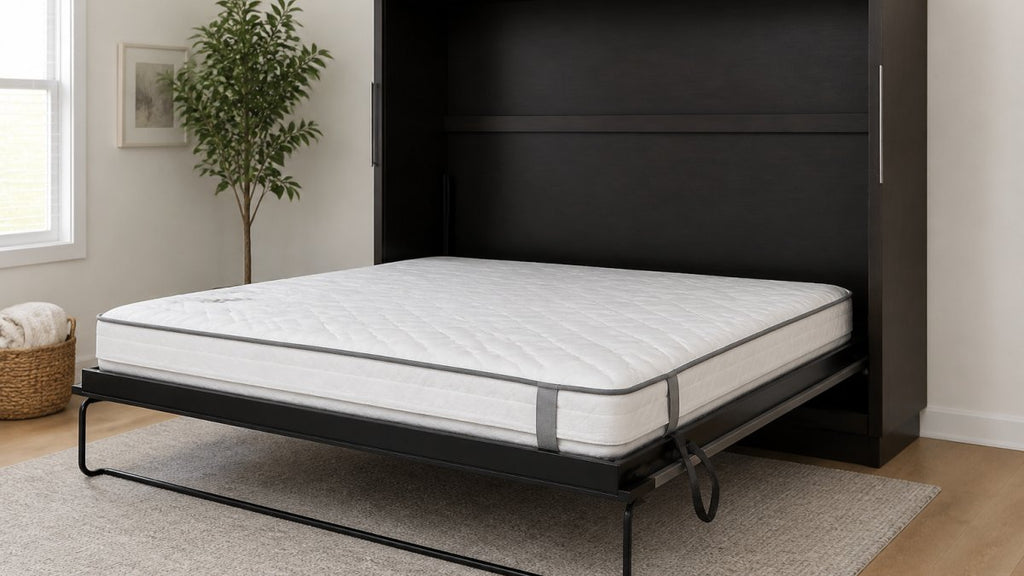

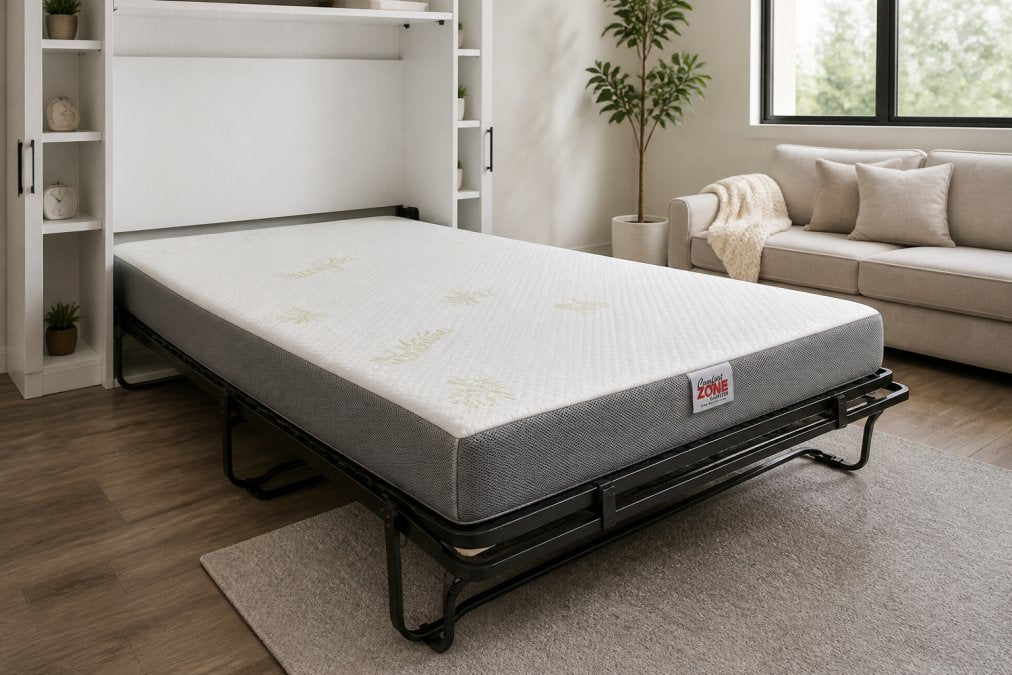
How to Choose a Wall Bed Mattress: 2026 Guide
Table of Contents
- Understanding Wall Bed Mattress Requirements
- Maximum Mattress Thickness for Murphy Bed Systems
- Mattress Type Compatibility: Foam, Spring, and Latex
- Custom Size Mattress for Murphy Bed Fit
- Comfort and Support Features That Matter
- How to Keep Mattress from Sliding on Murphy Bed
- Installation Safety and Long-Term Performance
- Bedding and Storage Considerations
Understanding Wall Bed Mattress Requirements
Choosing the right wall bed mattress isn't just about comfort, it's about safety, longevity, and ensuring your space-saving investment works as intended. Unlike traditional beds, wall beds (also called Murphy beds) subject mattresses to unique stresses: vertical storage, repeated folding, weight distribution against a piston-assisted or spring-balanced mechanism, and constant pressure from the bed frame itself.
At Comfortzoneshop, we've worked with homeowners converting spare rooms into dual-purpose spaces. The most common mistake is picking a mattress based on bedroom comfort alone. Wall bed systems demand specific specifications your mattress must meet. A mattress that's too heavy won't fold smoothly. One that's too thick won't close properly. A poorly constructed core sags within months under vertical pressure. This guide walks you through every decision point so you end up with a wall bed mattress that delivers both comfort and durability.
Weight Capacity and Structural Integrity
Wall beds operate within strict weight limits. Your bed frame has a maximum capacity, typically 400 to 600 pounds depending on the mechanism, and your mattress is part of that calculation (the FDA).
Check your bed's specifications first. The weight capacity includes the mattress, bedding, and any occupant. Most standard queen mattresses weigh 80 to 120 pounds, but thicker or denser models can push 140+ pounds (peer-reviewed research).
Structural integrity matters more for wall beds than traditional setups. The mattress core must resist compression when the bed folds. Memory foam and high-density polyfoam hold up better than lower-grade materials because they maintain their shape under repeated stress. Pocket coil systems work well too, as long as the coil count is high enough (800+ for a queen) to distribute pressure evenly (peer-reviewed research). A reinforced base with high-density foam or additional support coils keeps the mattress firm for years.
Measuring Your Wall Bed Space
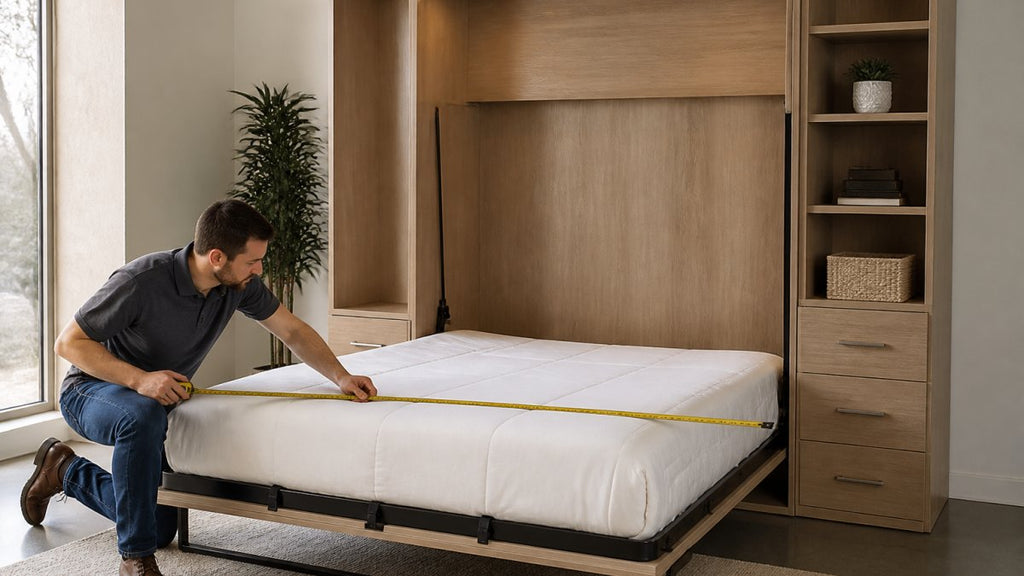
Before shopping, measure your wall bed frame precisely. You need three dimensions: width, length, and interior depth.
Width and length are straightforward, measure the frame's interior opening. Standard sizes are queen (60" × 80") and full (54" × 75"), but many wall beds use custom dimensions.
Interior depth is critical and often overlooked. This is the space between the back wall and the front edge of the frame when the bed is closed. Most wall beds have 8 to 12 inches of interior depth. Your mattress must fit within this space without compressing or bowing outward. If your frame is a non-standard size, custom mattress manufacturing is your best option. Comfortzoneshop specializes in custom-sized mattresses that fit unique wall bed dimensions exactly, eliminating fitment problems and ensuring your bed operates smoothly for years.
Maximum Mattress Thickness for Murphy Bed Systems
The ideal thickness for most wall beds is 8 to 10 inches. This range provides enough cushioning for comfort while staying within the interior depth limits of most frames. Some beds accommodate up to 12 inches, but that's on the upper end and only works if your frame's interior depth is specifically designed for it.
When your bed folds up, the mattress compresses against the frame and the wall. A 12-inch mattress in an 8-inch space either won't close or will compress under pressure, creating stress on the internal structure and accelerating sagging. Over time, compressed sections lose their ability to rebound, creating permanent indentations and reducing comfort.
The maximum mattress thickness for murphy bed systems also affects the bed's mechanical operation. Piston-assisted mechanisms have specific force ratings calibrated for a certain weight and thickness. An oversized mattress throws off that balance, making the bed harder to open and close, and potentially damaging the hydraulic system.
Measure your frame's interior depth and subtract half an inch for safety clearance. That's your maximum thickness target.
Mattress Type Compatibility: Foam, Spring, and Latex
Not all mattress materials perform equally in a wall bed. Each type has trade-offs between comfort, durability, and suitability for vertical storage.

Memory Foam Performance in Vertical Storage
Memory foam is popular for wall beds because it's lightweight, conforms to body shape, and resists motion transfer. However, memory foam in vertical storage has a weakness: temperature sensitivity. When stored upright in a warm environment, memory foam can soften slightly and compress more easily.
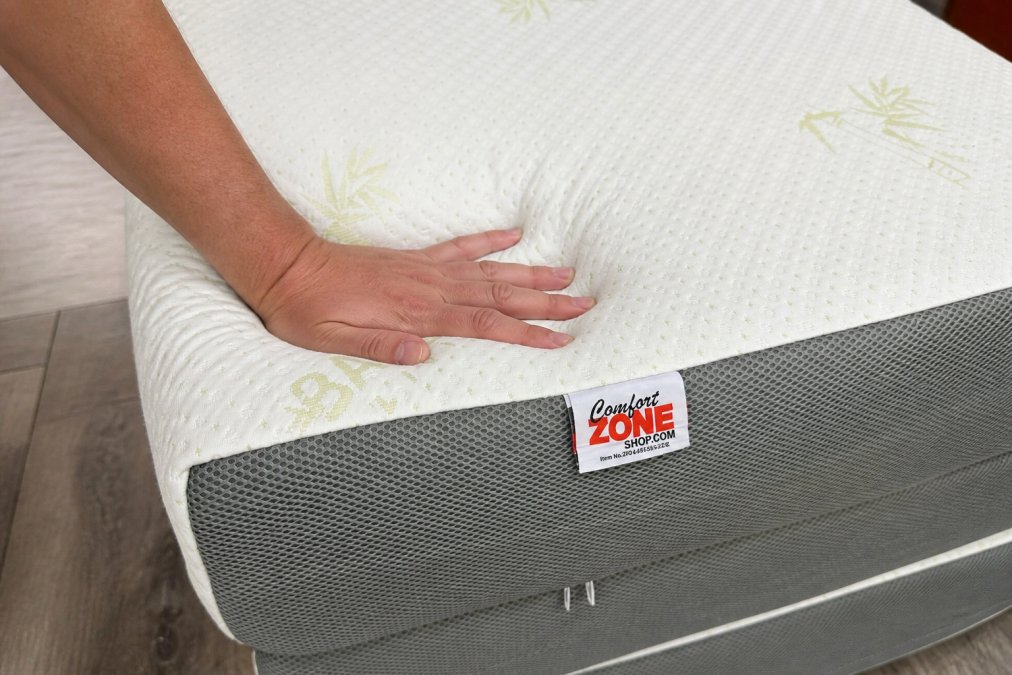
High-density memory foam (3+ pounds per cubic foot) holds up better than lower-density versions. The denser the foam, the more resistant it is to compression and sagging. Comfortzoneshop's 6.5" Bamboo 2-Sided Mattress uses upgraded bamboo-infused memory foam on one side, providing both cooling properties and structural integrity for wall bed use. The advantage of memory foam for wall beds is durability under vertical pressure, the material doesn't have springs that can break or coils that can separate.

Pocket Coil and Spring-Based Options
Pocket coil mattresses offer excellent edge support and motion isolation. Each coil is wrapped individually, so when one area compresses, surrounding coils remain stable. A queen pocket coil mattress should have at least 800 coils; higher counts (1,000+) provide better support and longer lifespan.
The drawback of pocket coils in vertical storage is potential separation. If the mattress shifts during folding, the coils can shift slightly within their pockets, creating soft spots over time. High-quality pocket coil systems have reinforced borders and strong base layers that minimize this risk. Traditional open-coil (Bonnell) springs are less ideal for wall beds because they respond as a single unit and are more prone to sagging under vertical storage stress.
Latex Mattresses for Long-Term Durability
Latex, whether natural or synthetic, offers exceptional durability and resilience. It resists compression, maintains its shape under repeated stress, and lasts longer than most foam or spring alternatives. Natural latex is more expensive but offers superior longevity. Synthetic latex costs less and performs nearly as well for wall bed use.
The advantage for wall beds is clear: latex doesn't sag under vertical pressure the way lower-quality foams do. It rebounds fully after each folding cycle, maintaining consistent support and comfort for years. The drawback is weight. A queen latex mattress typically weighs 120 to 150 pounds, which is within range for most frames but worth confirming before purchase.
Custom Size Mattress for Murphy Bed Fit
Standard mattress sizes don't work for every wall bed. Many custom wall bed frames use dimensions like 58" × 78" or 62" × 82" to fit specific room layouts or architectural constraints.
Buying a standard mattress for a non-standard frame creates problems. You either need to compress a larger mattress into a smaller space or leave gaps that make the bed feel unstable. A custom size mattress for murphy bed is the solution. Comfortzoneshop manufactures custom-sized mattresses to your exact specifications. You provide the dimensions, and we build a mattress that fits perfectly, no compression, no gaps, no compromises.
Custom manufacturing also lets you choose the exact comfort level and materials. The process is straightforward: measure your frame's interior dimensions (width, length, and depth), specify your comfort preferences and any material requirements, and we handle the rest. Custom mattresses are available with fast local delivery in the Tampa, Clearwater, St. Petersburg, and New Port Richey areas.
Comfort and Support Features That Matter
Wall bed mattresses need to balance two competing demands: enough support to handle the unique stresses of vertical storage, and enough comfort to make your guests actually want to sleep on them.
Firmness Scale and Pressure Relief
For wall beds, a medium to medium-firm mattress is often the sweet spot. Too soft, and the mattress compresses unevenly under the weight of the frame and occupant, leading to faster sagging. Too firm, and it doesn't provide enough pressure relief.
On a 1-10 firmness scale, aim for 5 to 7 for most wall beds. Pressure relief comes from the comfort layer, the top 2 to 3 inches of the mattress. Memory foam, latex, or high-quality polyfoam all provide good pressure relief. The key is thickness and density.
Edge Support and Motion Isolation
Edge support is how much the mattress resists compression at the perimeter. Wall beds experience intense edge pressure because the mattress rests on a frame that's often narrower than a traditional bed base. Reinforced edge support, achieved through high-density foam borders or pocket coils around the perimeter, is essential.
Motion isolation matters if your wall bed will host couples or if you're a light sleeper. Memory foam and latex excel at motion isolation; pocket coil systems are good but not as effective as foam.
Cooling Technology for Better Sleep Quality
Wall beds in warm climates or rooms without good air circulation can trap heat. Cooling technologies include gel-infused foam, open-cell foam, breathable covers, and phase-change materials. Bamboo-infused foam, like the Comfortzoneshop 6.5" Bamboo 2-Sided Mattress, naturally wicks moisture and runs cooler than standard memory foam.
How to Keep Mattress from Sliding on Murphy Bed
A mattress that slides or shifts during folding creates safety hazards and accelerates wear on the mattress and frame.
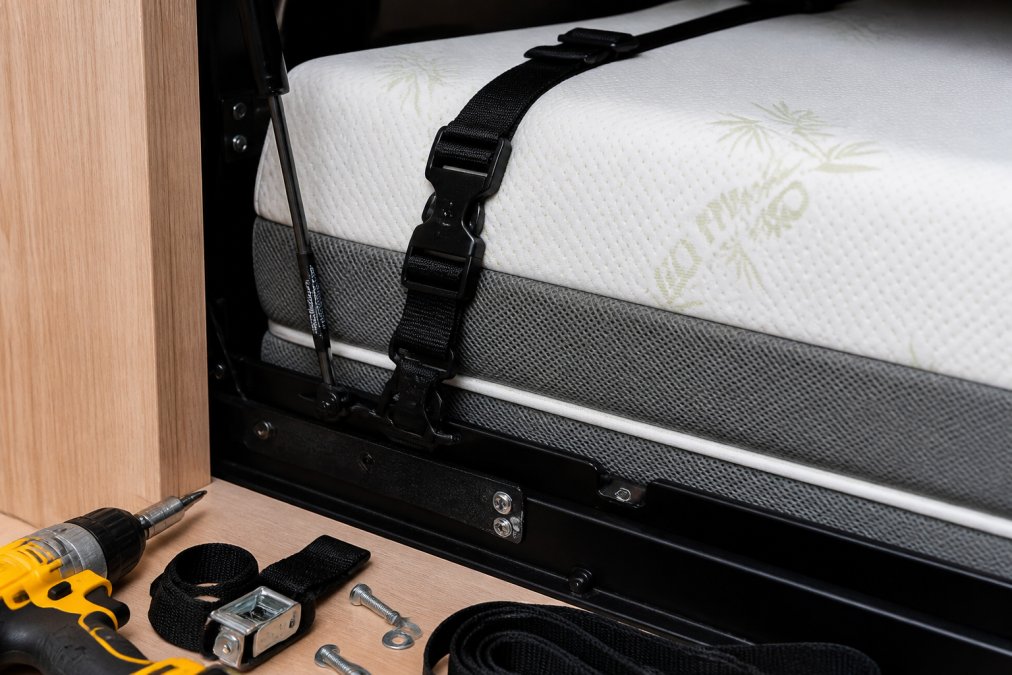
The best solution is a non-slip base layer between the mattress and frame. Anti-slip pads or mats placed between the mattress and frame create friction that prevents movement. Safety straps or fasteners, typically nylon straps with Velcro or buckles, secure the mattress to the frame at multiple points. A combination approach works best: use non-slip pads for baseline friction, then add safety straps at the head and foot of the mattress for extra security.
How to keep mattress from sliding on murphy bed also depends on your mattress material. Memory foam and latex have more grip than smooth spring mattress surfaces, so they're naturally more resistant to sliding.
Installation Safety and Long-Term Performance
Proper installation determines whether your wall bed mattress lasts 5 years or 15 years.
Piston-Assisted and Spring-Balanced Mechanisms
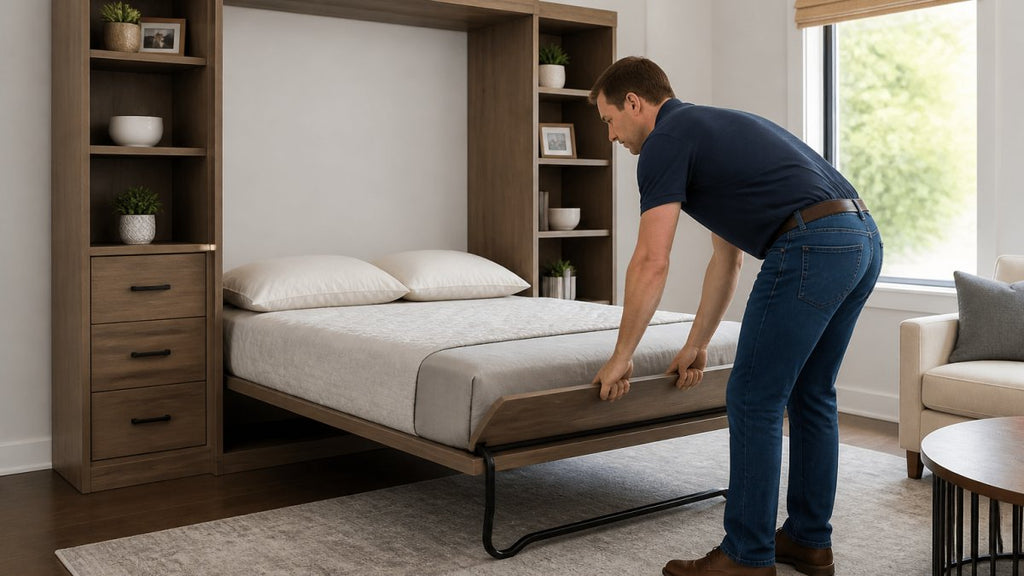
Wall beds use two primary lifting mechanisms: piston-assisted (hydraulic cylinders) and spring-balanced (mechanical springs or gas struts).
Piston-assisted systems are smoother and require less physical effort to open and close. They're calibrated for a specific weight range, so your mattress must fall within that range for the mechanism to function properly. Spring-balanced systems use mechanical springs or gas struts to counterbalance the bed's weight. They're more forgiving of weight variations, though a slightly heavier mattress will feel harder to use.
Regardless of mechanism type, follow the manufacturer's weight capacity guidelines. Your mattress choice affects how smoothly your wall bed operates.
Preventing Mattress Sag in Vertical Position
Mattress sagging in vertical storage is the most common long-term problem. It happens when the mattress's internal structure can't maintain its shape under the constant pressure of gravity and the bed frame.
High-density foam (3+ pounds per cubic foot) resists sagging better than low-density foam. Pocket coil systems with high coil counts (800+) also resist sagging well. Latex is the most sag-resistant material available.
To minimize sagging, rotate your mattress regularly, every 3 to 6 months. Also ensure your mattress is properly supported by the frame; unsupported areas compress faster. Avoid storing heavy items on top of the mattress when the bed is closed. Keep the bed clean and dry; moisture can weaken foam and coil systems over time.
| Mattress Material | Weight per Queen | Sag Resistance | Best For |
|---|---|---|---|
| Memory Foam (high-density) | 100-120 lbs | Excellent | Most wall beds |
| Pocket Coil (800+ count) | 110-130 lbs | Very Good | Couples, motion isolation |
| Latex (natural or blended) | 120-150 lbs | Excellent | Long-term durability |
| Polyfoam (standard) | 80-100 lbs | Good | Budget-conscious buyers |
Bedding and Storage Considerations
Your wall bed mattress doesn't exist in isolation. Bedding, pillows, and storage all affect how well your system works.
Choose bedding that's easy to remove and store. Fitted sheets should have deep pockets that accommodate your mattress thickness without slipping. Consider vacuum storage bags to save space for flat sheets, pillows, and blankets.
If your wall bed frame includes built-in storage compartments or cabinets, use them for bedding, extra pillows, and guest supplies. Comfortzoneshop offers custom cabinetry solutions that integrate storage directly into your wall bed frame, so bedding has a dedicated home and your room stays organized.

Consider the mattress cover carefully. A washable, removable cover protects the mattress and makes cleaning easier. Some covers have moisture-wicking properties that help with cooling and durability. If your wall bed is in a humid environment, a moisture-resistant cover extends mattress life significantly.
Choosing the right wall bed mattress requires balancing comfort, durability, safety, and fit. The wrong choice leads to sagging, discomfort, and a wall bed system that doesn't operate smoothly. The right choice, one that matches your frame's specifications, your comfort preferences, and your space constraints, delivers years of reliable performance.
At Comfortzoneshop, we understand these trade-offs because we work with wall bed systems every day. Our custom-sized mattress manufacturing ensures a perfect fit for any frame dimension, and our team can help you select the right materials and firmness level for your specific needs. We offer fast local delivery in the Tampa, Clearwater, St. Petersburg, and New Port Richey areas. Get started with Comfortzoneshop and transform your spare room into a comfortable, functional space that actually works.
Frequently Asked Questions
Q: What is the maximum thickness for a wall bed mattress?
A: Most wall bed systems accommodate mattresses between 6 and 10 inches thick. Thicker mattresses can interfere with the folding mechanism and may not fit properly when the bed is closed. Always check your specific wall bed's manufacturer specifications before purchasing. A 6.5-inch mattress, like Comfortzoneshop's Bamboo 2-Sided Mattress, offers a proven balance between comfort and compatibility with standard wall bed mechanisms.
Q: Can you use a regular mattress on a wall bed?
A: Regular mattresses can work on wall beds, but they must meet specific requirements: proper thickness (typically under 10 inches), adequate weight capacity compatibility, and sufficient edge support to prevent sagging. Standard innerspring or memory foam mattresses often lack the internal support needed for vertical storage. Custom-sized mattresses designed for wall beds provide better durability and performance over time.
Q: What type of mattress is best for a Murphy bed?
A: Memory foam and high-resolution foam mattresses perform well in wall bed applications because they distribute weight evenly and resist sagging during vertical storage. Pocket coil mattresses offer excellent motion isolation and edge support. Latex options provide long-term durability and natural cooling. The best choice depends on your firmness preference, budget, and how often the bed cycles open and closed.
Q: How do I ensure my mattress stays in place when the bed is folded?
A: Use safety straps, non-slip pads, or adhesive-backed grip strips specifically designed for wall beds. Mount these on the bed frame's interior surface where the mattress makes contact. Ensure the mattress weight is properly distributed across the frame's support system. Professional installation services can help verify that your mattress is secured correctly and won't shift during operation.
This article was written using GrandRanker
Related post
08
Oct
30
Sep