
9 Vertical Storage Hacks for Small Living Rooms
Last Updated: November 11, 2026
Quick Summary
Vertical storage for small living rooms means using the full height of your walls, from floor to ceiling, so you reclaim the dead zone above eye level. Measure usable wall width, clear height and spare depth before buying, then anchor tall units to studs and keep heavy items low.
- Measure usable wall width between obstructions, clear height minus molding, and spare depth before shopping.
- Floating shelves work best in narrow spots above a sofa, beside a doorway, or in a corner gap.
- Renters can use over-door organizers, tension-pole shelving, and freestanding ladder shelves without drilling.
- Anchor tall bookcases to wall studs and check the manufacturer's load rating before loading.
- A wall bed cabinet takes about 10 square feet of floor space when closed.
Short on floor space in your living room?We build solid wood Murphy bed cabinets with storage drawers and custom mattresses to fit your room.
Shop Murphy Bed Cabinets
Table of Contents
- 1. Measure Your Walls Before You Buy Anything
- 2. Small Living Room Wall Storage That Reaches the Ceiling
- 3. Floating Shelves for Small Living Rooms: Placement That Works
- 4. Renter-Friendly Vertical Storage You Can Install Without Damaging Walls
- 5. Small Living Room Storage Ideas on a Budget
- 6. DIY Vertical Storage Ideas You Can Build in a Weekend
- 7. Anchoring, Load Limits, and Safety Checks Before You Load a Shelf
- 8. Keep Vertical Storage From Looking Cluttered
- 9. When a Wall Bed Cabinet Beats Another Shelf
- Frequently Asked Questions
1. Measure Your Walls Before You Buy Anything
Most people buy a shelf, get it home, and discover it covers the light switch or blocks the window trim. The fix takes ten minutes and a tape measure. Vertical storage hacks for small living rooms only work when the numbers come first, and that is the approach we take at Comfort Zone Shop before recommending anything that hangs on a wall.
The three numbers that decide what fits
Write these down before you shop:
- Usable wall width between obstructions, not the full wall. Measure past outlet covers and baseboards.
- Clear height from floor to ceiling, then subtract for crown molding and ceiling fans.
- Depth you can spare, measured from the wall out into the walking path.
A shelf that is too deep turns a narrow room into a squeeze. If you want a broader planning method before you start, these space planning tips for multi-functional rooms walk through traffic paths and furniture placement.
2. Small Living Room Wall Storage That Reaches the Ceiling
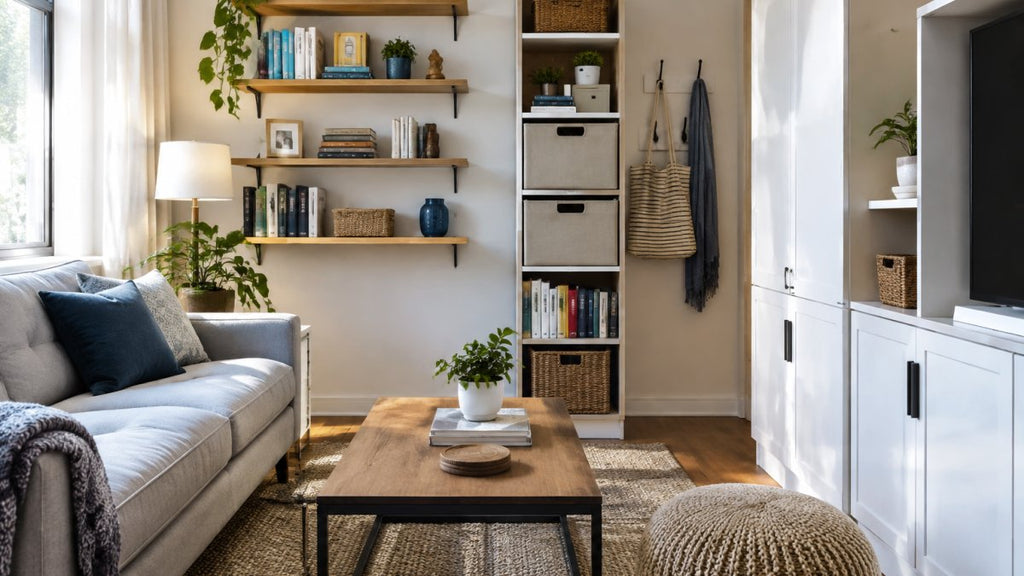
Small living room wall storage earns its keep when it runs floor to ceiling. A tall bookcase or a built-in unit uses the dead zone above eye level, which is where most rooms waste the most room. The tradeoff is visual weight: a wall of shelving can make a compact room feel boxed in.
Open shelving keeps things airy. Closed cabinetry hides the mess. Consider a mix, with closed doors on the lower half and open shelves up top, so the eye reads lightness at head height. If you are weighing why this matters so much in compact homes, our guide on why space-saving furniture is essential for city living covers the reasoning.
3. Floating Shelves for Small Living Rooms: Placement That Works
Floating shelves for small living rooms work best in odd, narrow spots that furniture cannot fill: above a sofa, beside a doorway, or in the gap between a window and a corner. Mount them at eye level or slightly above so the shelf line lifts the ceiling visually.
Keep the run short. Two or three shelves in a tight column beat one long span that dominates the wall. Space them roughly a forearm apart so tall items fit without wasted air.
4. Renter-Friendly Vertical Storage You Can Install Without Damaging Walls
Renters have real options that leave no holes. Over-door organizers, tension-pole shelving, and freestanding ladder shelves all deliver vertical storage without a drill. Command-style adhesive hooks hold light items well, though they are not for anything heavy.
Freestanding units are the safest bet. A narrow ladder shelf leans against the wall, needs no hardware, and moves with you. Watch out: leaning units must sit on level floor and stay clear of door swings, or they tip when bumped.
5. Small Living Room Storage Ideas on a Budget
Small living room storage ideas on a budget start with what you already own. Stackable crates, baskets on a basic bracket shelf, and a slim shoe organizer hung inside a closet door cost little and reclaim floor space fast.
Prioritize one wall and do it well rather than scattering cheap shelves everywhere. A single tidy column of stackable crates reads intentional; five mismatched units read like clutter.
6. DIY Vertical Storage Ideas You Can Build in a Weekend
DIY vertical storage ideas range from a simple bracket shelf to a full alcove unit. A basic painted board on two L-brackets takes an afternoon. Built-in shelves in a narrow alcove take a weekend and look custom.
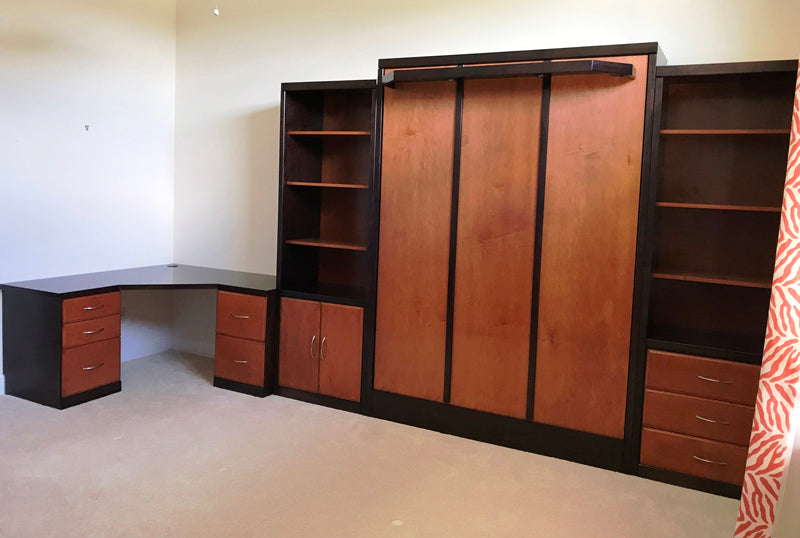
If you like the DIY route but want a flawless fit, custom home office and cabinetry is an option to consider.
7. Anchoring, Load Limits, and Safety Checks Before You Load a Shelf
Safety is the step most guides skip. Anchor tall bookcases and shelf units to wall studs where possible, especially in homes with kids or pets, and check the manufacturer's load rating before loading them.
Watch out: overloading the top shelf raises the center of gravity and makes tipping far more likely. Put heavy items low and light decor high.
Before you load a shelf, run through these safety checks.
| Check | What to do | Why |
|---|---|---|
| Anchoring | Anchor tall bookcases and shelf units to wall studs | Especially in homes with kids or pets |
| Load rating | Check the manufacturer's load rating before loading | Prevents overloading |
| Weight placement | Put heavy items low and light decor high | Overloading the top shelf raises the center of gravity |
| Leaning units | Sit on level floor, clear of door swings | They tip when bumped |
8. Keep Vertical Storage From Looking Cluttered
A loaded shelf can undo the calm you wanted. The trick is restraint: leave breathing room between objects, group items in odd numbers, and mix books with a plant or a framed photo. Baskets hide the small stuff that reads as mess.
If the room still feels tight after you load the shelves, professional decluttering services for small condos can help you edit down. For multi-purpose rooms, ideas on how to hide a bed in a living room keep the space looking uncluttered when guests are not staying.
9. When a Wall Bed Cabinet Beats Another Shelf
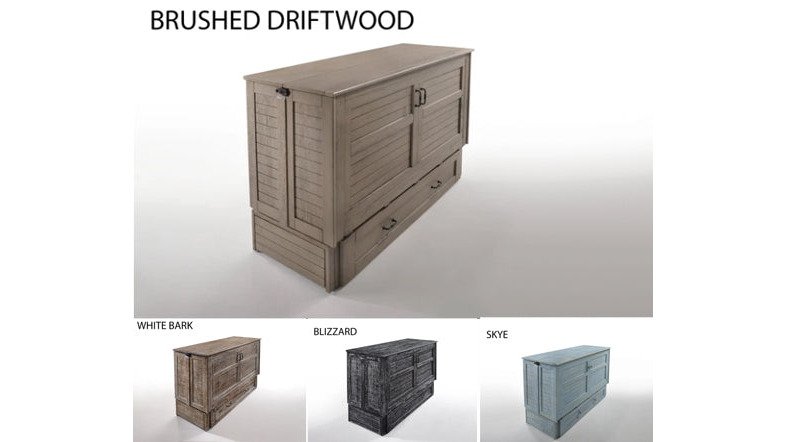
Sometimes the best vertical storage is furniture that does two jobs. A wall bed cabinet folds a guest bed into a handsome cabinet that takes about 10 square feet of floor space when closed, freeing the room for daily living. That beats stacking one more shelf on an already full wall.
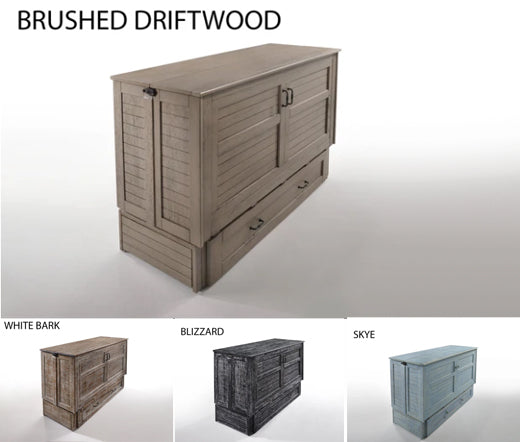
Our Murphy bed cabinets, including the Clover and Daisy models, come in solid hardwood with a large rolling storage drawer for bedding, a built-in dual power and USB module, and a limited 10-year warranty. We also build custom-sized mattresses so the fit is exact, and we provide professional delivery and installation.
Your walls are the largest unused surface in a small living room, and putting them to work is the fastest way to win back floor space. When you are ready for storage that doubles as a comfortable guest bed, Comfort Zone Shop builds solid wood Murphy bed cabinets with rolling storage drawers, custom-sized mattresses, and professional installation to fit your room exactly. Get started with Comfort Zone Shop and turn your wall into usable space today.
Frequently Asked Questions
How can I add vertical storage to a small living room without losing floor space?
Go up, not out. A tall bookcase, wall-mounted shelves, or a Murphy cabinet bed all use wall space while keeping the floor clear. Start by measuring the wall from baseboard to ceiling and the depth you can spare, usually 30 to 40 centimeters for shelves. Then pick pieces that sit flush. A cabinet bed like the Clover, for example, takes up about 10 square feet of floor space when closed, so the room stays usable during the day.
Are floating shelves a good idea for a small living room?
Yes, if you mount them where they will not crowd the seating area. Floating shelves for small living rooms work best above a sofa, beside a doorway, or in a narrow alcove where a full bookcase will not fit. Keep them shallow, around 20 to 25 centimeters deep, so they do not protrude into walkways. Anchor them into studs and respect the load limit, since a shelf packed with hardcover books can pull out of drywall.
What is the cheapest way to add vertical storage to a small living room?
Stackable crates, over-door organizers, and a single tall shelf unit give you the most storage per dollar. Small living room storage ideas on a budget usually start with what you already own: stack boxes in a corner, hang a shoe organizer on the back of the entry door for small items, and add a slim shelf above the TV. These options cost little and need only basic tools, so you can test a layout before spending more.
How do I keep vertical storage from making a small living room look cluttered?
Limit what sits in the open. Use closed boxes or baskets on lower shelves, keep the top shelf sparse, and group items in odd numbers with varying heights. A curated gallery of a few framed prints above a shelf reads calmer than a wall of small objects. Choose one finish, such as white or natural wood, across your shelves and cabinets so the eye sees structure rather than a mix of pieces.
Should I anchor wall shelves and tall bookcases in an apartment?
Yes. Anchor tall bookcases and any shelf above chest height to wall studs, and use the anti-tip hardware that comes with the furniture. Drywall anchors alone are not enough for heavy loads. For rentals, stud-mounted brackets leave small holes you can patch, while tension poles and over-door racks need no drilling at all. Check the manufacturer's load rating and keep the heaviest items on the lowest shelf.