
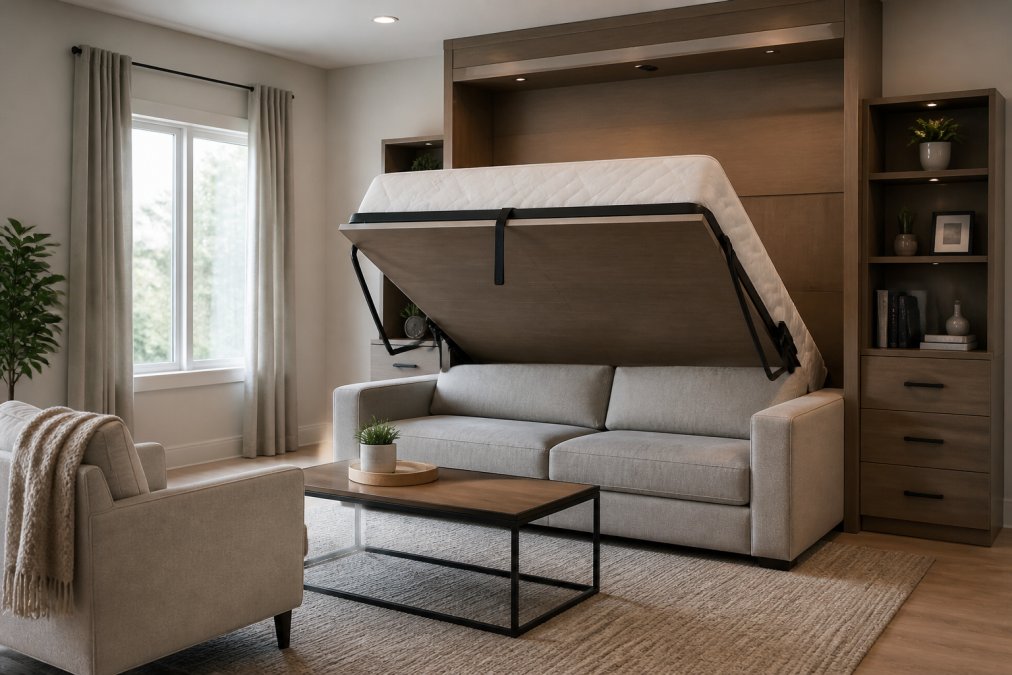
How to Hide a Bed in Your Living Room: 7 Ideas
Table of Contents
- Why Hiding a Bed in Your Living Room Works
- Murphy Beds and Wall Beds: The Most Effective Way to Hide a Bed in a Living Room
- Best Room Dividers for Small Apartments
- How to Style a Daybed in a Living Room
- DIY Bed Concealment Ideas for Any Budget
- Hidden Storage Solutions That Double as Bedroom Furniture
- How to Hide a Bed in a Living Room: Choosing the Right Method for Your Space
- Conclusion
Last Updated: August 11, 2026
Why Hiding a Bed in Your Living Room Works
Knowing how to hide a bed in your living room is essential for small-space living. A studio apartment or open-plan condo rarely has a dedicated bedroom, meaning your sleeping and living areas share the same square footage. The challenge is making that work without the space feeling cramped.
The good news: this is a solved problem. Multifunctional furniture design has advanced significantly, offering solutions far beyond a pull-out sofa, from Murphy beds with integrated cabinetry to bookcase dividers and raised sleeping platforms. This Comfortzone1 guide walks through seven of the most effective approaches, including angles most interior design guides skip, like acoustic privacy and ventilation.
The core principle behind every method is zoning. A living room that doubles as a bedroom needs visual and functional separation between its two roles. When the sleeping zone is properly concealed or defined, the space reads as a living room first.
| Method | Best For | Concealment Level | Relative Cost |
|---|---|---|---|
| Murphy / wall bed | Maximum concealment | Full | Higher |
| Room divider + daybed | Open-plan zoning | Partial | Moderate |
| Sofa bed | Occasional guests | Full (daytime) | Lower-Moderate |
| Loft / raised platform | Vertical space use | Moderate | Moderate-Higher |
| Curtain track screen | Soft separation | Partial | Lower |
| Bookcase divider | Style + function | Partial | Moderate |
| Hidden storage bed | Decluttering | Low | Moderate |
Murphy Beds and Wall Beds: The Most Effective Way to Hide a Bed in a Living Room
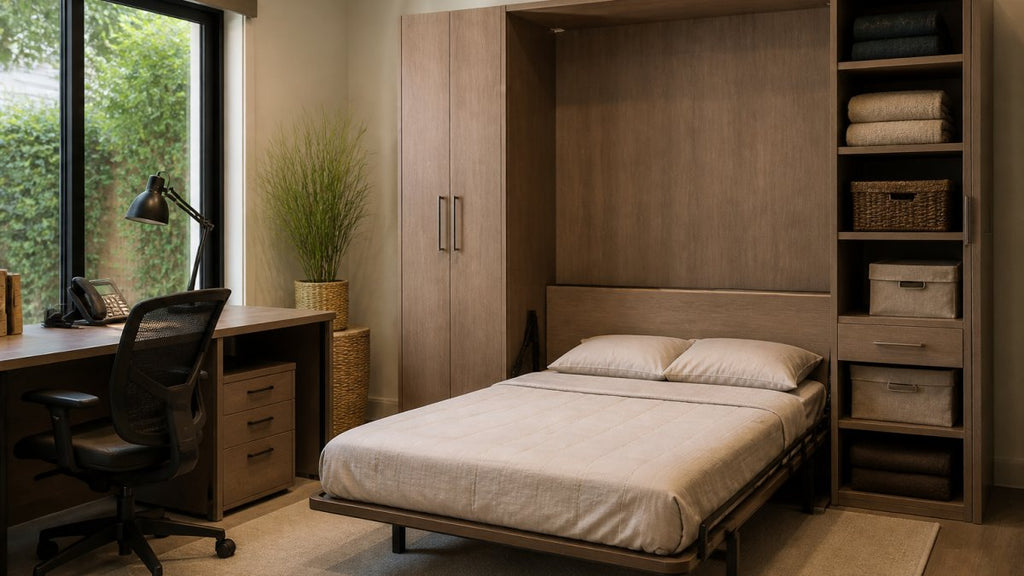
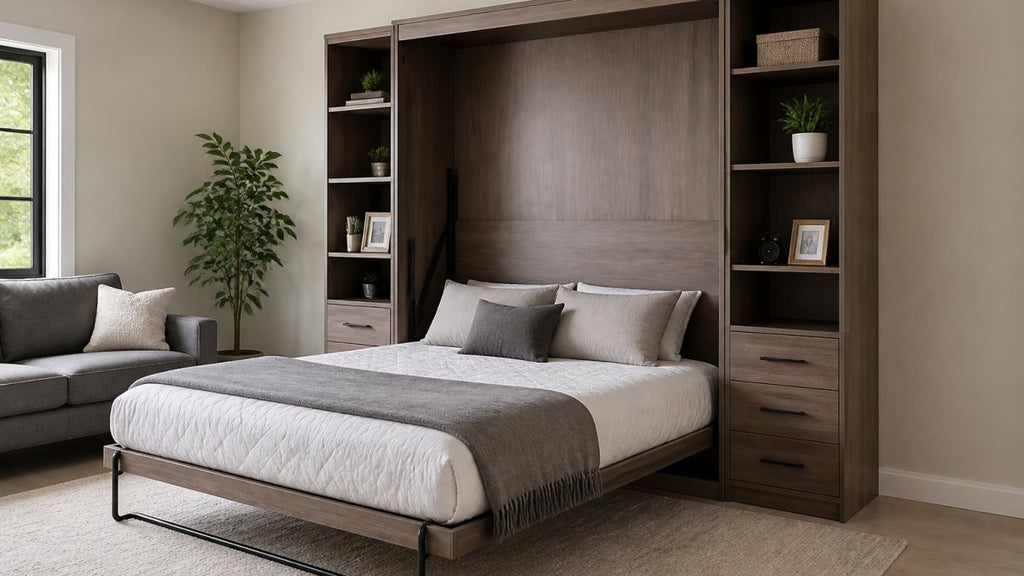
Murphy beds are the gold standard for complete bed concealment. When folded up, a quality wall bed disappears into a cabinet that looks like built-in shelving or a home office unit, allowing the room to function as a full living space.
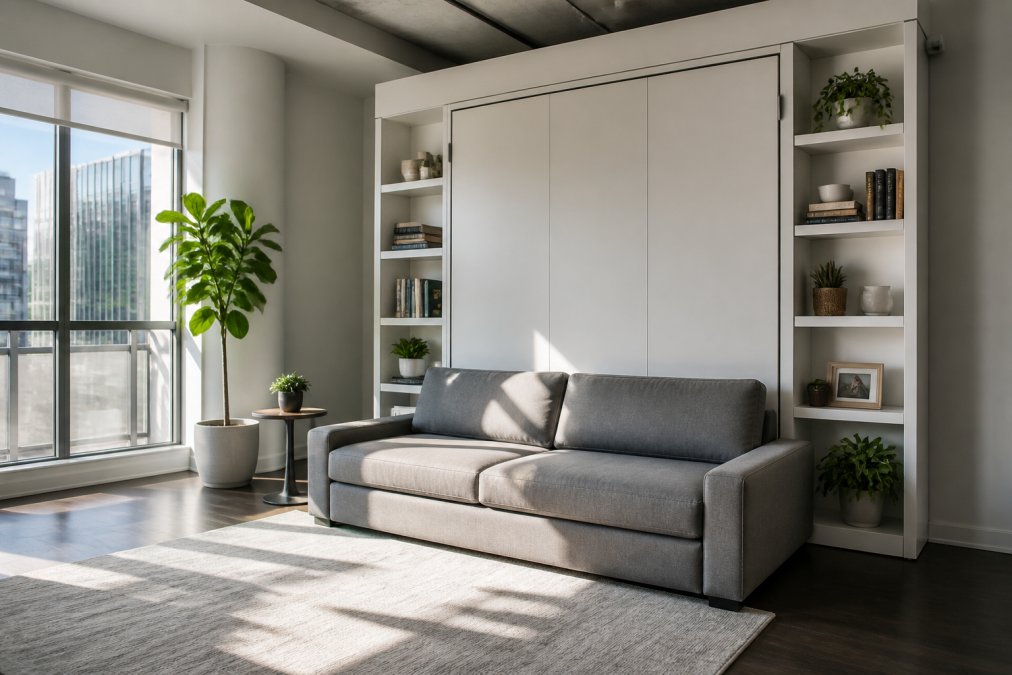
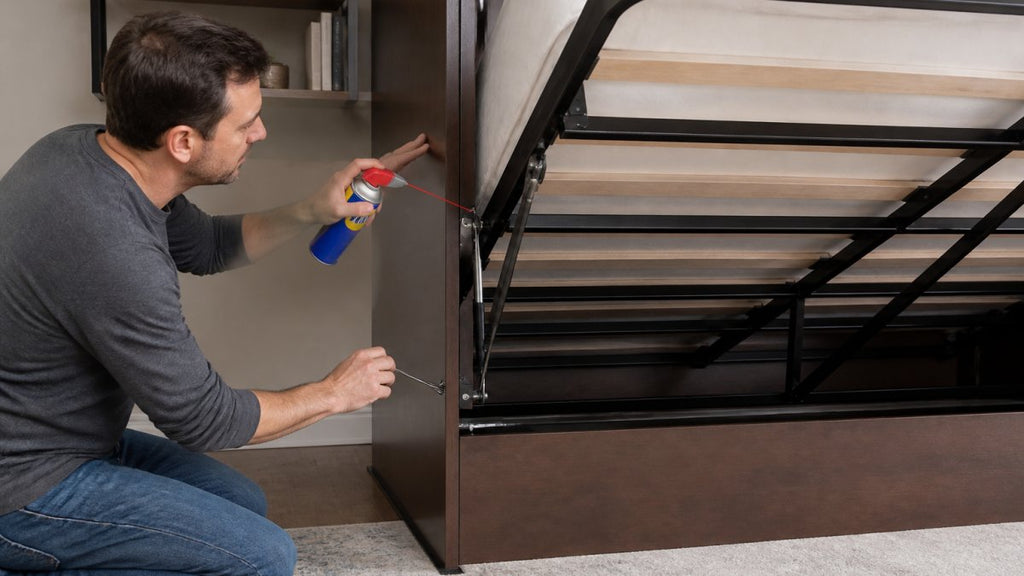
Not all Murphy beds are equal. Mechanism quality, cabinet material, and mattress support vary significantly. Cheap wall beds use thin particleboard and spring mechanisms that wear out quickly. A solid wood frame with a piston-lift mechanism is a different product entirely.
Horizontal vs. Vertical Murphy Bed Configurations
Vertical Murphy beds fold up against the wall with the bed's length running floor to ceiling. This standard configuration works well in rooms with at least 8-foot ceilings and requires the full mattress length as floor space when open.
Horizontal Murphy beds fold sideways, with the bed's width running floor to ceiling. These work better for rooms with lower ceilings or narrower wall sections. A queen horizontal wall bed needs about 60 inches of wall width but only requires standard ceiling height, making it ideal for studio apartments.
Custom Cabinetry and Integrated Storage
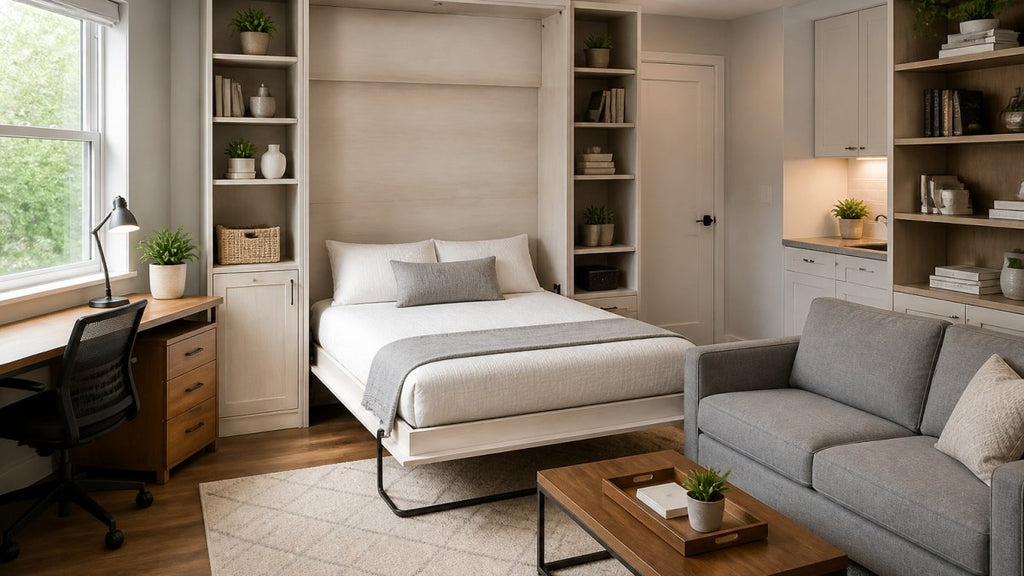
The real value of a Murphy bed system comes from surrounding cabinetry. A well-designed unit integrates the bed with shelving, a fold-down desk, or a pivoting sofa, turning one wall into a complete multifunctional space.
Custom cabinetry also solves the mattress fit problem. Custom-sized mattress manufacturing, like the service offered at Comfortzone1, ensures precise fit, which matters for both comfort and proper folding mechanism operation.
Pro Tip
When planning a Murphy bed installation, measure the wall width, ceiling height, and floor-to-ceiling clearance before ordering. A 1-inch discrepancy can affect which models will work in your space.
Best Room Dividers for Small Apartments
The best room dividers for small apartments define separate zones without requiring construction and can be repositioned. The best ones add storage or acoustic benefit simultaneously.
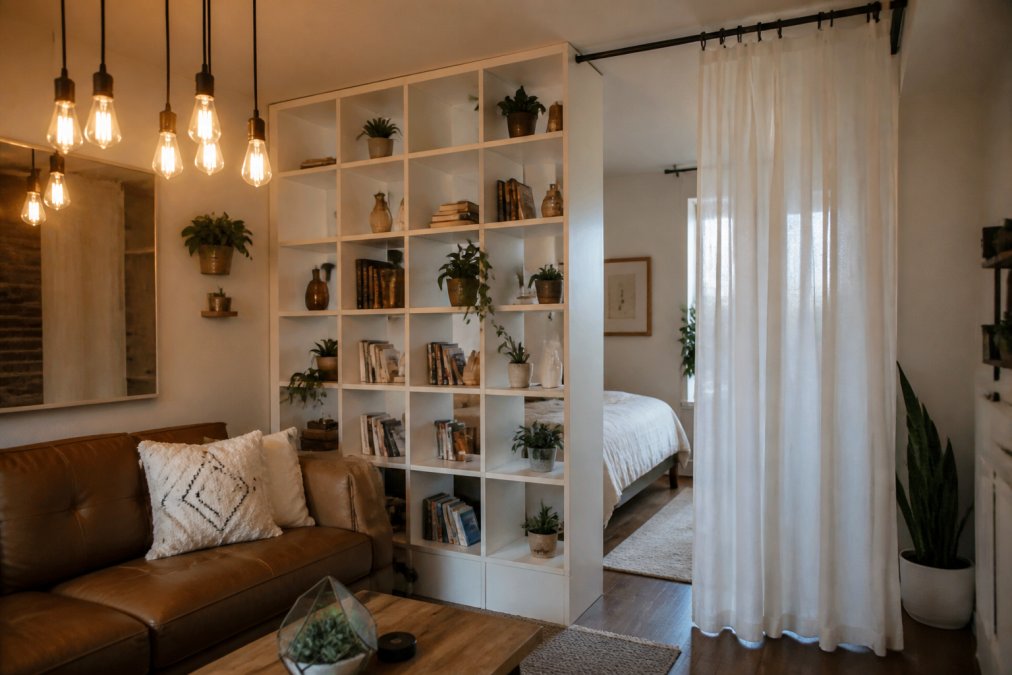
A room divider is a lightweight partition wall that you can take with you when you move.
Bookcase Dividers and Double-Sided Shelving
A double-sided bookcase divider is one of the smartest investments in small space living. On the living room side, it holds books, plants, and decorative objects. On the sleeping nook side, it stores bedside essentials and clothing. One piece of furniture creates genuine spatial separation while serving dual purposes.
According to Architectural Digest's small space design guides, open shelving units used as room dividers are among the most popular solutions in studio apartment design because they divide space without blocking light.
For stability, a bookcase divider over 6 feet tall should be anchored to the ceiling or wall to prevent tipping.
Curtain Tracks and Fabric Screens
A ceiling-mounted curtain track with floor-to-ceiling panels is the most affordable way to conceal a sleeping area. When open, the room flows as one space. When drawn, the sleeping nook becomes private.
A properly installed curtain track with carriers and gliders looks architectural and intentional. Linen, velvet, and blackout fabric all work well depending on your light control and visual weight preferences.
Acoustic Privacy: The Divider Feature Most People Overlook
Most guides focus entirely on visual privacy. Acoustic privacy is harder to achieve and matters more for sleep quality.
A bookcase filled with books provides meaningful sound absorption. Fabric curtains absorb some sound but don't block it. For genuine acoustic separation, layer solutions: a bookcase divider on one side, heavy curtain panels on the other, with a fabric rug on the sleeping side to reduce floor-reflected noise.
As the National Sleep Foundation's guidance on sleep environments notes, noise is one of the primary environmental factors that disrupts sleep quality. Addressing acoustics in a shared living-sleeping space is essential for consistent rest.
Watch Out
Skipping acoustic treatment in a sleeping nook is the most common mistake in studio apartment design. Visual concealment alone does not create a restful sleep environment. Add at least one sound-absorbing layer, whether that's a bookcase, heavy curtains, or a fabric panel.
How to Style a Daybed in a Living Room
A daybed styled correctly reads as a sofa during the day and functions as a comfortable bed at night. Use full-size throw pillows along the back wall, add two or three standard decorative pillows in front, and keep a fitted cover or duvet in a color matching your living room palette. The goal is for the daybed to look like an intentional design choice.
Sofa Beds vs. Daybeds: Choosing the Right Convertible Furniture
Sofa beds hide the sleeping function inside a sofa frame. The mattress is thin, and the mechanism adds weight that makes moving difficult.
Daybeds are always beds, styled to look like seating. The mattress is full-depth, providing significantly better sleep quality. The styling effort is higher, but the sleeping experience is closer to a real bed.
For anyone using the piece as a primary sleeping surface, a daybed with a quality mattress is the better choice. Sofa beds work well for guest use a few times per month.
Key Takeaway
The single most important factor in choosing convertible furniture is how often the sleeping function will be used. Frequent use demands a full-depth mattress. Occasional guest use can tolerate a sofa bed mechanism.
DIY Bed Concealment Ideas for Any Budget
DIY bed concealment ranges from weekend projects under $100 to custom builds rivaling professional installations. Choose a method matching both your budget and lease situation, since some approaches require wall anchoring that may not be permitted in rental units.
Raised Platforms and Loft Beds
A raised sleeping platform elevates the mattress 18 to 24 inches off the floor, with the space underneath becoming storage, a desk area, or reading nook. This works particularly well in apartments with high ceilings.
Loft beds elevate the sleeping surface near-ceiling height, leaving the full floor area below free for furniture. The tradeoff is that getting in and out requires a ladder.
For a DIY platform, solid wood construction is worth the extra cost. Hollow-core or particleboard platforms flex under weight and develop squeaks quickly.
Lighting Design for Your Hidden Sleeping Zone
Lighting separates a well-designed sleeping nook from one that feels like an afterthought. The living room lighting is wrong for a sleeping environment. The sleeping zone needs its own lighting circuit.
Practical options include recessed puck lights installed inside a platform base or under shelving (controlled by a dimmer), battery-operated wall sconces, clip-on reading lights, or LED strip lighting tucked under a platform edge. The goal is to dim the sleeping zone independently of the living room.
Ventilation and Airflow in Enclosed Sleeping Nooks
An enclosed sleeping nook can become uncomfortably warm, especially in climates requiring significant air conditioning. Curtain panels and bookcase dividers restrict airflow from the room's central HVAC system.
Solutions include positioning the nook near an existing HVAC vent, using a small fan for air circulation, choosing breathable curtain fabrics like linen, and leaving a gap at the top of curtain panels to allow air exchange.
As noted in the EPA's guidance on indoor air quality and ventilation, adequate airflow in sleeping areas is directly tied to air quality and comfort. In a sealed nook, CO2 levels can rise noticeably overnight without air exchange.
Hidden Storage Solutions That Double as Bedroom Furniture
Hidden storage is the underrated element in hiding a bed in a living room. The problem with most studio apartments is not just where to sleep, but where to put bedroom items.
A platform bed with integrated storage drawers keeps clothing, linens, and personal items out of sight. A storage ottoman at the foot holds extra bedding. A headboard with built-in shelving and a charging station replaces a nightstand.
Every piece of furniture in a dual-purpose room should earn its floor space by serving at least two functions. Custom cabinetry takes this furthest, combining a Murphy bed, wardrobe, and display shelving into a complete bedroom-in-a-wall that folds away entirely. Comfortzone1 specializes in this approach, with custom sizing available for non-standard wall dimensions.
How to Hide a Bed in a Living Room: Choosing the Right Method for Your Space
Choosing how to hide a bed comes down to three variables: how often the sleeping function is used, how much wall or floor space you can dedicate to it, and whether you own or rent.
For primary sleeping use in a studio apartment: A Murphy bed or wall bed provides full concealment, a full-depth mattress, and returns the entire floor area to living room use during the day.
For occasional guest use in a one-bedroom: A daybed or sofa bed in the living room is sufficient and reads as intentional design.
For renters who cannot anchor to walls: A freestanding bookcase divider paired with a ceiling-mounted curtain track creates a sleeping nook without permanent modification. Add a platform bed with storage drawers for a functional bedroom zone with no apartment damage.
For those wanting maximum space efficiency: A loft bed or raised platform with integrated storage underneath maximizes vertical space and creates distinct zones.
A well-executed Murphy bed system significantly improves daily life in a small space. The ability to close a wall and have your living room back completely every morning changes how the space feels to live in.
Comfortzone1 offers Murphy beds, wall beds, and storage solutions with fast local delivery and professional installation. Custom mattress manufacturing ensures precise fit.
For guidance on planning a multifunctional room layout, the American Society of Interior Designers' resources on small space planning offer a useful framework for thinking through traffic flow and furniture placement before committing to a configuration.
Frequently Asked Questions
What is the best way to hide a bed in a studio apartment?
A Murphy bed or wall bed is the most space-efficient option for a studio apartment. When folded up, it disappears into a cabinet that looks like a built-in shelving unit or wardrobe. Pair it with integrated storage to eliminate visual clutter. If a wall bed isn't in the budget, a well-styled daybed with bolster pillows functions as a sofa during the day and a sleeping surface at night, keeping the floor plan open.
Can you use room dividers to hide a bed in a living room?
Yes. Bookcase dividers, curtain tracks, folding screens, and sliding doors all create a defined sleeping zone without permanent construction. Double-sided bookcases work especially well because they provide storage on both sides and visually anchor the bedroom nook. For better privacy, combine a structural divider with a curtain track so you can fully enclose the sleeping area when needed.
How do you make a bed look like a sofa during the day?
Style a daybed with fitted covers in a solid or neutral fabric, then layer on structured bolster pillows along the back and standard throw pillows across the front. This mimics the look of a sofa. Keeping bedding tucked tightly and using a consistent color palette with the rest of the living room helps the piece read as seating rather than a bed. A sofa bed with a tight-back cushion design achieves a similar effect.
Are Murphy beds the best option for hiding a bed in a living room?
For most small apartments and studio layouts, Murphy beds offer the cleanest concealment because the sleeping surface completely disappears into the wall unit. Quality wall beds with solid wood cabinetry hold up well over years of daily use. That said, the right choice depends on your floor plan, budget, and how often the bed is used. Daybeds and sofa beds cost less upfront and work well for occasional guest sleeping, while Murphy beds are better for nightly use.
Hiding a bed in a living room works best when the solution is matched to how the space is actually used, not just how it looks in a showroom. The methods above cover the full range from budget DIY to custom installation. For anyone ready to move from planning to purchasing, Comfortzone1 carries Murphy beds, wall beds, and storage furniture with custom sizing, fast delivery, and professional installation support. Get in touch with the Comfortzone1 team to find the right fit for your floor plan.
This article was written using GrandRanker