
Can You Put a Regular Mattress on a Murphy Bed?
Table of Contents
- Can You Put a Regular Mattress on a Murphy Bed?
- Maximum Mattress Thickness for Wall Beds
- Weight Limits for Murphy Bed Mechanisms
- Memory Foam vs. Innerspring: Which Works Best
- Custom Mattress Sizing for Murphy Beds
- Safety Considerations and Warranty Implications
- Troubleshooting Mattress Gaps and Folding Issues
- Frequently Asked Questions
Last Updated: September 28, 2026
Can You Put a Regular Mattress on a Murphy Bed?
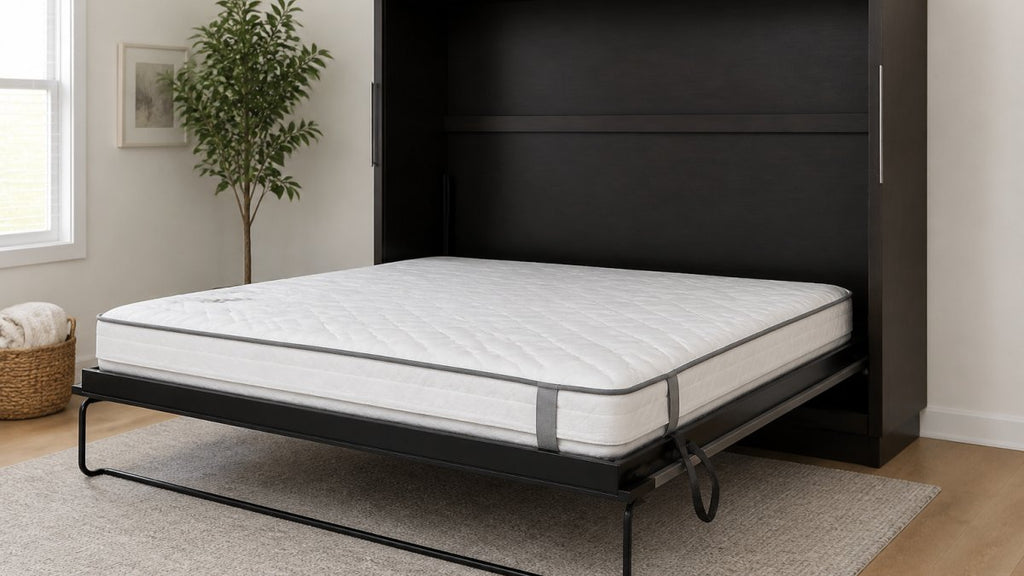
Yes, you can put a regular mattress on a murphy bed, but it requires careful consideration of weight, thickness, and mattress type. Not every standard mattress works safely with every wall bed mechanism. The wrong combination can damage the bed's piston system, create safety hazards, or void your warranty.
At Comfort Zone Shop, we help homeowners in the Tampa Bay area navigate this question every day. Many people assume any mattress fits any bed. The reality is more nuanced. Your murphy bed's folding mechanism has specific limits. Exceed those limits, and you're risking equipment failure.

This guide covers what actually works, what doesn't, and how to choose the right mattress for your wall bed.
Maximum Mattress Thickness for Wall Beds
Thickness is the first constraint you'll hit. Most murphy bed cabinets are engineered for mattresses between 8 and 10 inches thick. Thicker mattresses create clearance problems when the bed folds up.
Here's why thickness matters:
- Cabinet depth limits: Your cabinet has a fixed interior depth. A 14-inch memory foam mattress might physically fit when the bed is down, but won't fold flat into the cabinet.
- Piston compression: The gas pistons that hold your bed open and closed need clearance to function. Oversized mattresses interfere with this mechanism.
- Frame contact: When folded, your mattress presses against the cabinet frame. Too much thickness causes binding, warping, or permanent creases.
Check your bed's specifications first. Most manufacturers list the maximum mattress thickness in the manual. If you've lost yours, contact the cabinet maker or measure the interior space yourself.
Memory foam and hybrid mattresses tend to be thicker than traditional innerspring beds. A 10-inch innerspring is a safer standard for wall beds.
Watch OutMattresses thicker than 10 inches can prevent the bed from closing completely. This creates a safety hazard and may damage the piston mechanism over time.
Weight Limits for Murphy Bed Mechanisms
The piston system supporting your murphy bed has a weight capacity. Exceed it, and the bed won't stay open reliably. It could collapse unexpectedly.
Weight breakdown for a typical setup:
- Mattress: 50 to 150 pounds (depending on type and size)
- Bedding: 10 to 20 pounds
- Occupants: 200 to 400+ pounds
If you're heavier or plan to have multiple guests, a lighter mattress matters. Innerspring beds are your friend here. They weigh less than foam while still providing solid support.
Pro TipAsk your bed manufacturer for the exact weight rating. Don't estimate. An undersized mechanism will fail, and repairs are expensive.
Memory Foam vs. Innerspring: Which Works Best
Both mattress types can work on a murphy bed, but vertical storage creates durability challenges that horizontal beds don't face. The choice depends on your bed's specifications and how you want the mattress to perform over time.
Memory foam mattresses:
- Pros: Excellent comfort, pressure relief, motion isolation, minimal motion transfer
- Cons: Heavier (120-160 lbs for queen), thicker (10-14 inches), more expensive
- Vertical storage impact: Foam density breaks down faster under repeated folding. High-density foam (5+ lbs per cubic foot) resists compression better than standard density (3-4 lbs). Budget models compress permanently after 2-3 years of daily folding.
- Best for: Comfort-focused users with beds rated for heavier loads who don't fold the bed daily, or those using high-density foam specifically engineered for murphy beds
Innerspring mattresses:
- Pros: Lighter weight (80-100 lbs for queen), thinner profile (8-10 inches), better airflow, lower cost, coil structure resists permanent creasing
- Cons: Less contouring, more motion transfer, shorter overall lifespan than premium foam
- Vertical storage impact: Steel coils maintain structural integrity through repeated folding. Innerspring mattresses show minimal sagging even after 5+ years of daily use. The trade-off is less body-contouring comfort.
- Best for: Weight-conscious setups, tight cabinet spaces, and daily-use murphy beds where durability matters more than luxury feel
Hybrid mattresses:
- Pros: Coil base provides fold durability; foam layer offers moderate comfort; mid-range weight (100-130 lbs for queen)
- Cons: Thicker than pure innerspring (9-12 inches), more expensive than innerspring alone
- Vertical storage impact: Coil support prevents foam from sagging under repeated folding, making hybrids a practical middle ground
- Best for: Users seeking comfort and durability without the weight penalty of all-foam construction
The vertical storage factor: When a mattress folds repeatedly, gravity and compression stress the core differently than a stationary bed. Memory foam layers can develop permanent body impressions or "memory" of the folded position. Innerspring and hybrid designs resist this because coils return to their original shape after each fold. If your murphy bed closes daily, innerspring or hybrid construction will outlast all-foam by several years.
For murphy beds, innerspring or hybrid mattresses are often the better practical choice. They're lighter, thinner, and structurally resilient to vertical storage.
Custom Mattress Sizing for Murphy Beds
Standard mattress sizes don't always match murphy bed dimensions. A queen murphy bed might need a slightly shorter or narrower mattress than a traditional queen.
Benefits of custom sizing:
Custom Home Office and Cabinetry →
- Perfect fit: No gaps between mattress and frame
- Optimal thickness: Built to your cabinet's depth limits
- Weight optimization: Choose foam density and core materials that match your bed's capacity
- Warranty protection: Custom mattresses are engineered for your specific bed, not generic standards
Best ForHomeowners with non-standard bed dimensions, tight spaces, or specific comfort requirements who want guaranteed compatibility.
Safety Considerations and Warranty Implications
Using the wrong mattress can void your murphy bed warranty and create genuine safety hazards. But understanding how your bed's mechanism works, and what adjustments are possible, helps you make informed choices instead of guessing.
How warranty coverage actually fails:
Most murphy bed manufacturers specify mattress weight and thickness limits in the warranty terms. Exceeding those limits voids coverage for:
- Piston or gas spring failure
- Cabinet frame damage or warping
- Hinge or locking mechanism failure
- Any structural damage related to the bed's opening and closing
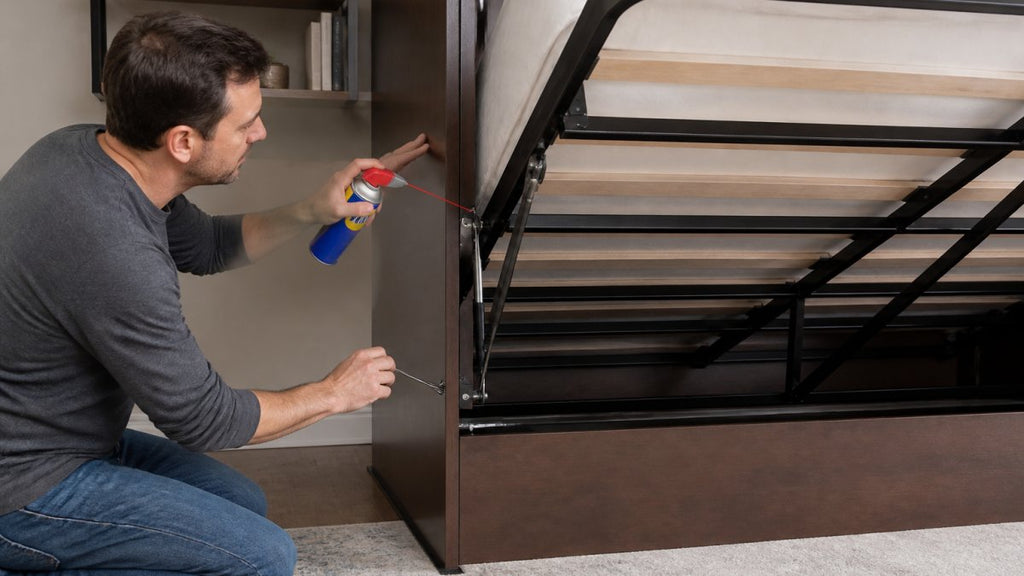
Mechanism tension adjustment, the overlooked solution:
- Locating the adjustment valve on the piston arm (usually a small screw or hex fitting)
- Turning it clockwise to increase tension (counterclockwise decreases tension)
- Testing the bed's opening and closing smoothly
- Making small adjustments, typically a quarter-turn at a time
Real safety hazards:
- Piston failure: Oversized or overweight mattresses stress the gas pistons. They can fail suddenly, causing the bed to drop unexpectedly. This is a crushing hazard if someone is underneath.
- Structural damage: Improper mattress fit can warp the cabinet frame, bend hinges, or crack wood over time. Repairs are expensive and often not covered if you exceeded weight limits.
- Folding hazards: A mattress that doesn't fit properly in the cabinet can pinch fingers or create crushing hazards when closing.
- Binding and jamming: If the mattress is too thick, it can jam the mechanism mid-fold, leaving the bed stuck partially open or closed.
Before buying any mattress for your murphy bed, confirm:
- Your bed's maximum thickness rating (usually 8-10 inches)
- Your bed's weight capacity (typically 600-900 lbs total load)
- Your bed's interior dimensions (width, depth, length)
- Whether your warranty covers aftermarket mattresses or requires manufacturer-approved models
- Whether your mechanism has adjustable tension and what the adjustment range is
Custom-sized mattresses and warranty:
Troubleshooting Mattress Gaps and Folding Issues
Sometimes a mattress fits the specifications but still causes problems. Common issues include gaps between the mattress and frame, or difficulty folding the bed smoothly.
Gaps at the edges:
Solutions:
- Use a mattress topper to fill the gap
- Add a bed frame or platform inside the cabinet
- Order a custom-sized mattress with exact dimensions
- Use a mattress pad designed for murphy beds
Difficulty folding:
- Measure the mattress thickness again
- Verify you're not exceeding weight limits
- Check that the mattress is centered in the cabinet
- Ensure the piston arms have full clearance
Watch OutNever force a murphy bed closed. Forcing it can damage the pistons, frame, or hinges. If it resists, stop and diagnose the problem.
Mattress creasing:
Minimize creasing by:
- Using a mattress topper for cushioning
- Folding slowly and evenly
- Storing the bed in a climate-controlled space
- Rotating the mattress quarterly if possible
Frequently Asked Questions
How thick of a mattress can you put on a Murphy bed?
Most Murphy beds accommodate mattresses up to 10-12 inches thick. Exceeding this limit prevents the bed from folding properly and can damage the piston mechanism. Check your specific bed's manual for exact thickness specifications. Thinner mattresses (6-8 inches) work well on wall beds and reduce strain on the folding mechanism. If you need extra cushioning, consider a mattress topper instead of a thicker mattress.
Do I need a special mattress for a Murphy bed cabinet?
A standard queen or twin mattress can work if it meets thickness and weight requirements, but custom mattress sizing for Murphy beds ensures perfect fit and optimal performance. Comfort Zone Shop manufactures custom-sized mattresses that fit your specific cabinet dimensions and weight capacity. Custom options prevent gaps, reduce folding strain, and extend your bed's lifespan. Many users find the fit and comfort difference worth the investment.
How do I know if my mattress is too heavy for my Murphy bed mechanism?
Check your bed's documentation for exact weight limits. If your mechanism struggles to fold smoothly or feels strained, the mattress may be too heavy. Test the mechanism with the bed empty first to establish baseline performance.
What kind of mattress is best for a Murphy bed?
Memory foam and hybrid mattresses work well on Murphy beds. Innerspring mattresses can work. Choose mattresses with good support to prevent sagging when the bed folds repeatedly. A tri-fold premium gel memory foam mattress, like those available through Comfort Zone Shop, combines durability with the flexibility needed for wall bed use.
Can a memory foam mattress be used on a Murphy bed?
Yes, memory foam mattresses are actually ideal for Murphy beds. They provide consistent support. Memory foam also reduces motion transfer, making them comfortable for overnight guests. Ensure the mattress meets your bed's thickness and weight limits. A quality memory foam mattress with a 10-year warranty, like options from Comfort Zone Shop, offers durability and comfort for repeated folding and unfolding.