
Maximize Space in Tiny Homes With Wall Beds
Table of Contents
- Why Wall Beds Work for Tiny Homes
- Assess Your Space and Plan Your Wall Bed Layout
- How to Convert Office to Guest Room With a Wall Bed
- Choosing a Custom Mattress for Murphy Bed Comfort
- Space-Saving Storage Solutions for Tiny Homes
- Installation Considerations: DIY vs. Professional Setup
- Maintaining Your Wall Bed for Long-Term Durability
- Frequently Asked Questions
Last Updated: September 17, 2026
Why Wall Beds Work for Tiny Homes
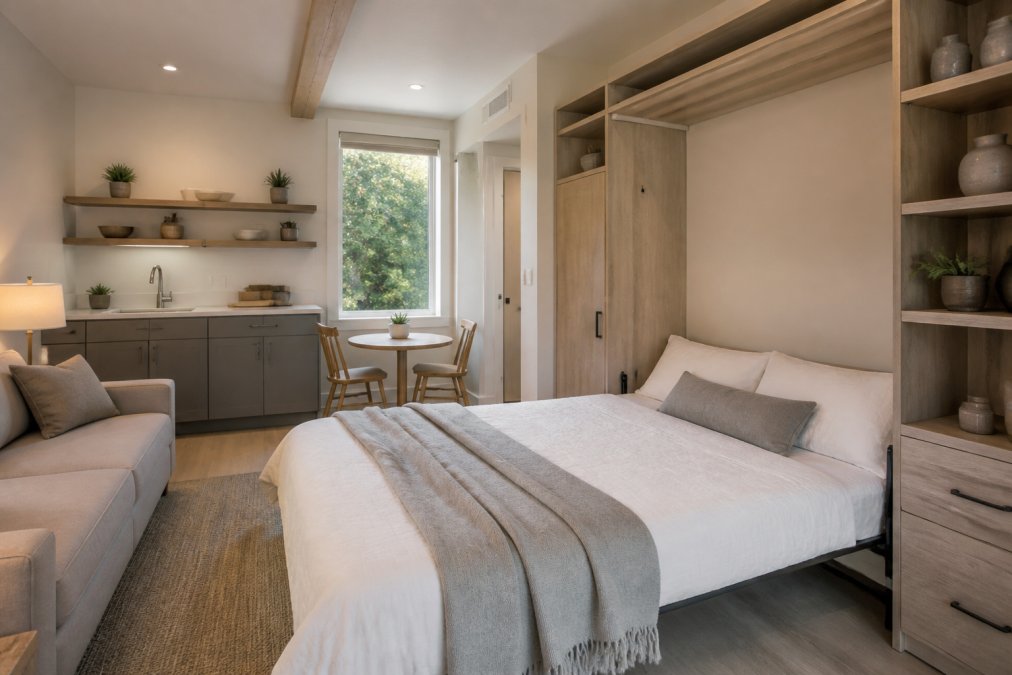
Wall beds tiny homes are one of the most practical solutions for maximizing space in a tiny home. They transform unused wall space into functional sleeping areas, freeing up floor space for living, working, or entertaining. Unlike traditional beds that consume square footage year-round, wall beds tiny homes allow you to reclaim that area when the bed is folded up.
The core advantage is simple: vertical thinking instead of horizontal sprawl. In a 400-square-foot apartment, a wall bed can give you back 40-50 square feet of usable living area. That's not just extra space, it's the difference between a cramped studio and a functional one-bedroom equivalent.
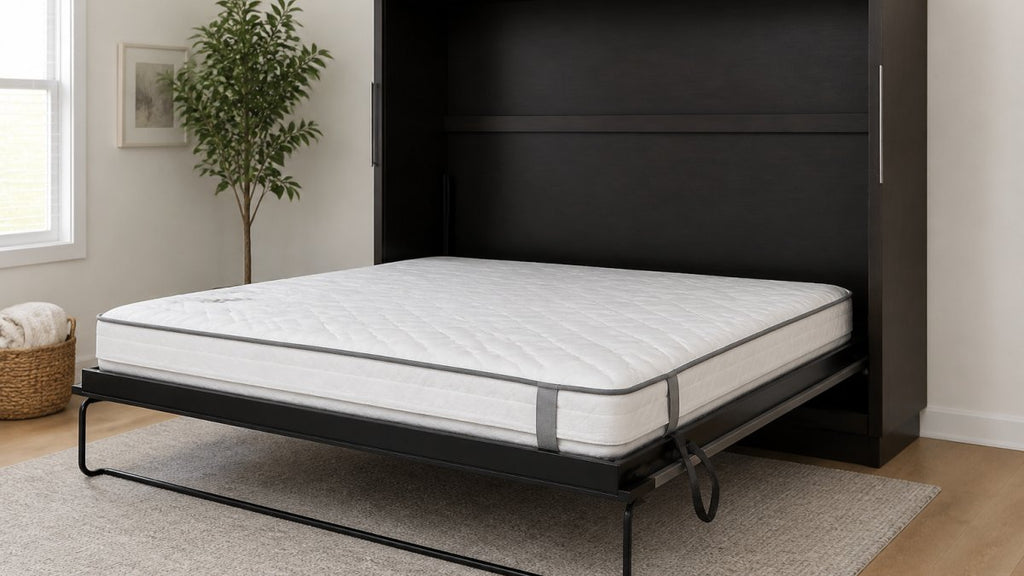
Comfort Zone Shop specializes in custom wall beds designed specifically for tight quarters. Our Traditional and Savona Wallbeds come with high-quality mattresses engineered for comfort, without the center pole that makes pull-out beds miserable. When guests arrive or you need a sleeping surface, the bed descends smoothly. When you don't need it, it disappears into the wall.
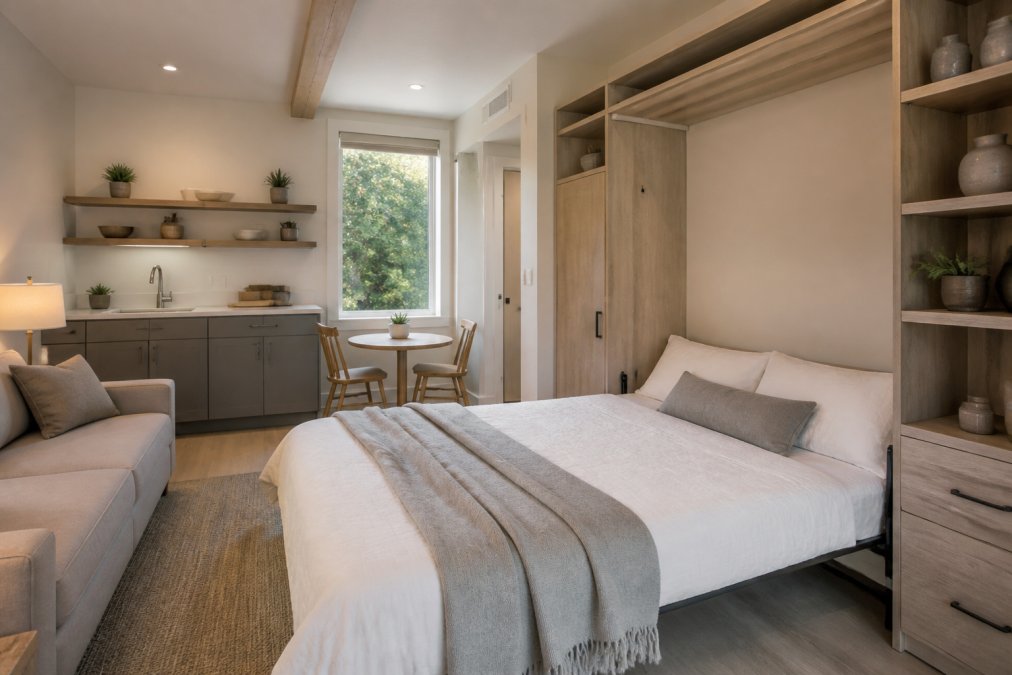
The durability question matters here. Many people worry that wall beds break down or get stuck. Quality hardware and proper installation prevent these issues. The spring-loaded or pneumatic lift systems on well-built units operate smoothly for years with minimal maintenance.
Pro TipWall beds work best in rooms 10 feet wide or wider. Narrower spaces can still accommodate them, but you'll have less clearance when the bed is down. Measure twice before committing.
Assess Your Space and Plan Your Wall Bed Layout
Before you order anything, measure your room carefully and evaluate whether a wall bed actually fits your lifestyle. Not every tiny home benefits equally from this solution.
Measure Your Available Wall Space
Start with the wall where you want the bed installed. You need:
- A wall at least 5 feet wide
- Ceiling height of at least 8 feet
- Floor space extending at least 3 feet out from the wall when the bed is lowered
- No major obstacles like windows, doors, or electrical outlets in the center of the wall
Use a tape measure and write down the exact dimensions. Check for any architectural quirks, sloped ceilings, built-in shelves, or radiators, that might interfere.
Next, consider the room's primary function. If this is a guest bedroom, a wall bed is straightforward. If you're converting an office into a dual-purpose space, you'll need to plan how the bed integrates with your desk, storage, and work setup.
Watch OutMeasure from the floor to the actual ceiling, not the drop ceiling. Popcorn ceilings and light fixtures can hang lower than you think. A bed that fits on paper won't fit in reality if you ignore these details.
Check Load-Bearing Capacity and Structural Integrity
Check what's behind your wall:
- Exterior walls with studs: These are ideal. They're designed to bear weight and are the strongest option.
- Interior walls: Some interior walls are load-bearing, some aren't. You may need a structural engineer to confirm.
If you're renting, check your lease and contact your landlord before installation.
Perfect for apartments in multi-unit buildings.
How to Convert Office to Guest Room With a Wall Bed
Converting a home office into a dual-purpose guest bedroom is one of the most common uses for wall beds. The goal is to keep your workspace functional while adding sleeping capacity for visitors.
Start by mapping out the layout. A typical setup includes:
- The wall bed (mounted on one wall)
- A desk or work surface (on an adjacent wall or floating)
- Storage (shelves, cabinets, or the integrated cabinetry that comes with some wall bed systems)
- Minimal walking space (at least 2-3 feet for movement)
Comfort Zone Shop's Custom Home Office and Cabinetry solutions are built for exactly this scenario. You can pair a Savona or Traditional Wallbed with custom cabinetry that includes shelving, desk space, and storage drawers. The cabinetry surrounds the bed frame, so when the bed is up, you have a complete office. When it's down, the desk area becomes a nightstand or guest workspace.
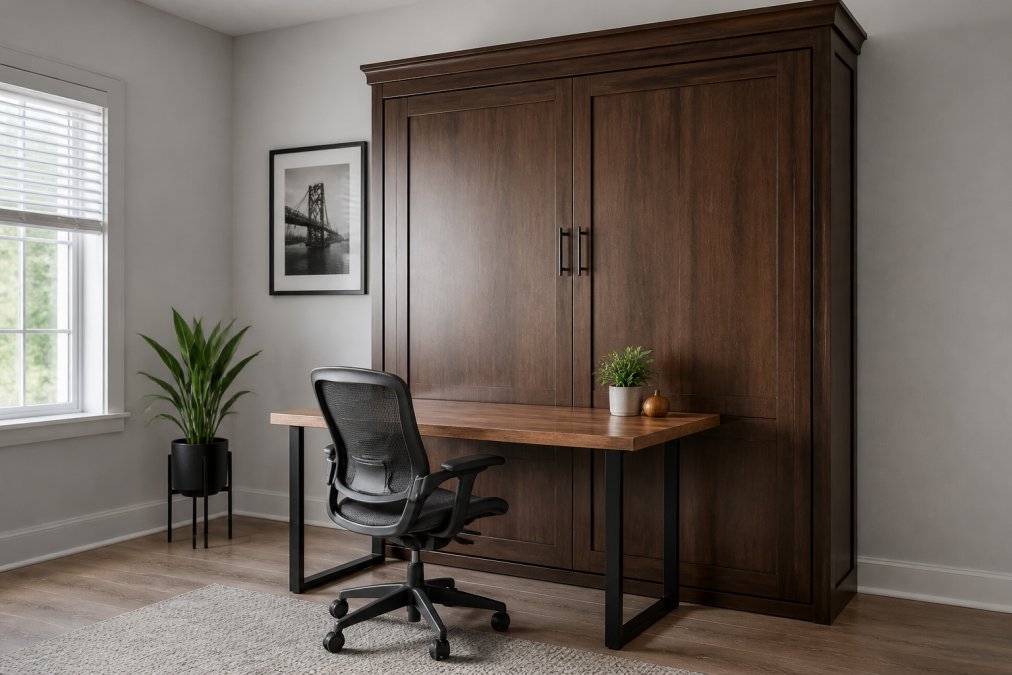
The mechanical operation matters here. A quality wall bed should open and close smoothly. Pneumatic lifts (gas-powered) are smoother than spring-loaded systems, but both work well when maintained.
Key TakeawayThe best office-to-guest-room conversions use vertical storage (shelves, wall-mounted cabinets) instead of floor-based furniture. This keeps the floor clear and makes the room feel larger when the bed is down.
Choosing a Custom Mattress for Murphy Bed Comfort
Wall beds are only as comfortable as the mattress inside them. This is where many people compromise and regret it later.
A quality wall bed mattress needs to be:
- Thinner than a standard mattress
- Lightweight enough to fold without strain
- Durable enough to handle repeated folding
- Comfortable enough for regular use, not just occasional guests
Comfort Zone Shop manufactures custom-sized mattresses specifically for wall beds. This matters because wall bed frames come in non-standard dimensions. A custom mattress ensures a perfect fit with no gaps, bunching, or movement when the bed is in use.
Custom Home Office and Cabinetry →
When you're choosing a mattress, consider the sleeper's needs.
Space-Saving Storage Solutions for Tiny Homes
A wall bed frees up floor space, but you still need somewhere to store clothes, bedding, and personal items. This is where integrated storage becomes essential.
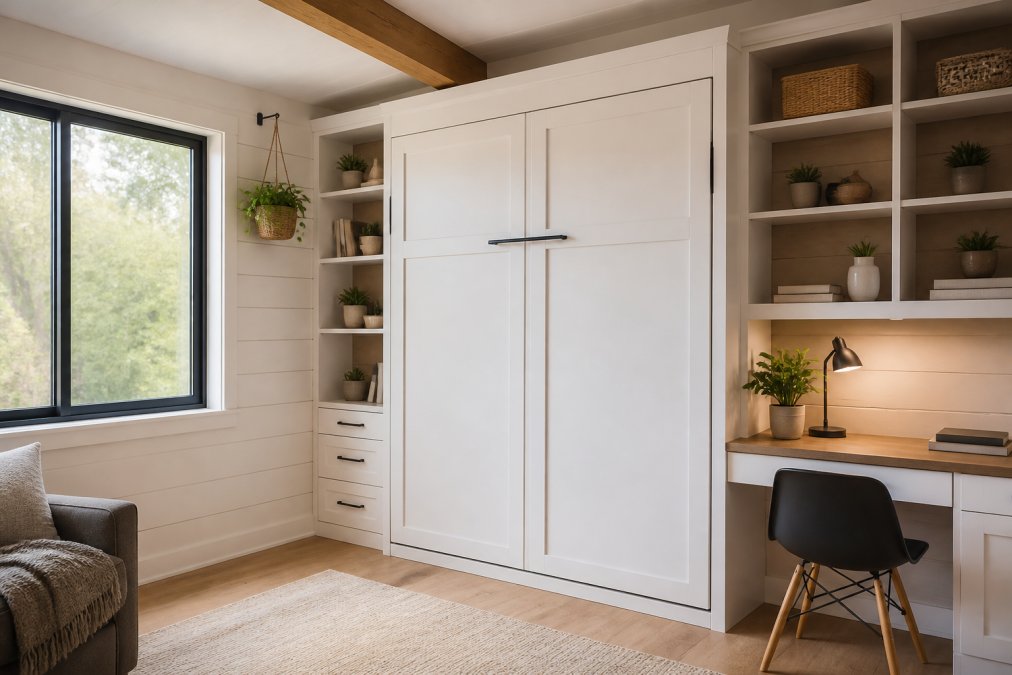
The best storage solutions are built into the wall bed system itself. Comfort Zone Shop's Custom Cabinetry includes:
- Shelves above the bed frame (for books, decor, or storage boxes)
- Drawers below the bed (for bedding, seasonal items, or extra linens)
- Desk space that doubles as a workspace and guest area
- Closed cabinetry with adjustable shelves (customizable for your needs)
Beyond the bed system, use these strategies:
- Vertical shelving: Wall-mounted shelves use vertical space instead of consuming floor area.
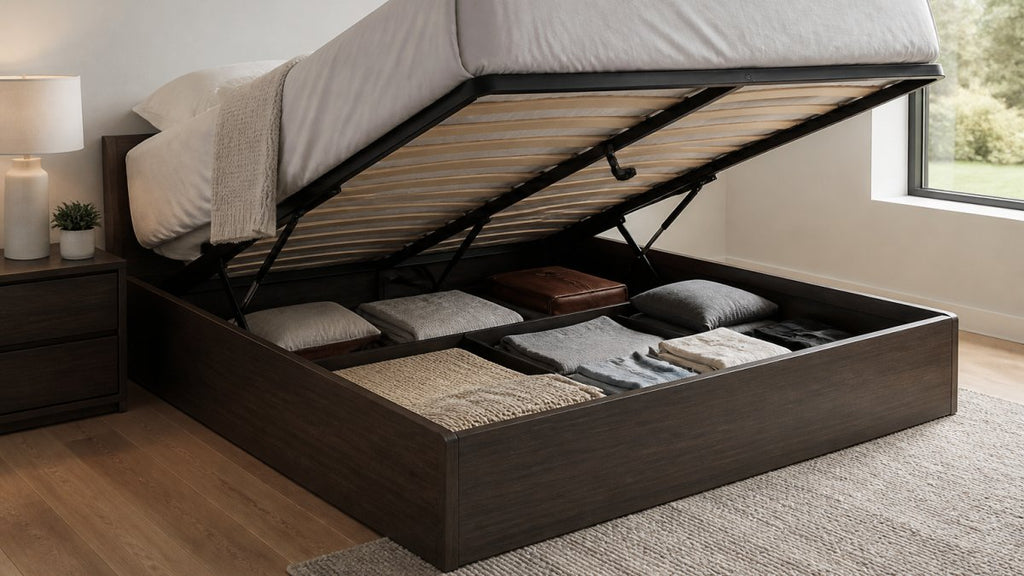
- Under-bed storage: Flat bins slide under the bed frame for seasonal clothing or items you rarely access.
- Closet optimization: Install double rods, shelf dividers, and hanging organizers to maximize closet space.
- Multi-functional furniture: A storage ottoman, bench with hidden compartments, or wall-mounted desk reduces clutter.
The key principle is floor plan optimization. Every piece of furniture should serve multiple purposes. A desk isn't just a workspace, it's also a nightstand, guest table, and storage surface. Shelves aren't just decoration, they're organized storage that keeps items visible and accessible.
Storage Type |
Best For |
Space Saved |
|---|---|---|
Integrated cabinetry |
Clothing, bedding, daily items |
20-30 sq ft |
Vertical shelving |
Books, decor, boxes |
10-15 sq ft |
Under-bed storage |
Seasonal items, extras |
5-10 sq ft |
Closet optimization |
Clothing, shoes, accessories |
3-5 sq ft |
Installation Considerations: DIY vs. Professional Setup
This decision affects both cost and long-term reliability. A poorly installed wall bed will malfunction or damage your wall.
DIY installation works if:
- You're confident with basic tools (drill, level, stud finder)
- The wall is straightforward (no electrical complications, solid studs)
- You have help (installing a wall bed alone is difficult and dangerous)
- You're willing to take time and verify every measurement
DIY requires you to locate studs, drill pilot holes, install mounting brackets, and secure the frame.
Professional installation is better if:
- You're unsure about wall structure or load-bearing capacity
- Your apartment has restrictions on permanent modifications
- You want a warranty that covers installation
- You value speed and certainty
Comfort Zone Shop provides professional delivery and installation in the Tampa Bay area.
Watch OutNever install a wall bed on drywall alone. It will fail. The frame must be anchored to studs, a header, or solid masonry. If you can't locate solid structure, hire a professional or choose a different wall.
Maintaining Your Wall Bed for Long-Term Durability
Monthly checks:
- Test the opening and closing motion. It should be smooth and consistent.
- Listen for unusual sounds (squeaks, grinding, clicking). These indicate wear or misalignment.
- Check the mattress for sagging or damage.
- Verify that the frame is level and secure (no wobbling or movement).
Quarterly maintenance:
- Clean the tracks and pivot points with a dry cloth to remove dust and debris.
- Lubricate moving parts with silicone spray (not WD-40, which attracts dust).
- Inspect hardware for rust or corrosion, especially in humid climates.
- Check that all bolts and fasteners are tight.
Annual inspection:
- Have a professional inspect the system, especially the pneumatic lifts or spring mechanisms.
- Replace worn gaskets or seals before they fail.
- Test the bed's weight capacity by applying load and verifying stability.
Structural integrity depends on the installation. If the frame was mounted improperly, the wall will crack or the bed will pull away over time.
Frequently Asked Questions
How do wall beds improve the functionality of a small floor plan?
Wall beds fold vertically into cabinetry, freeing floor space that would otherwise be occupied by a traditional bed frame. This reclaimed square footage transforms a bedroom into a multi-purpose room—a home office by day, guest bedroom by night. In tiny homes, this dual-purpose approach lets you use every inch efficiently. The folding mechanism and integrated desk or storage options maximize your living area conversion without sacrificing comfort or functionality.
What should I look for when choosing a custom mattress for a Murphy bed?
Custom mattresses designed for wall beds must fit precisely within your cabinet frame without gaps or overhang. Mattress thickness matters. Comfort Zone Shop manufactures custom-sized mattresses tailored to your exact bed dimensions, ensuring a perfect fit and eliminating compatibility issues.
Are wall beds safe and easy to operate in a tiny home?
Modern wall beds are safe when properly installed and maintained. The spring-loaded or pneumatic lift mechanism supports smooth, controlled folding with minimal effort. Structural integrity depends on correct installation into wall studs and verification of load-bearing capacity before setup. Professional installation eliminates safety risks and ensures the bed meets structural requirements, especially in apartments or condos.
What are the common mistakes to avoid when designing a tiny home with wall beds?
Neglecting to verify wall load-bearing capacity before installation risks structural damage.
Related post
08
Oct
30
Sep