
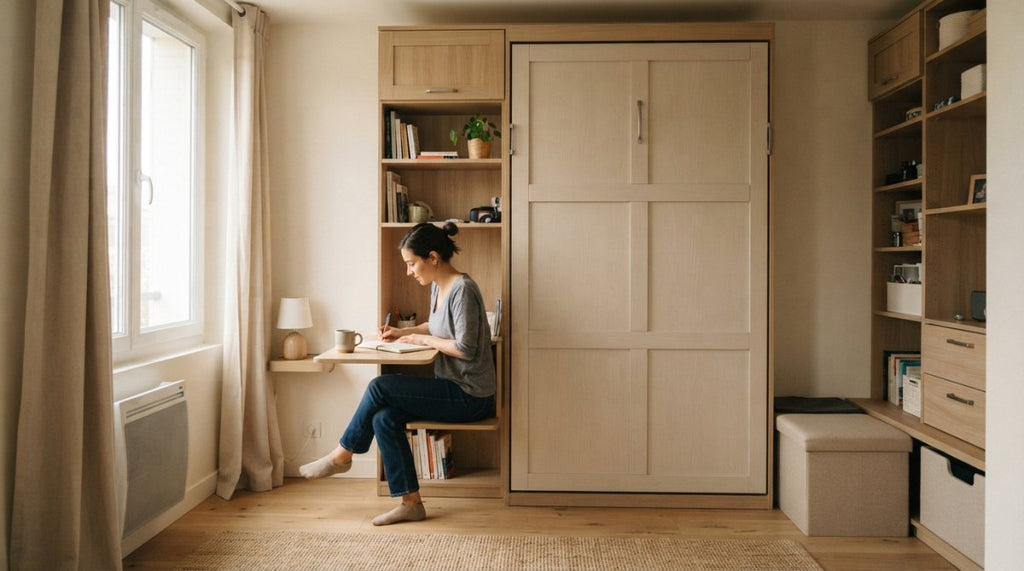
Space-Saving Bedroom Design Tips for Small Rooms
Table of Contents
- Optimize Your Floor Plan with Strategic Furniture Placement
- Murphy Bed Cabinet Benefits for Compact Living
- Small Bedroom Storage Ideas That Maximize Vertical Space
- How to Organize a Tiny Bedroom Without Clutter
- Use Color Palettes and Lighting to Expand Visual Space
- Multi-Functional Furniture and Built-In Solutions
- Conclusion: Transform Your Small Bedroom into a Functional Retreat
- Frequently Asked Questions
Last Updated: September 23, 2026
Space-Saving Bedroom Design Tips for Small Rooms
Small bedrooms don't have to feel cramped. The right design choices can transform a tight space into a functional, comfortable retreat. At Comfort Zone Shop, we help homeowners maximize their living areas with smart furniture solutions and strategic layouts. These space-saving bedroom design tips combine three elements: smart furniture placement, vertical storage, and visual tricks that make spaces feel larger.
Optimize Your Floor Plan with Strategic Furniture Placement
Your floor plan is the foundation of space-saving bedroom design. A thoughtful layout can add to the psychological perception of usable space by understanding how furniture dimensions and placement interact with your room's geometry.
Measure and Map Your Room
Measure your room's length, width, and ceiling height. Note windows, doors, closets, outlets, and architectural features. Sketch a to-scale floor plan on graph paper or use a free tool to prevent costly furniture purchases that won't fit.
Standard bedroom furniture dimensions to keep in mind:
- Queen bed frame: 60" wide × 80" long (requires 3 feet of clearance on at least one side for making the bed)
- Twin bed frame: 39" wide × 75" long
- Standard dresser: 30-36" wide × 16-20" deep
- Nightstand: 24" wide × 16" deep
- Desk: 48" wide × 24" deep (minimum for functional workspace)
Strategic Bed Placement
Place your bed against the longest wall, ideally opposite the door, to anchor the room visually and maximize open floor space. Avoid floating the bed in the center. Position the bed where morning light hits it if possible, and never block windows with furniture.
Secondary Furniture Placement
Arrange remaining pieces along walls in this priority order: closet storage, dresser, desk (wall-mounted if possible), nightstands (wall-mounted to save 6-8 sq ft per side), and seating if space allows.
Account for Door Swing
Leave at least 18 inches of clearance from the door's swing radius to prevent blocking or damage.
The Pathway Principle
Maintain clear pathways from the door to the bed, closet, and workspace. Clear pathways reduce cognitive load and make small rooms feel more open.
Vertical Anchors
Use tall, narrow furniture (floor-to-ceiling shelving, tall narrow dressers, or wall-mounted cabinets) to draw the eye upward and make rooms feel larger. Comfort Zone Shop offers custom cabinetry and wall-mounted solutions designed to your exact room dimensions.

Murphy Bed Cabinet Benefits for Compact Living
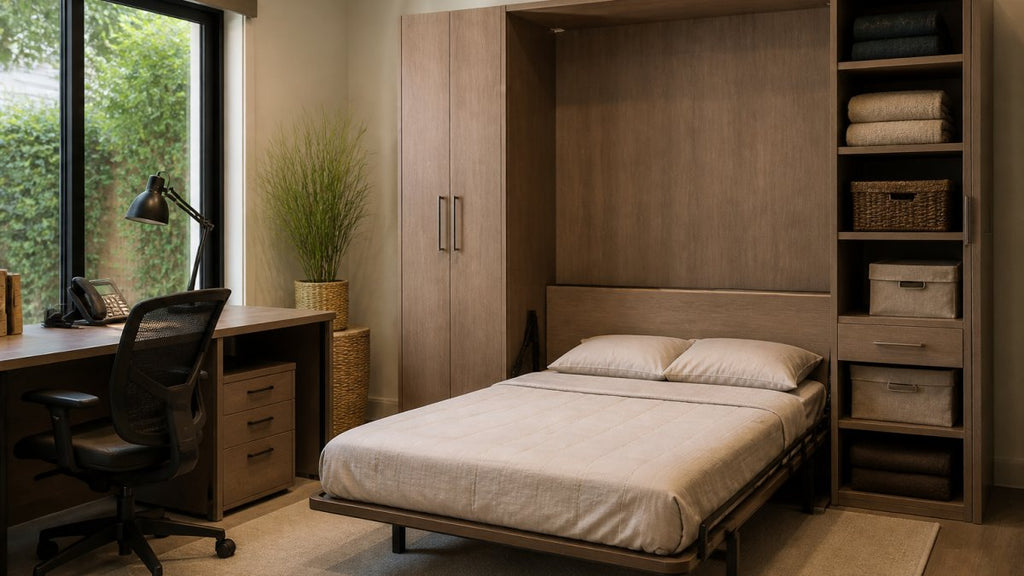
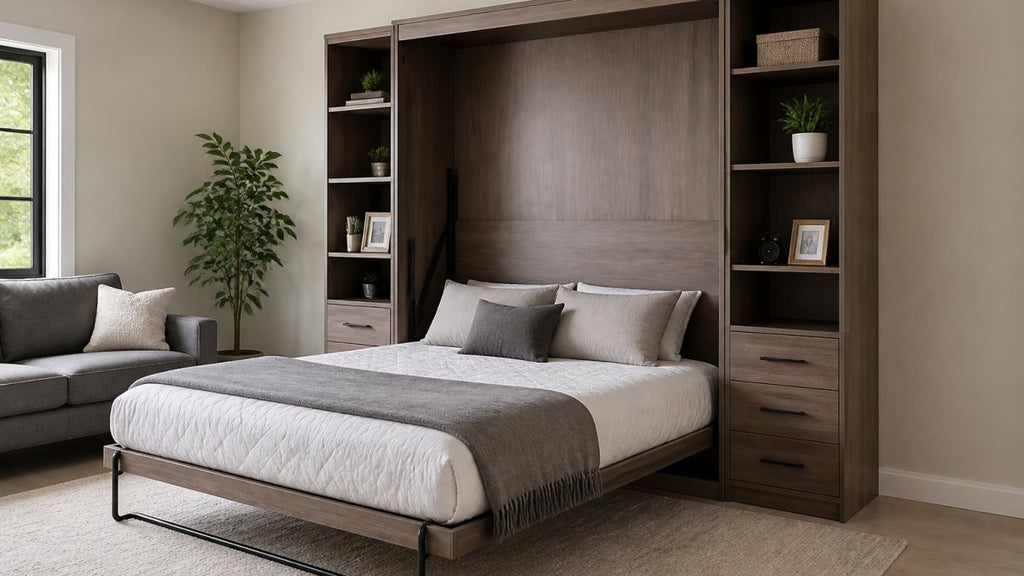
A Murphy bed cabinet is one of the most effective space-saving bedroom design solutions for tiny rooms. When closed, it looks like a stylish piece of furniture. When open, it becomes a full-sized bed. This single transformation can free up 40 square feet or more of usable floor space.

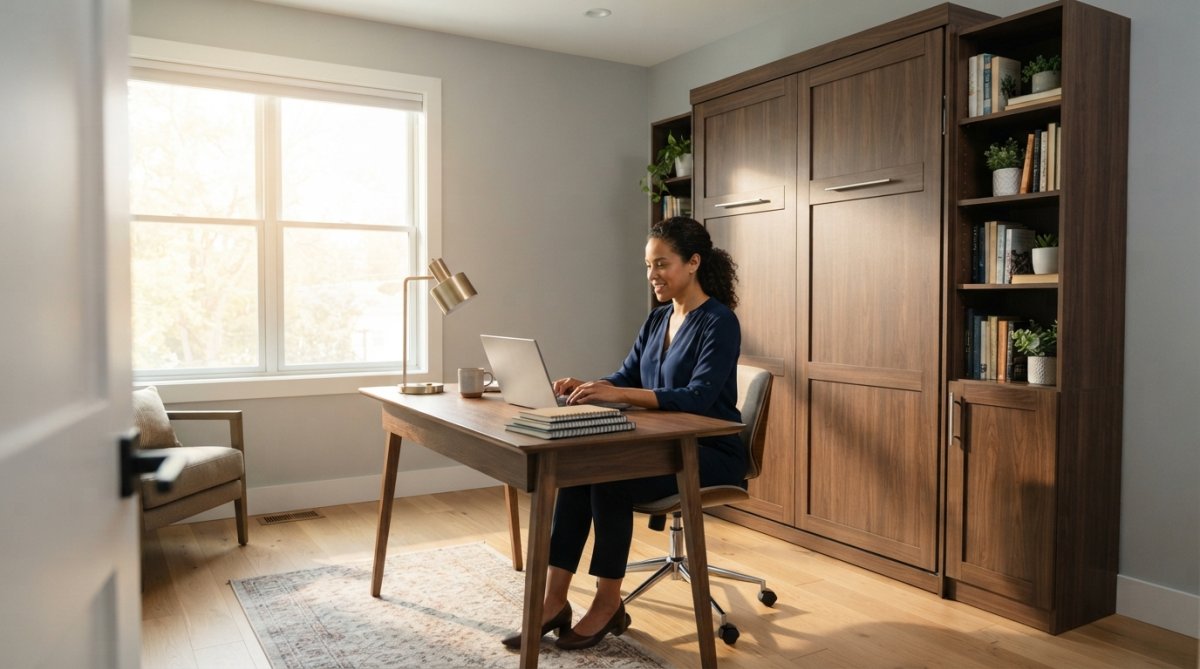
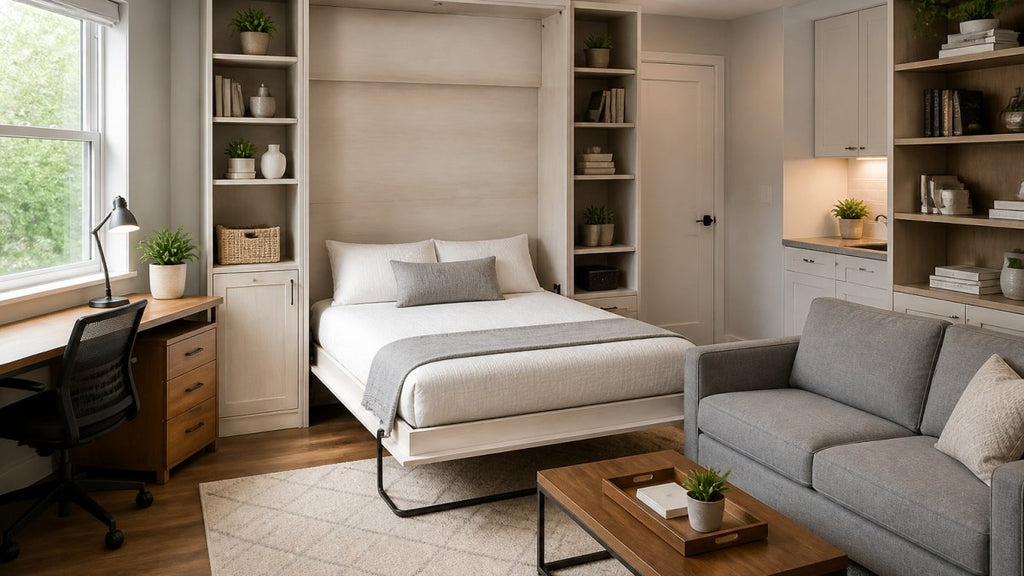
Murphy bed cabinets work especially well for multi-purpose rooms. During the day, your bedroom doubles as a home office, workout space, or guest room. At night, the bed lowers down for sleeping. No bulky bed frame taking up space when you don't need it.
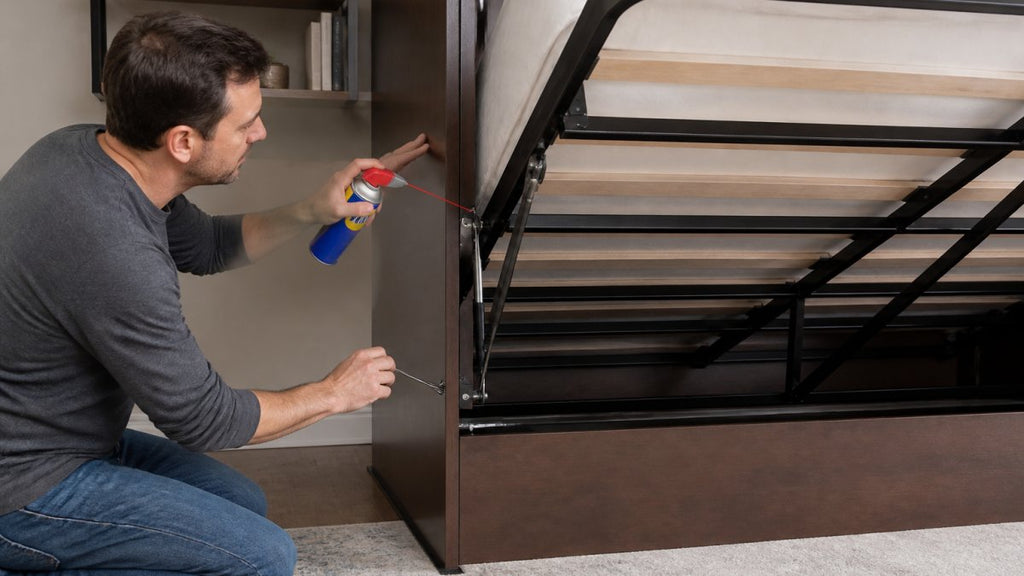
The Clover Murphy Cabinet Bed from Comfort Zone Shop features solid hardwood construction with a rolling storage drawer, higher sleep platform, built-in dual power and USB module, and comes with a tri-fold premium gel memory foam queen mattress. Locally handcrafted in the Tampa Bay area and backed by a 10-year warranty. Professional delivery and installation services are available. The real benefit: you reclaim your floor space, giving your room room to move, work, and breathe.
Small Bedroom Storage Ideas That Maximize Vertical Space
Vertical storage is your secret weapon in space-saving bedroom design. Install shelving from floor to ceiling (open for display, closed for hidden storage). Wall-mounted shelves draw the eye upward, making rooms feel taller and larger. Add under-bed storage with rolling drawers for seasonal items. Use the back of your bedroom door for hooks and organizers. Wall-mounted nightstands and floating desks can provide function without consuming floor space.
How to Organize a Tiny Bedroom Without Clutter
Organization is the foundation of making small spaces work. Visual clutter can increase cognitive load and stress, making small spaces feel even smaller. A well-organized tiny bedroom can reduce mental fatigue and improve sleep quality.
The Psychology of Small-Space Organization
Clover Murphy Cabinet Bed – A →
The Four-Box Decluttering System
Declutter using this framework: Keep items you use regularly or genuinely love. Donate items in good condition you don't use. Sell items with resale value. Discard broken or unusable items. Process one category at a time (clothing, books, electronics, décor) to prevent decision fatigue.
The Zone Organization System
Divide your bedroom into functional zones: Sleep Zone (bed, nightstand, rest items only), Dressing Zone (closet, dresser, accessories), Work Zone (desk, chair, work items only), and Storage Zone (seasonal or rarely used items). This zoning approach prevents items from migrating across the room.
Container and Labeling Strategy
Use clear storage containers with specific labels. For under-bed storage, use low-profile rolling drawers (4-6 inches tall). The Clover Murphy Cabinet Bed from Comfort Zone Shop includes a large rolling storage drawer in the base, perfect for bedding and seasonal items. For closet shelving, use shelf dividers and vertical file organizers.
The Daily Reset Routine
Establish a 2-minute evening reset: return items to zones, clear the nightstand, ensure pathways are clear, and fold clothing. This prevents clutter from accumulating and maintains the psychological benefits of an organized space.
The Visible vs. Hidden Rule
Keep only what you actively use on visible surfaces. Everything else goes into drawers, closets, or under-bed storage. The rule of thumb: if an item isn't used at least weekly, it should be hidden. Visible clutter is the enemy of small-space design because it competes for your visual attention and makes the room feel smaller.
This includes décor.
Maintenance Systems for Long-Term Success
Organization only works if it's sustainable. Build these habits:
- One-in, one-out rule: For every new item you bring in, remove one similar item. This prevents creep.
- Monthly audit: Spend 15 minutes each month checking that items are in their zones and nothing has accumulated.
- Seasonal refresh: Every three months, reassess what's working and adjust zones if needed.
- Donation box: Keep a small box in your closet for items to donate. When it's full, drop them off. Don't let donations pile up.
The Mental Clarity Payoff
Use Color Palettes and Lighting to Expand Visual Space
Color and light are psychological tools in space-saving bedroom design. They can make a small room feel twice as large.
Install multiple light sources:
- Overhead lighting for general brightness
- Bedside lamps for task lighting and ambiance
- Wall sconces to save table space
- A desk lamp if you work in your bedroom
Multi-Functional Furniture and Built-In Solutions
Multi-functional furniture is the backbone of space-saving bedroom design. Every piece should earn its place by serving more than one purpose.
Conclusion: Transform Your Small Bedroom into a Functional Retreat
Small bedrooms are a challenge, but they're also an opportunity to design intentionally. Every choice matters. Strategic furniture placement, vertical storage, smart color choices, and multi-functional pieces work together to create a space that's both comfortable and efficient.
Space-Saving Strategy |
Best For |
Key Benefit |
|---|---|---|
Murphy bed cabinet |
Bedrooms under 120 sq ft |
Reclaims 40+ sq ft during day |
Vertical shelving |
Any small bedroom |
Uses wall space, draws eye upward |
Under-bed storage |
Seasonal items, extra bedding |
Hidden storage without floor impact |
Wall-mounted nightstands |
Minimal floor space needs |
Saves 6-8 sq ft per side |
Multi-functional furniture |
Guest rooms, home offices |
One piece serves two purposes |
Light color palette |
Visual perception |
Makes room feel 15-20% larger |
Strategic mirrors |
Limited natural light |
Reflects light, creates depth illusion |
Pro Tips for Small Bedroom Success:
Pro TipMeasure twice before buying any furniture. A bed that's even 2 inches too wide can block a closet door or wall outlet. Custom sizing from Comfort Zone Shop ensures perfect fit every time.
Watch OutAvoid wall-to-wall carpet in small bedrooms. It makes rooms feel heavier and smaller. Use area rugs instead to define zones while keeping the visual space open.
Key TakeawayThe best space-saving bedroom design combines three elements: strategic placement, vertical storage, and light colors. Master these three and even tiny rooms become comfortable, functional spaces.
Frequently Asked Questions
What is the best space-saving bedroom design for a one-bedroom apartment?
Start with a low-profile bed frame or wall-mounted option to keep floor space open. Add vertical storage using tall shelving or wall-mounted cabinets. Use multi-functional furniture like storage beds or Murphy bed cabinets that serve dual purposes. Keep your color palette light and minimal to avoid visual clutter. Consider a Murphy bed cabinet if you need guest sleeping space without sacrificing your living area—they fold away in seconds and take up just 10 square feet when closed.
How do Murphy bed cabinets actually benefit small bedroom layouts?
Murphy bed cabinets transform unused wall space into functional sleeping areas. When closed, they look like attractive cabinetry, freeing up floor space for a desk, seating, or movement. They're ideal for dual-purpose rooms—home offices that become guest bedrooms instantly. Quality options like the Daisy Murphy Cabinet Bed include built-in storage drawers, USB charging ports, and solid hardwood construction with 10-year warranties, ensuring they hold up to daily use without the durability concerns of cheaper alternatives.
What are the most effective small bedroom storage ideas for renters?
Focus on non-permanent solutions: under-bed storage containers, over-door organizers, floating shelves, and freestanding closet systems. Use vertical wall space with pegboards or ladder shelving. Storage beds with built-in drawers maximize the space your bed already occupies. Declutter regularly to maintain a clutter-free environment. If you own, consider wall-mounted cabinets or custom cabinetry—Comfort Zone Shop offers custom solutions designed to fit unique room dimensions and can be tailored to your space without permanent installation.
How do I know if a space-saving bed solution will actually fit my room?
Measure your room's dimensions and doorways before purchasing. Wall-mounted and Murphy bed solutions require specific wall space and clearance. Custom-built options are ideal if standard sizes won't work—Comfort Zone Shop manufactures custom-sized mattresses and cabinetry to fit unique room dimensions exactly. Their local team can assess your space, discuss layout options, and ensure professional delivery and installation so your new bed arrives ready to use without installation headaches.