
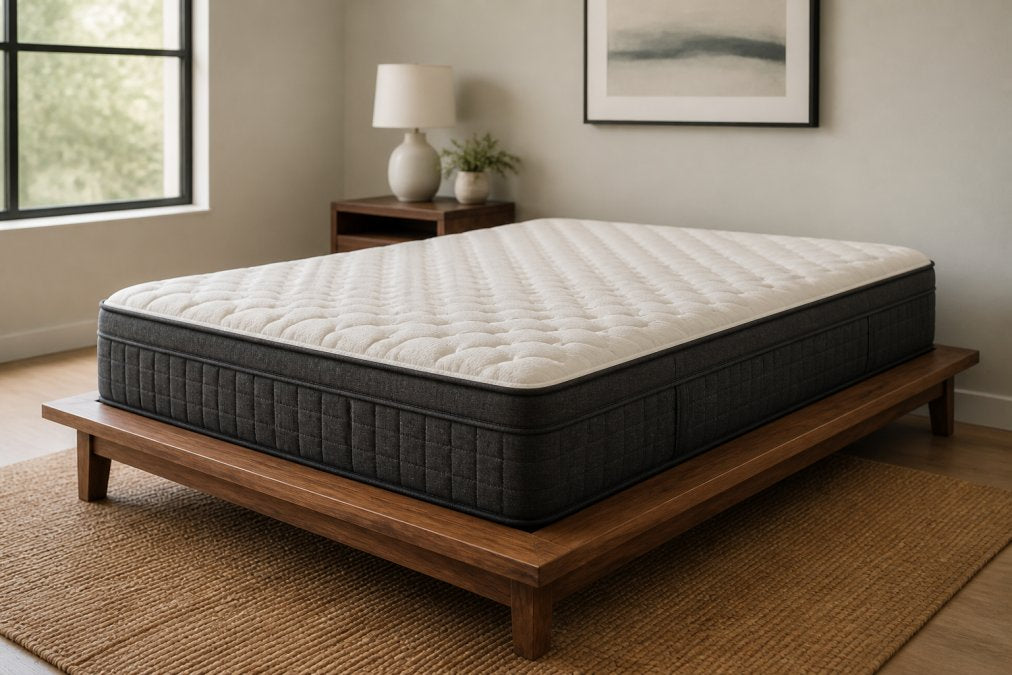
Best Mattresses for Platform Beds: 2026 Guide
Table of Contents
- What Is a Platform Bed and Why Mattress Choice Matters
- Do Platform Beds Need Box Springs?
- Mattress Thickness for Platform Beds: Finding the Right Fit
- Key Features to Look for in Mattresses for Platform Beds
- Benefits of Custom-Sized Mattresses for Platform Beds
- Spices Bedroom Collection Platform Beds at Comfort Zone Shop
- Common Mistakes When Choosing Mattresses for Platform Beds
- Frequently Asked Questions
Last Updated: September 24, 2026
What Is a Platform Bed and Why Mattress Choice Matters
A platform bed is a bed frame with a solid or slatted surface that supports a mattress without requiring a box spring foundation. Unlike traditional beds that rely on a box spring to absorb shock and distribute weight, platform beds transfer all support directly through their built-in structure. This fundamental difference makes choosing the right mattress for platform beds critical to comfort, durability, and warranty compliance.
The mattress you select for a platform bed must work in harmony with the frame's design. Platform beds offer excellent space-saving benefits for apartments and condos, making them popular in smaller living spaces. However, many people don't realize that not all mattresses perform equally on platform surfaces. The wrong choice can void your warranty, reduce mattress lifespan, or create uncomfortable sleeping conditions.
At Comfort Zone Shop, our custom-sized mattress manufacturing means we understand exactly how different mattress types interact with platform bed frames. The key is understanding slat spacing, weight distribution, and how your mattress construction affects performance on a solid or semi-solid base.
Pro TipPlatform beds require mattresses specifically designed for their structure. Memory foam, latex, and hybrid mattresses typically perform best because they distribute weight evenly across the solid surface.
Do Platform Beds Need Box Springs?
No, platform beds do not need box springs. In fact, most mattress manufacturers recommend against using a box spring with a platform bed because it creates an unstable, overly soft foundation that can damage the mattress and frame.
Here's why the combination is problematic: a box spring adds an unnecessary layer of suspension between your mattress and the solid platform surface. This creates excessive motion, reduces edge support, and can cause premature wear on the mattress. The additional height also makes the bed uncomfortable for many users.
Platform beds are engineered to provide direct support through either solid wood, metal slats, or a combination of both. When you add a box spring on top of that, you're working against the frame's design. Your mattress warranty may even be voided if you use a box spring, so always check your manufacturer's guidelines.
What you might want instead is a bunkie board. A bunkie board is a thin, rigid platform that sits directly on your platform bed frame and adds extra support under your mattress. It's especially useful if your slats are spaced more than 3 inches apart or if you want additional firmness. Unlike a box spring, a bunkie board complements the platform bed's design rather than conflicting with it.
Mattress Thickness for Platform Beds: Finding the Right Fit
The ideal mattress thickness for platform beds typically ranges from 8 to 12 inches, though this depends on your personal preference and the bed frame's design. Thinner mattresses, around 8 inches, work well on platform beds because they sit closer to the frame and maintain better edge support. Thicker mattresses, up to 12 inches, still perform adequately as long as the platform provides consistent support across the entire surface.
One common mistake is assuming that thicker mattresses are always better. On a platform bed, a very thick mattress can actually reduce the feeling of support because the weight distributes too far from the frame. A medium-thickness mattress, around 10 inches, strikes the right balance for most sleepers.
Platform bed height also matters. If your frame sits low to the ground, a thinner mattress keeps the overall bed height manageable for getting in and out. Conversely, if your platform bed has significant height, a 10 to 12-inch mattress creates a more comfortable sleeping position without the bed feeling too high.
The Spices Bedroom Collection from Comfort Zone Shop features platform bed frames engineered for standard mattress thicknesses. Our custom-sized mattress manufacturing allows us to create the perfect thickness for your specific frame, ensuring optimal support and comfort for your unique needs.

Key Features to Look for in Mattresses for Platform Beds
When selecting a mattress for your platform bed, focus on construction quality, support systems, and compatibility with your frame's design. The right features ensure your mattress lasts longer, performs better, and maintains comfort over time.
Slat Spacing and Support Requirements
Slat spacing is one of the most overlooked factors when choosing a mattress for platform beds, yet it directly impacts warranty validity and mattress performance. Most mattress manufacturers require slat spacing of no more than 3 inches apart. If your platform bed has slats spaced wider than 3 inches, your mattress warranty is likely void.
Why does spacing matter so much? When slats are too far apart, the mattress sags between supports, creating pressure points and uneven weight distribution. This accelerates wear on the comfort layers and can damage the support core. Over time, you'll notice sagging in specific areas where your body weight concentrates between slats.
If your platform bed has wider slat spacing, you have two options. First, add a bunkie board across the entire frame to create a continuous surface. Second, install additional slats to bring spacing within the manufacturer's requirements.
Basic - Spices Bedroom Collection →
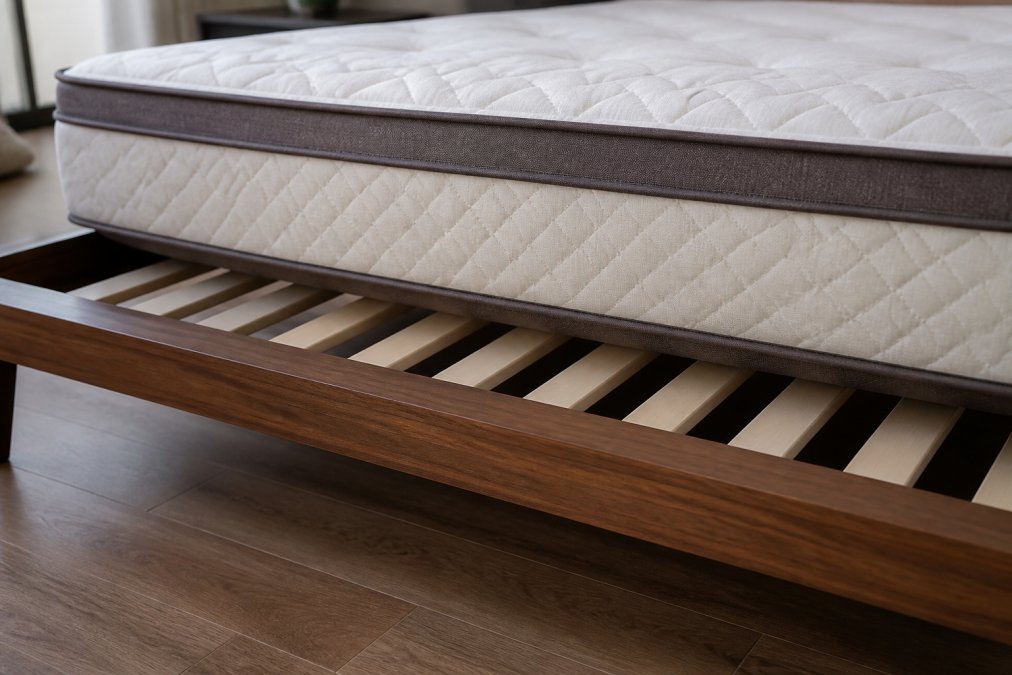
Watch OutIgnoring slat spacing requirements voids your mattress warranty. Most manufacturers will not cover defects if slats exceed 3 inches apart, even if the sagging is clearly caused by inadequate support.
Breathability and Airflow
Platform beds, especially those with solid surfaces rather than slats, can trap heat and moisture underneath the mattress. Breathability becomes critical for comfort, particularly in warm climates or for hot sleepers.
Mattresses with good airflow design include ventilated memory foam layers, open-cell latex, or hybrid constructions that combine breathable materials. Look for mattresses specifically marketed for cooling technology or temperature regulation. These designs prevent heat buildup and extend mattress lifespan by reducing moisture accumulation.
Weight Capacity and Edge Support
Platform beds must support the combined weight of the mattress and sleepers without excessive deflection. Check your frame's weight capacity specification and select a mattress that doesn't exceed it. Most quality platform beds support 500 to 800 pounds, though this varies by construction.
Edge support becomes particularly important on platform beds because the mattress sits directly on the frame. Poor edge support means the mattress compresses at the edges when you sit or sleep near the perimeter. This creates an unstable feeling and accelerates wear on the outer comfort layers.
Look for mattresses with reinforced edge support systems, often called edge bands or perimeter support. These are typically firmer materials positioned around the mattress perimeter to prevent excessive compression. On platform beds, strong edge support directly translates to better overall durability and comfort.
Benefits of Custom-Sized Mattresses for Platform Beds
Standard mattress sizes don't always fit non-standard platform bed frames. If you're working with a custom-sized bed or an unusual dimension, a custom mattress becomes essential. Custom-sized mattresses ensure perfect fit, eliminate gaps, and maximize support across the entire frame.
One major benefit is eliminating warranty concerns. When your mattress matches your frame exactly, there's no question about whether the support is adequate.
Custom mattresses also maximize comfort for unique sleeping arrangements.
Spices Bedroom Collection Platform Beds at Comfort Zone Shop
The Spices Bedroom Collection from Comfort Zone Shop features platform beds engineered for optimal mattress compatibility. These beds come complete with 10 pieces of 1x4-inch mattress support slats and center rail support, meeting the slat spacing requirements that protect your mattress warranty.
Best ForHomeowners in the Tampa Bay area seeking durable, solid wood platform beds that maximize living space while providing reliable mattress support for years of comfortable sleep.
Common Mistakes When Choosing Mattresses for Platform Beds
Many people make preventable errors when selecting mattresses for platform beds. Understanding these mistakes helps you avoid costly purchases and warranty issues.
Mistake |
Impact |
Solution |
|---|---|---|
Ignoring slat spacing |
Warranty void, premature sagging |
Verify spacing, add bunkie board if needed |
Choosing too-thick mattress |
Reduced support, awkward height |
Select 8-12 inch mattress |
Using box spring |
Unstable foundation, warranty issues |
Skip box spring entirely |
Non-breathable mattress |
Heat buildup, moisture damage |
Choose cooling or breathable construction |
Weak edge support |
Sagging edges, reduced durability |
Prioritize reinforced edge support |
Frequently Asked Questions
Do platform beds need a box spring?
No. Platform beds have a solid or slatted surface that replaces the box spring entirely. Adding a box spring can void your mattress warranty and create an unstable, overly soft sleeping surface. The platform itself provides the necessary foundation support. Comfort Zone Shop's Spices Bedroom Collection platform beds come with 10 pieces of 1x4" mattress support slats and center rail support, eliminating any need for a box spring.
What thickness of mattress is good for a platform bed?
Mattresses between 8 and 12 inches work best on platform beds. Thinner mattresses (6-8 inches) may feel too firm without the cushioning of a box spring, while very thick mattresses (14+ inches) can make the bed too high and difficult to access. The ideal mattress thickness for platform beds balances comfort with proper support from the slat system. Consider your personal comfort preference and how high you want your bed to sit.
Can you put a normal mattress on a platform bed?
Yes, but with caution. Most standard mattresses work on platform beds, but check slat spacing first—gaps larger than 3 inches can void warranties and provide inadequate support. Memory foam and latex mattresses perform well on platform beds due to their conforming support. However, traditional innerspring mattresses may sag if slats are too far apart. Verify your platform bed's slat spacing and mattress warranty requirements before purchasing.
What are the benefits of custom-sized mattresses for platform beds?
Custom-sized mattresses ensure a perfect fit for non-standard platform bed dimensions, eliminate gaps around edges, and maximize your sleeping surface. They reduce warranty complications from improper fit. Comfort Zone Shop manufactures custom-sized mattresses to match your exact platform bed specifications, ensuring optimal comfort and durability.
What mattress types work best with platform beds?
Memory foam, latex, and hybrid mattresses perform exceptionally well on platform beds because they distribute weight evenly across the slats and don't require traditional box spring support. All-foam constructions offer excellent pressure relief and motion isolation. Avoid traditional innerspring mattresses on platform beds unless slat spacing is very tight (under 3 inches), as the springs need consistent support that gaps can't provide.