
Can a Murphy Bed Fit in a Studio? Space Guide
Table of Contents
- Can a Murphy Bed Actually Fit in a Studio Apartment?
- Space Requirements: How Much Room Do You Really Need?
- Murphy Bed Installation Requirements for Renters and Owners
- Pros and Cons of Wall Beds for Studio Living
- Custom Mattress for Murphy Bed: Ensuring the Right Fit
- Weight Capacity and Safety Considerations
- Maximizing Your Studio with Integrated Furniture Solutions
- Conclusion
Last Updated: August 18, 2026
Can a Murphy Bed Actually Fit in a Studio Apartment?
A murphy bed fit studio is absolutely possible and increasingly common for people maximizing small living spaces. The real question isn't whether it fits, but whether it fits well for your specific layout and lifestyle. At Comfortzoneshop, we've helped countless residents in the Tampa Bay area transform cramped one-room apartments into functional dual-purpose spaces. Success depends on three critical factors: available wall space, ceiling height, and your daily routine.
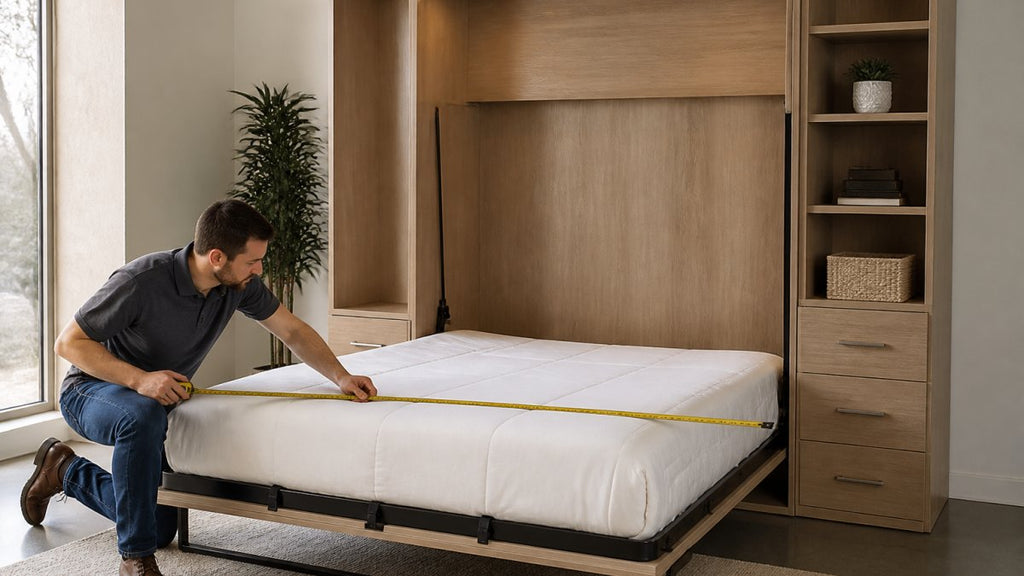
Most people assume a studio apartment is too small for a murphy bed. They're wrong. A typical studio ranges from 300 to 500 square feet. A standard queen murphy bed requires roughly 10 feet of wall width and 8 feet of ceiling height when closed. If your studio has one solid interior wall without windows or doors, you're already halfway there.
The challenge isn't space, it's understanding what "fitting" actually means. A bed that physically closes doesn't automatically solve your space problem if it leaves no room to move around it or makes daily conversion inconvenient.
Space Requirements: How Much Room Do You Really Need?
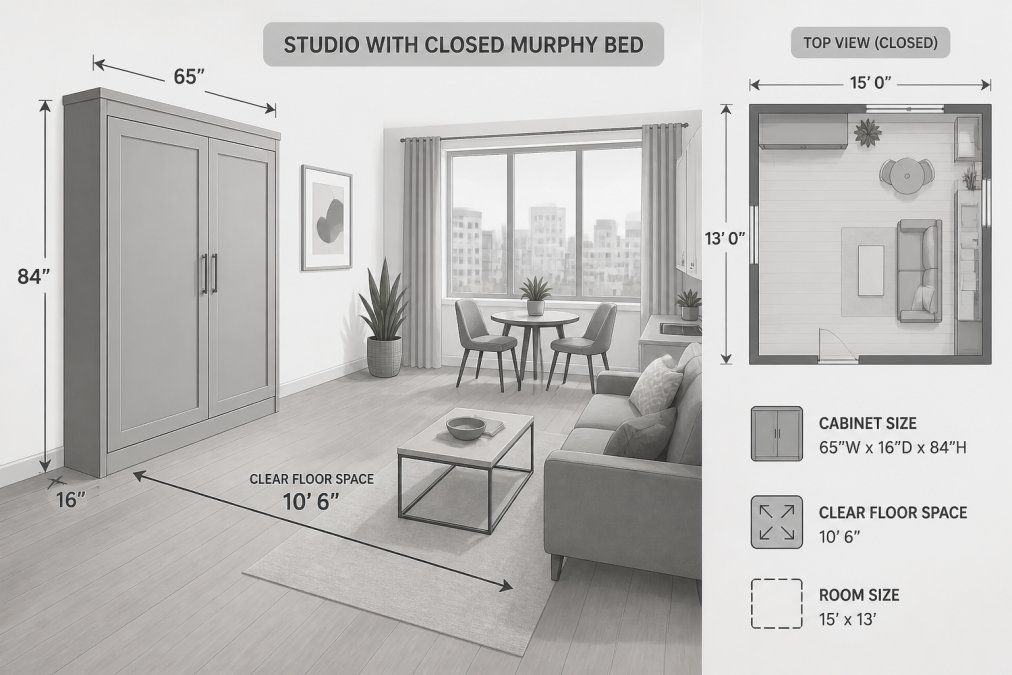
A murphy bed needs more than just wall dimensions. It needs usable space around it. When your bed is closed, it requires roughly 40 inches of depth from the wall, shrinking your living area unless you plan the furniture layout strategically.
For a queen-size murphy bed, plan for a minimum of 10 feet of uninterrupted wall space and 8 feet of ceiling clearance. A full-size bed requires around 8 feet of wall width. Twin beds are compact enough for smaller studios, though most adults find them cramped for nightly use.
When the bed is down, you need at least 2 feet of clearance at the foot for comfortable movement. Walk your space carefully and measure twice. A murphy bed in the wrong position turns your studio into a bedroom that happens to have a kitchenette.
Vertical vs. Horizontal Orientation
Orientation changes everything. A horizontal wall bed (extending left-to-right) requires more wall width but less ceiling height. A vertical murphy bed (extending floor-to-ceiling) uses less horizontal space but demands taller ceilings. Most studios work better with horizontal orientation because ceilings are typically 8-9 feet, and horizontal beds look less imposing when closed.
Horizontal beds also integrate better with custom cabinetry. You can build storage shelving above, beside, or underneath the bed frame. Vertical beds limit storage flexibility. If your studio has 9-foot ceilings and limited wall width, vertical makes sense. Otherwise, horizontal is the smarter choice.
Floor Plan and Square Footage Considerations
Your floor plan matters more than total square footage. A 450-square-foot studio with one long wall is easier to work with than a 500-square-foot space chopped into small rooms. Open layouts are ideal.
Measure your actual living area after accounting for the bed footprint. If your studio is 12 feet wide by 18 feet long, and a queen murphy bed takes up 10 feet by 3 feet when closed, you're left with roughly 200 usable square feet for living, dining, and working. That's tight but manageable if the remaining space is rectangular and unobstructed.
Studios with load-bearing walls, structural columns, or plumbing runs often can't accommodate a standard murphy bed. Comfortzoneshop offers custom-sized mattress manufacturing to fit unique room dimensions, and our diverse catalog of convertible sleepers can help you create a comfortable, functional, and stylish environment tailored to your unique needs.
Murphy Bed Installation Requirements for Renters and Owners
Installation is where most people stumble. A murphy bed isn't a piece of furniture you place in the corner. It requires proper wall mounting into studs, potentially electrical work for motorized models, and structural assessment. The installation process typically takes 4-8 hours for a standard unit.
Wall Mounting and Structural Feasibility
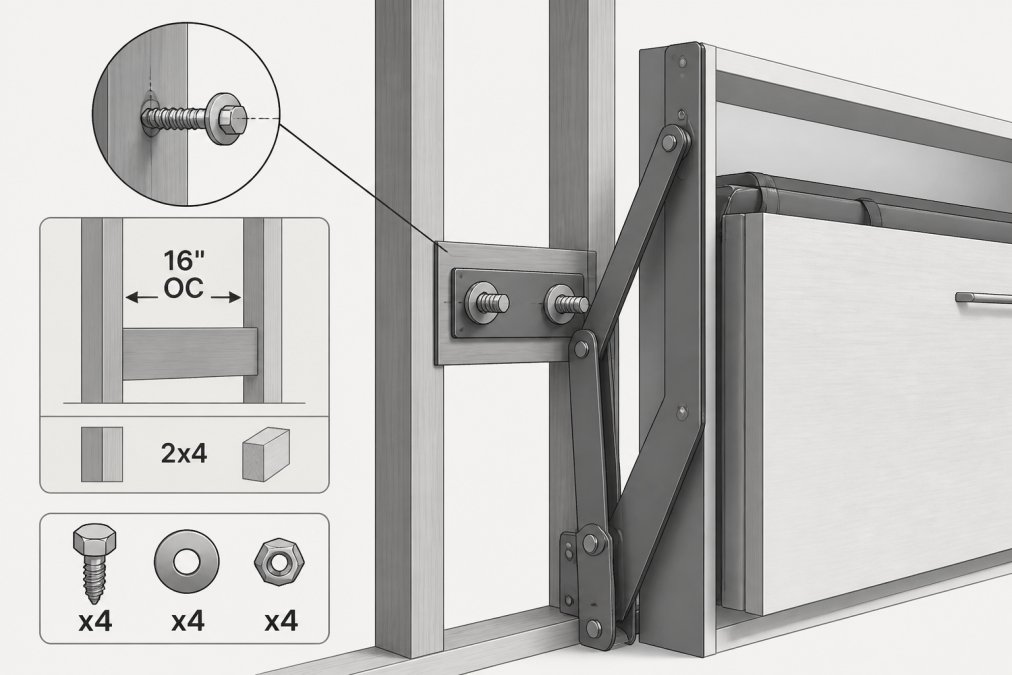
Your walls must handle the weight. A queen-size murphy bed with a mattress and person weighs 600-800 pounds when in use. That load transfers to the wall studs and mounting hardware. Drywall alone won't hold it. You need mounting bolts anchored directly into wooden studs, spaced 16 inches apart.
Before purchasing, locate your studs using a stud finder. If studs don't align with where you want the bed, you can move the bed location or install additional blocking (horizontal support beams between studs). Additional blocking adds cost but solves misaligned stud problems.
Plaster walls, common in older buildings, require different anchoring methods. Plaster is brittle and prone to cracking around mounting points. Specialized anchors designed for plaster reduce damage, but installation becomes more involved. If your studio has plaster walls, consult a professional before ordering a standard murphy bed.
The wall must also be reasonably flat and plumb (vertical). Uneven walls create gaps between the bed frame and wall, affecting mechanical operation. Walls with significant bowing need shimming or partial removal of wall material to create a flat mounting surface.
Rental Unit Considerations
Renters face a unique challenge: landlords typically prohibit permanent wall modifications. Standard murphy bed installation requires drilling into studs, which most leases forbid. Some murphy beds use heavy-duty floor-anchored systems that don't require wall studs. These sit against the wall but rely on floor bolts for stability. They're heavier and take up slightly more floor space, but they work in rental units.
Another option is a murphy bed that mounts to a freestanding frame rather than directly to the wall. These are rare and expensive, but they avoid permanent modifications. Before committing to a rental solution, talk to your landlord. Some are flexible about small-scale modifications if you agree to repair damage when you leave.
Pros and Cons of Wall Beds for Studio Living
A murphy bed solves one problem and creates others. Understanding the trade-offs helps you decide if it's right for your lifestyle.

Pros:
- Transforms a studio into a dual-purpose space (bedroom by night, living room by day)
- Frees up square footage for a proper seating area, workspace, or dining table
- Can be integrated with storage cabinetry for additional organization
- Eliminates the visual clutter of a permanent bed frame dominating the room
- Makes studios more appealing to guests and potential roommates
Cons:
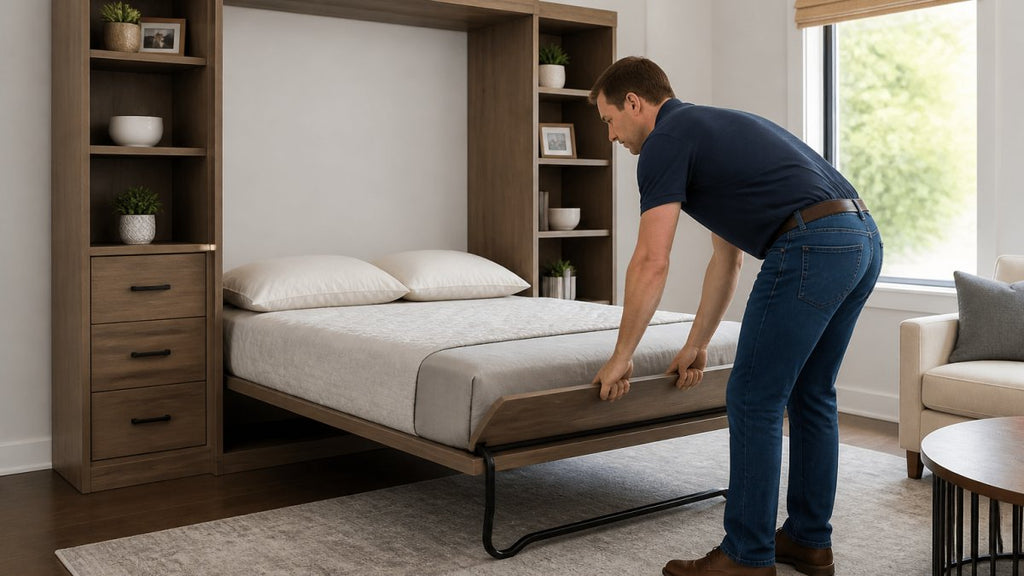
- Daily conversion takes 1-2 minutes, which becomes tedious if you're constantly in and out
- Mattress thickness is limited (typically 8-10 inches), affecting comfort for some sleepers
- Mechanical components wear over time; hinges, pistons, and latches require maintenance
- Installation is permanent and expensive to remove or relocate
- Not ideal if you have a partner who keeps different sleep schedules
- Reduces wall space for artwork, shelving, or other décor
Daily Conversion and Ergonomic Impact
The daily ritual of folding and unfolding a murphy bed shapes your experience more than you might expect. If you're someone who values spontaneous naps, works irregular hours, or entertains frequently, the conversion process becomes friction in your life.
For people with consistent routines, up in the morning, out during the day, home at night, the conversion is manageable. For others, it's a daily negotiation that wears thin.
Ergonomically, lowering and raising a bed affects your back and shoulders. Spring-loaded mechanisms handle most of the weight, but you're still guiding the frame and mattress. People with mobility issues, back problems, or arthritis often find this challenging. Motorized murphy beds solve this problem but cost significantly more.
Standard murphy beds use thinner, firmer mattresses (8-10 inches) because thick mattresses don't fit when closed. If you need a plush, memory-foam mattress for back support, a murphy bed might not meet your comfort needs. Comfortzoneshop manufactures custom mattresses designed specifically for murphy bed dimensions, allowing you to balance comfort with functionality.
Custom Mattress for Murphy Bed: Ensuring the Right Fit
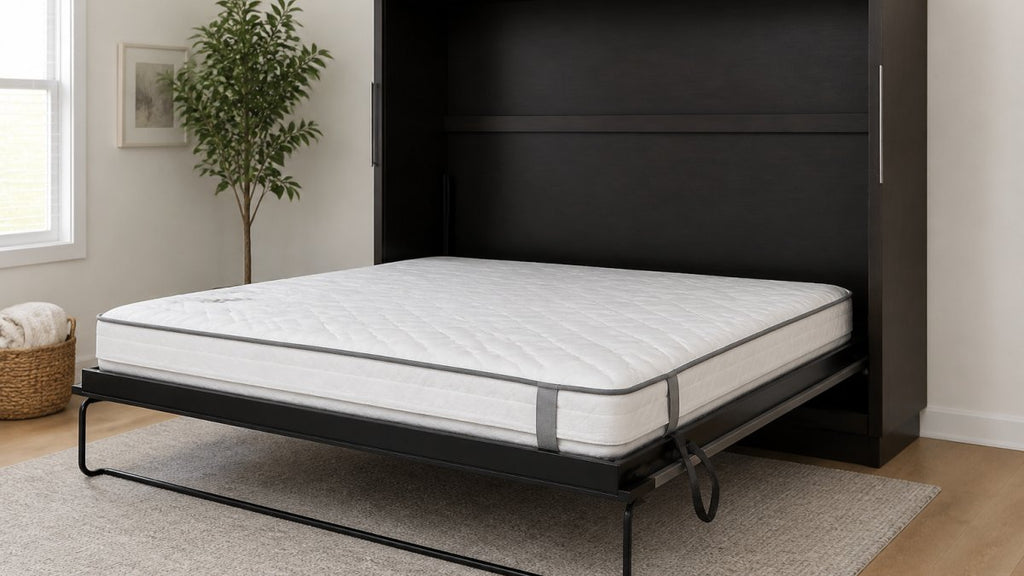
Most people buy a murphy bed, then try to squeeze a standard mattress into it. Standard queen mattresses are 60 inches wide by 80 inches long and 10-14 inches thick. A murphy bed mattress is typically 60 by 80 inches but only 6-10 inches thick, and sometimes slightly narrower to ensure clearance when closing.
A mattress that's too thick won't allow the bed to close properly. A mattress that's too soft compresses unevenly, creating gaps that affect mechanical operation. A mattress that's the wrong dimensions slides around during use.
Mattress Thickness and Compatibility
Measure your murphy bed's mattress pocket depth before ordering. Most beds accommodate 8-10 inches; some allow only 6 inches. If your bed spec says 8 inches, don't assume a standard 10-inch mattress will work.
Firmness matters too. A medium-firm mattress (around 7-8 on a firmness scale) works best for murphy beds. Too soft, and the mattress compresses unevenly when folded, creating wrinkles that affect comfort. Too firm, and it feels like sleeping on a board.
Comfortzoneshop custom-manufactures mattresses sized specifically for murphy beds, ensuring perfect fit and appropriate firmness. Rather than forcing a standard mattress into an incompatible space, a custom mattress is built to your bed's exact dimensions, eliminating fitment problems and extending the life of both mattress and bed mechanism.
Weight Capacity and Safety Considerations
A murphy bed's weight capacity is the sum of its frame strength and wall mounting. Most quality beds support 600-800 pounds total (person plus mattress plus bedding). Cheap murphy beds often rate lower, sometimes 500 pounds or less.
Check the manufacturer's specifications carefully. If you weigh 250 pounds and your partner weighs 200 pounds, you're at 450 pounds before the mattress and bedding. A bed rated for 500 pounds total is risky; one rated for 800 pounds gives you comfortable headroom.
Weight capacity also depends on wall condition. A bed rated for 800 pounds on properly mounted studs might only safely hold 600 pounds on a wall with compromised framing. This is why professional installation matters.
Safety latches prevent the bed from accidentally closing while you're inside. Modern murphy beds have multiple safety points that lock the bed in the open position. Test the latch mechanism when the bed is delivered. It should require deliberate action to release.
Maximizing Your Studio with Integrated Furniture Solutions
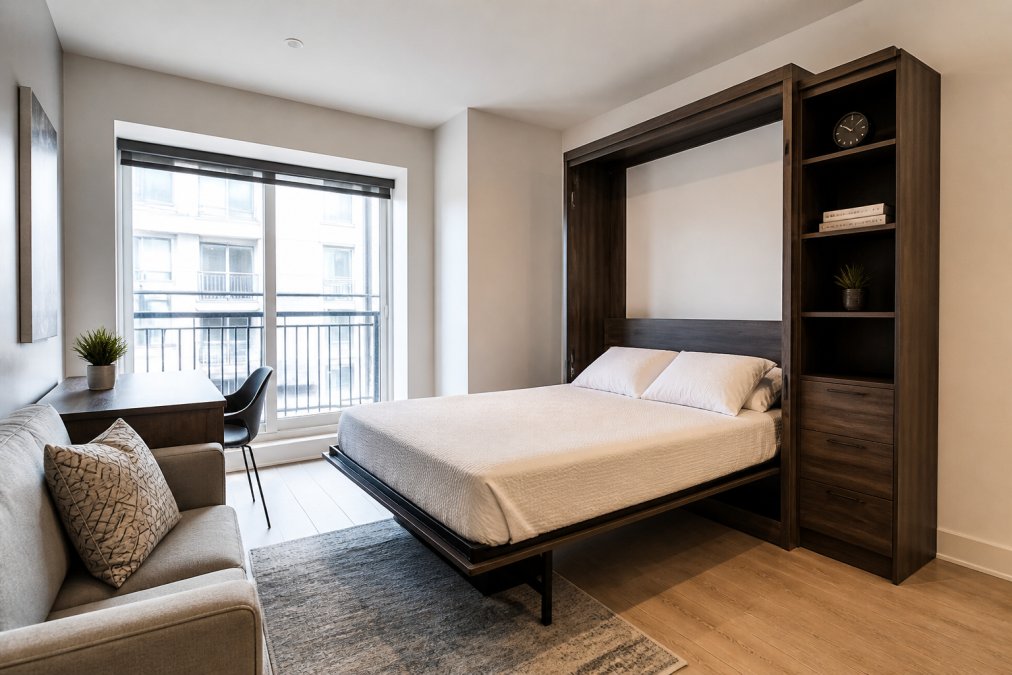
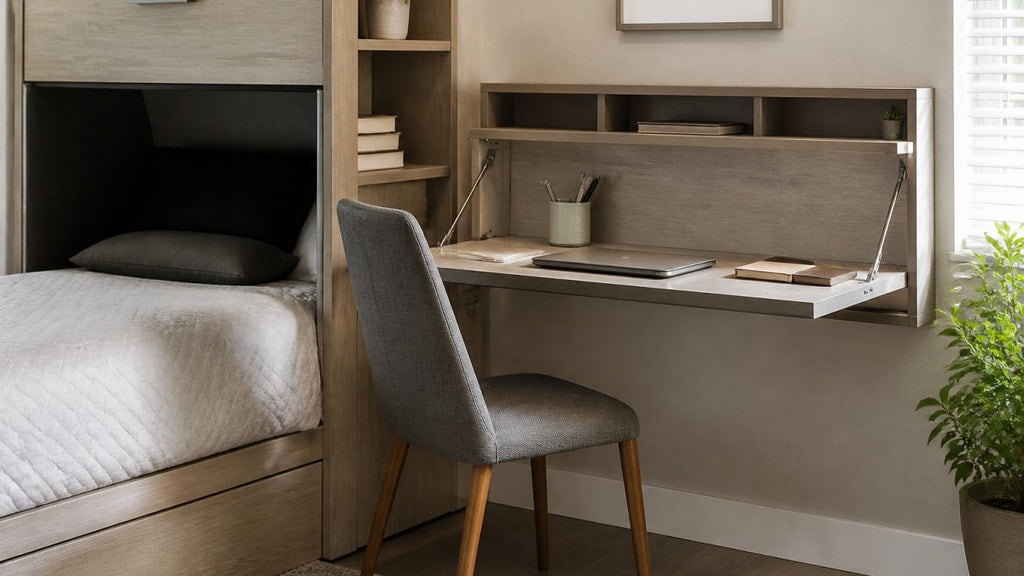
A murphy bed is most effective when it's part of a larger design strategy, not a standalone piece. Custom cabinetry above and beside the murphy bed provides storage without taking additional floor space. A desk that folds down or slides out from beneath the bed creates a workspace that disappears when not in use. A sofa bed in the living area provides additional sleeping space for guests.
The key is treating your studio as a system, not a collection of separate pieces. Every piece of furniture should serve multiple purposes or occupy space efficiently.
Comfortzoneshop specializes in these integrated solutions. We offer custom-sized mattress manufacturing to fit unique room dimensions, and our diverse catalog of convertible sleepers can help you create a comfortable, functional, and stylish environment tailored to your unique needs.
A murphy bed can absolutely fit in a studio apartment, but success requires honest assessment of your space, lifestyle, and tolerance for daily conversion. If you have 10 feet of wall space, reasonable ceiling height, and a consistent daily routine, a murphy bed transforms your studio into a genuinely livable space.
The difference between a murphy bed that works and one that doesn't often comes down to professional design and installation. Comfortzoneshop helps studio residents throughout the Tampa Bay area evaluate their spaces, design integrated furniture solutions, and install beds that actually improve their quality of life. We custom-manufacture mattresses to fit your exact bed dimensions and offer fast local delivery, ensuring your murphy bed is comfortable and functional from day one.
Consider the Clover Murphy Cabinet Bed for a custom-built, space-saving solution. It features a large rolling storage drawer and a higher sleep platform for added comfort and convenience. For a stylish option, the Daisy Murphy Cabinet Bed offers an instant guest bed solution with a 10-year warranty. Another solid wood choice is the Sagebrush Murphy Bed Cabinet, also featuring a large rolling storage drawer and higher sleep platform. Finally, the Poppy Murphy Cabinet Bed provides custom-built, space-saving elegance with similar features.


Frequently Asked Questions
Are Murphy beds good for studio apartments?
Yes, Murphy beds are excellent for studios when space is properly planned. A quality wall bed can transform a studio by eliminating the need for a dedicated bedroom, freeing up square footage for living and working areas. The key is ensuring your wall can support the weight and that you have enough clearance space when the bed is down. Many studio residents find a Murphy bed solves their space problem without sacrificing comfort, especially with a custom mattress designed for your frame.
What are the main downsides of a Murphy bed?
The primary drawbacks include daily conversion effort, mechanical wear over time, and the need for sturdy wall installation. If you use your bed multiple times daily, the repetitive folding can feel tedious. Spring-loaded mechanisms and piston systems require occasional maintenance to stay smooth. Additionally, installation requires finding load-bearing studs or reinforcing your wall, which isn't always feasible in rental units. Finally, some people find the ergonomic impact of frequent folding uncomfortable if they have mobility issues.
How big does a room need to be for a Murphy bed?
A studio or bedroom needs at least 75-100 square feet to comfortably accommodate a Murphy bed with usable living space. The bed itself requires wall space (typically 3-5 feet wide depending on mattress size), and when opened, it needs clearance space in front, usually 3-4 feet minimum. Your floor plan matters: a rectangular room works better than an awkward L-shape. Measure your wall studs, calculate your footprint, and account for furniture placement before purchasing. Comfortzoneshop can help assess whether your specific dimensions work.
Do I need professional installation for a Murphy bed?
Professional installation is strongly recommended, especially for wall-mounted models. Installation requires locating load-bearing studs, using the correct hardware, and ensuring the bed is perfectly level and secure. DIY installation risks wall damage, improper weight distribution, and safety issues. Comfortzoneshop offers professional installation services with fast local delivery in the Tampa Bay area, ensuring your Murphy bed is installed correctly and safely from day one.
This article was written using GrandRanker
Related post
08
Oct
30
Sep