

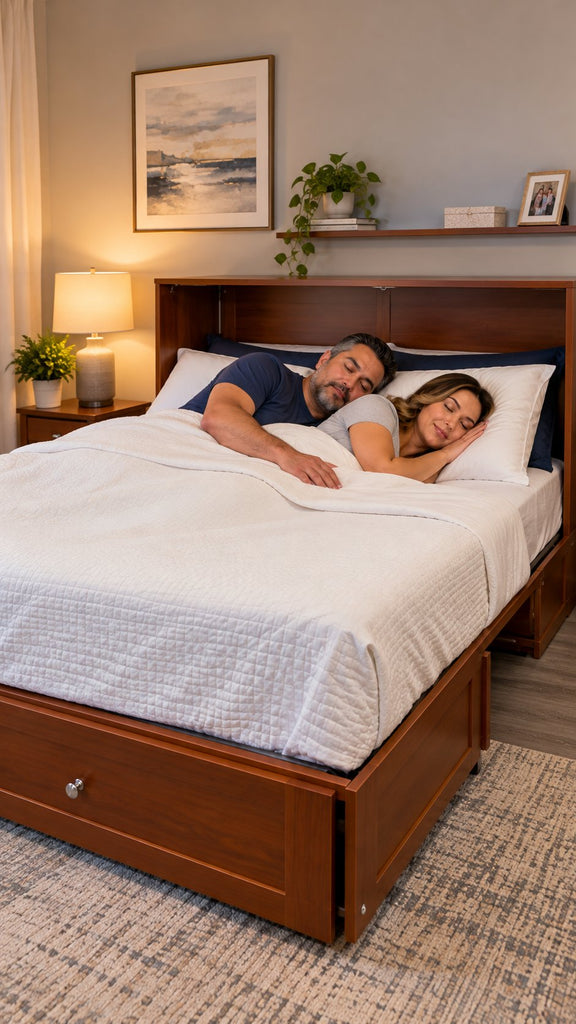
Are Cabinet Beds Comfortable for Daily Use?
Table of Contents
- Are Cabinet Beds Comfortable Enough for Daily Use?
- Cabinet Bed Mattress Comfort: What You're Actually Sleeping On
- Cabinet Bed vs. Murphy Bed: Which Feels Better Night After Night?
- Cabinet Bed Dimensions and Clearance: Does Size Affect Comfort?
- Cabinet Bed Mattress Replacement: Upgrading for Better Sleep
- How Daily Use Affects Cabinet Bed Durability and Support
- Frequently Asked Questions
Last Updated: October 15, 2026
Are Cabinet Beds Comfortable Enough for Daily Use?
Yes, cabinet beds can be comfortable for daily use, but only when the mattress and frame are built for it.
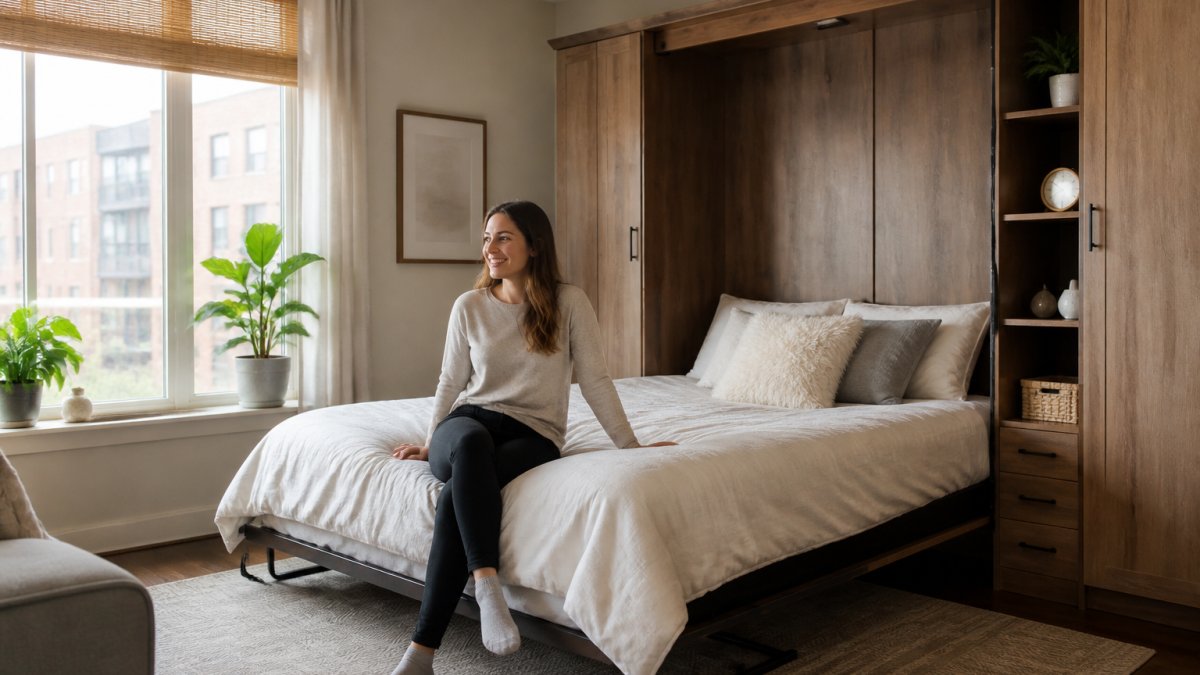
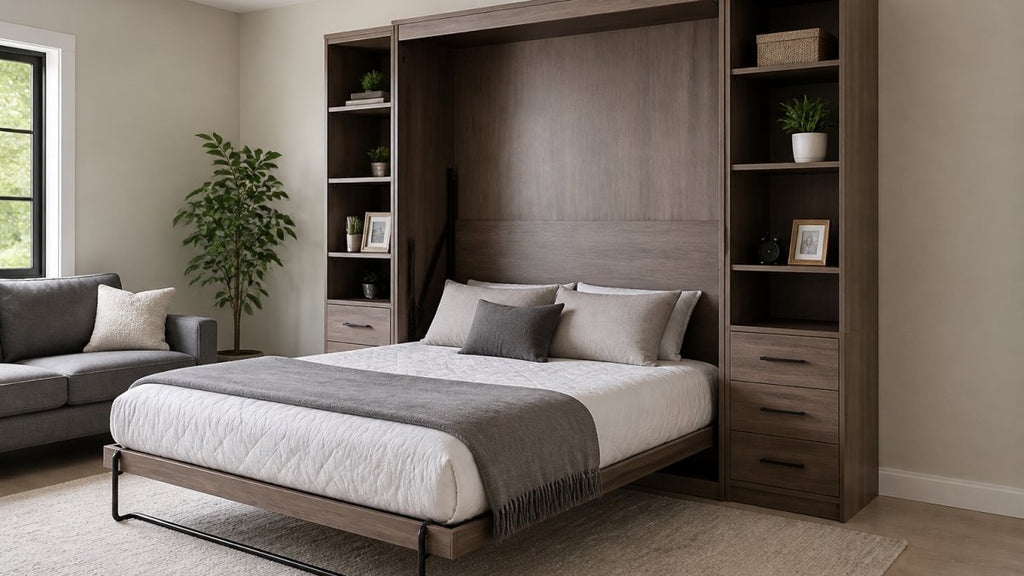
A cabinet bed is a fold-away bed stored inside a piece of furniture. The bed pulls out, the mattress unfolds, and the whole thing tucks away when you're done.

Most cabinet beds ship with a thin tri-fold mattress. That works fine for a guest who stays two nights a year.
Below, we break down what actually makes a cabinet bed comfortable long term, how it compares to a Murphy bed, and how to upgrade one that isn't cutting it.
What Separates a Guest Bed from a Nightly Bed
A guest bed only has to survive a weekend. A nightly bed has to support your back for eight hours, every night, for years.
Three things separate the two:
- Mattress thickness. Guest mattresses run thin. Nightly mattresses need real support layers.
- Support base. A solid, flat platform beats a flimsy folding base every time.
- Frame rigidity. A cabinet bed that flexes or rocks will feel unstable no matter what mattress you put on it.
A common mistake is judging a cabinet bed by the showroom floor model. That model often has the upgraded mattress. The base model may not.
Key TakeawayThe single biggest factor in daily-use comfort is the mattress, not the cabinet. A great frame with a cheap tri-fold mattress will still sleep poorly.
Cabinet Bed Mattress Comfort: What You're Actually Sleeping On
Cabinet bed mattress comfort depends almost entirely on the foam inside. Most cabinet beds use a tri-fold mattress because it has to bend into the cabinet. That fold is the trade-off. Folding mattresses are convenient, but cheap ones compress fast.
Here's the mechanism most buyers miss: every time you fold and unfold a tri-fold, the foam at the hinge lines gets compressed and released. Low-density foam (often in the 1.5 to 2.5 pound per cubic foot range) loses its cell structure faster than high-density foam (typically 3 pounds per cubic foot and up).
Tri-Fold Gel Memory Foam vs. Traditional Mattresses
Tri-fold gel memory foam is the standard for cabinet beds, and it can be genuinely comfortable. Gel memory foam sleeps cooler than plain memory foam and contours to your body. Traditional innerspring mattresses feel firmer and more familiar to some sleepers, but they don't fold, so they don't fit most cabinet beds.
Here's the practical split:
- Tri-fold gel memory foam: best for cabinet beds, folds flat, sleeps cool, but quality varies widely by foam density
- Traditional innerspring: comfortable but won't fit a folding cabinet design
- Hybrid: rare in cabinet beds, but some custom builds allow it
- Latex: a small number of custom cabinet beds use latex, which is durable but heavier and harder to fold
What to Check Before You Buy
Three specs separate a mattress that survives nightly use from one that doesn't:
- Thickness. Most cabinet beds are engineered around a 6- to 8-inch tri-fold. Going thicker can stop the cabinet from closing; going thinner costs you support layers.
- Density. Ask for the foam density in pounds per cubic foot. Under 2.5 is a guest-bed spec. 3.0 and up is a nightly-use spec.
- Fold pattern. Tri-fold (three panels) is standard. Bi-fold (two panels) exists but is less common and limits mattress choices.
Our cabinet beds, like the Clover Murphy Cabinet Bed, come with a tri-fold premium gel memory foam queen mattress. We offer four mattress options, with warranties ranging from 3 to 10 years, so you can pick the comfort level that fits daily use. If you're sleeping on it every night, choose the densest option your cabinet will accept, that's the single upgrade that changes how the bed feels in year three, not just week one.
Key TakeawayA tri-fold mattress is only as good as its foam density. Ask for the number in pounds per cubic foot before you buy, and treat anything under 2.5 as a guest-only spec.
Cabinet Bed vs. Murphy Bed: Which Feels Better Night After Night?
Cabinet beds and Murphy beds feel similar when the mattress quality matches. The real difference is how they mount and how much floor space they free up.
A Murphy bed (also called a wall bed) attaches to the wall and folds up vertically. A cabinet bed sits freestanding on the floor and folds into a cabinet.
Feature |
Cabinet Bed |
Murphy Bed (Wall Bed) |
|---|---|---|
Wall attachment |
None needed |
Bolted to wall studs |
Assembly |
Base packed inside assembled cabinet |
Requires wall mounting |
Floor footprint |
About 10 square feet when closed |
Nearly zero when closed |
Portability |
Can be moved |
Stays with the wall |
Best for |
Renters, condos, flexible rooms |
Permanent guest rooms |
For comfort, both feel the same once you're lying down. The mattress and platform do the work, not the mounting style.
The bigger difference shows up in daily use. A cabinet bed you can move. A wall bed you can't. If you rent or plan to rearrange your space, that matters.
Pro TipIf you're comparing a cabinet bed to a wall-mounted Murphy bed, weigh the installation, not just the sleep surface. A freestanding cabinet bed skips the wall attachment entirely, which is a real advantage in condos and apartments where drilling into studs isn't always an option.
Cabinet Bed Dimensions and Clearance: Does Size Affect Comfort?
Cabinet bed dimensions and clearance affect comfort more than most buyers expect. A bed that's too short or too narrow will feel cramped no matter how good the mattress is.
Clover Murphy Cabinet Bed – A Custom-Built, Space-Saving Solution →
Most cabinet beds come in queen size, with some full size and twin size options. Queen size fits two sleepers comfortably. Full size works for one adult or two smaller sleepers. Twin size suits kids' rooms and tight spaces.
Clearance matters in two directions:
- Pullout clearance: you need room to unfold the bed. Most designs need a few feet of open floor in front.
- Sleeping clearance: leave space around the bed so it doesn't feel boxed in.
Measure your room before you buy. A cabinet bed that fits the wall but blocks the closet door will annoy you daily.
Watch OutSkipping the room measurement is the most common cabinet bed mistake. A bed that unfolds into a doorway or blocks a dresser will feel cramped every night, and no mattress upgrade fixes that.
Cabinet Bed Mattress Replacement: Upgrading for Better Sleep
Cabinet bed mattress replacement is the fastest way to fix a bed that's uncomfortable for daily use. If your cabinet bed came with a thin base mattress, swapping it usually solves the problem.
When you replace the mattress, match these specs:
- Fold pattern. Tri-fold mattresses fit most cabinet beds. Measure your cabinet's interior first.
- Thickness. Too thick and the cabinet won't close. Too thin and you lose support.
- Firmness. Side sleepers usually want softer; back sleepers usually want firmer.
- Size. Queen, full, and twin are the common cabinet bed sizes.
This is where custom sizing helps. A mattress that's slightly off can leave gaps or bunch at the folds. Our professional delivery and installation service takes the guesswork out of fitting a replacement mattress to your specific cabinet.
We also custom-make mattresses to fit unique frame dimensions, so you're not stuck with whatever size the store happens to stock.
How Daily Use Affects Cabinet Bed Durability and Support
Daily use is the real test of any cabinet bed. Frames and mattresses that feel fine in month one can soften by month twelve. The difference between a cabinet bed that lasts three years and one that lasts fifteen comes down to four components, and each one fails in a predictable way.
The Four Wear Points
- Frame material. Solid hardwood resists flex and stays rigid through repeated folding. Particle board and MDF loosen at the joints, and once a cabinet bed racks out of square, the drawer and the fold mechanism stop aligning.
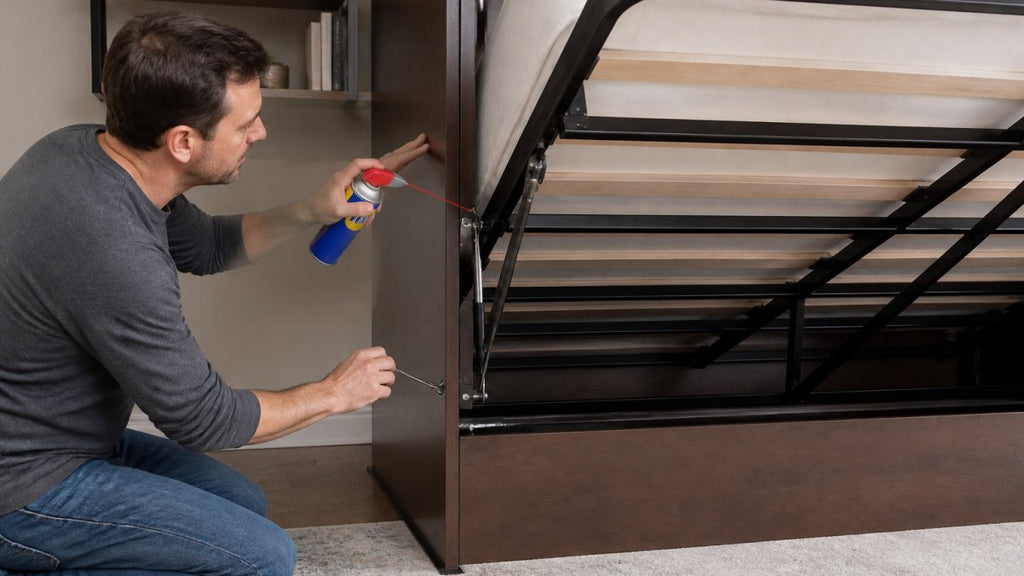
- Hinges and hardware. The fold points take the most stress. A cabinet bed opened and closed once a day cycles its hinges roughly 365 times a year, over 3,600 cycles in a decade. Cheap hinges sag; reinforced hinges with a rated cycle count hold up.
- Mattress foam. Denser foam keeps its shape longer than cheap foam. This is the component most likely to need replacement first, often in year three to five under nightly use.
- The platform. A higher sleep platform lifts you off the floor for easier entry and exit, which matters more as you get older. A platform that sags or flexes will telegraph through any mattress.
What Wears Out Fast
- Particle board frames that loosen at the joints
- Thin mattresses that compress at the fold lines
- Weak hinges that sag after hundreds of open-and-close cycles
- Drawer glides that weren't rated for the weight of stored bedding
Warranty and Repairability
Warranty coverage is the clearest signal of how long a manufacturer expects its product to last. A short warranty on the cabinet usually means the maker doesn't expect the frame to survive many years of folding. Our cabinet beds use solid hardwood construction and come with a limited 10-year warranty on the cabinet.
Repairability matters too. Hinges, drawer glides, and mattresses are the parts that wear first, and all three should be replaceable without replacing the whole cabinet. Before you buy, ask whether replacement hinges and a replacement mattress in the same dimensions will still be available in five years.
The Long-Term Value Math
This is the part most listings skip. A cabinet bed that lasts a decade costs less per night than replacing a cheap one every few years. Run the math on your own use: a bed used nightly for ten years is roughly 3,650 nights.
The Clover, Daisy, Sagebrush, and Poppy cabinet beds all share the same core build: a large rolling storage drawer, a higher sleep platform, a built-in dual power and USB module, and a base packed inside a fully assembled cabinet.
If you're weighing long-term value, the math favors buying once and buying well.
Pro TipBefore you buy, ask three questions: What's the frame made of? How long is the cabinet warranty? Can I still buy a replacement mattress in this size in five years? The answers separate a decade-long purchase from a three-year one.
Frequently Asked Questions
Are cabinet beds comfortable enough to sleep on every night?
Yes, when paired with the right mattress. Cabinet beds from Comfort Zone Shop use a higher sleep platform and a tri-fold premium gel memory foam queen mattress, which provides consistent support for nightly use. The key is choosing a mattress option that matches your firmness preference. Four mattress options are available, with warranties ranging from 3 to 10 years, so you can select the level of comfort and durability that fits your needs.
What kind of mattress does a cabinet bed use?
Cabinet beds typically use a tri-fold mattress designed to fold neatly inside the cabinet when closed. Comfort Zone Shop cabinet beds come with a tri-fold premium gel memory foam queen mattress. Four mattress options are available, and each carries a warranty ranging from 3 to 10 years. The gel memory foam construction helps regulate temperature and contours to your body, which matters if you are sleeping on it nightly rather than just for occasional guests.
Can you replace the mattress in a cabinet bed?
Yes, cabinet bed mattresses are replaceable. If your original mattress wears out or you want a different firmness level, you can order a replacement. Comfort Zone Shop offers custom-sized mattress manufacturing, so you can get a mattress built to fit your specific cabinet bed frame. This is also useful if you want to upgrade to a thicker or more supportive mattress after several years of daily use.
How much space do you need to open a cabinet bed?
A cabinet bed needs enough floor space in front of the cabinet to fully extend the folded mattress. When closed, models like the Daisy Murphy Cabinet Bed occupy just 10 square feet of floor space. You will also want clearance on the sides for the rolling storage drawer and room to walk around the bed once it is open. Measuring your room before ordering ensures the bed fits your layout comfortably.
A cabinet bed only earns its place in your home if it sleeps well every night, not just when guests visit. The frame, the mattress, and the fit all have to work together. Comfort Zone Shop builds custom cabinet beds with solid hardwood frames, offers custom-sized mattresses for a precise fit, and handles professional delivery and installation so it's set up right the first time. Get started with Comfort Zone Shop and turn a small room into a space that works day and night.
Related post
16
Oct

