

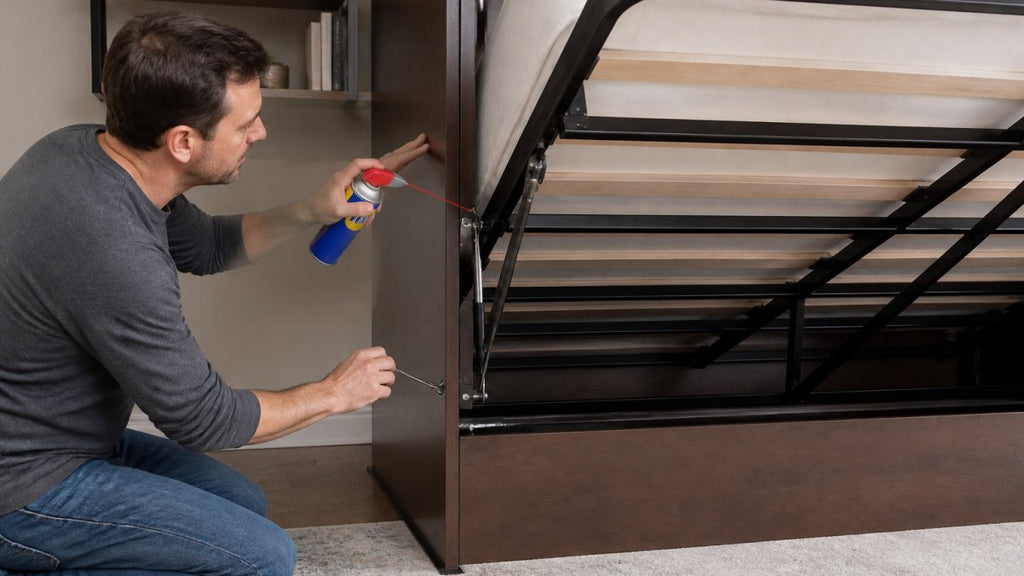
How to Fix a Squeaky Murphy Bed Mechanism at Home
Table of Contents
- Why Murphy Bed Mechanisms Squeak and How to Find the Noise
- Murphy Bed Mechanism Troubleshooting: Gas Pistons vs. Spring Systems
- Tightening Murphy Bed Hardware: Bolts, Screws, and Mounting Brackets
- Choosing a Safe Lubricant for Bed Hinges and Pivot Points
- Padding Rubbing Surfaces with Felt, Foam, and Wax
- Leveling, Stabilizing, and Adding Support to Reduce Movement
- When to Call a Murphy Bed Repair Technician
- Maintenance Schedule to Prevent Future Squeaks
- Frequently Asked Questions
Last Updated: October 20, 2026
Why Murphy Bed Mechanisms Squeak and How to Find the Noise
A squeaky Murphy bed almost always comes from metal-on-metal contact, a loose fastener, or a dry pivot point, and you can usually find the exact source in under ten minutes without any special tools.
Here is the key idea that guides this whole guide: a wall bed is not a regular bed frame.
So before you tighten or grease anything, find out which part is complaining.
Noise Diagnosis by Bed Position and Movement
The position of the bed when it squeaks tells you almost everything. Try these tests one at a time and listen closely:
- Squeak while folded up: the cabinet frame, wall brackets, or lift system is the likely source.
- Squeak only while lowering: the main pivot hinges need attention.
- Squeak when someone sits or rolls over: the mattress platform, slats, or leg support is moving.
A common mistake is spraying lubricant everywhere at once. You lose the ability to tell what worked. Test one area, then the next.
Pro Tip
Have a second person lie on the bed and shift their weight slowly while you listen at the hinge line with your ear close to the frame. You will hear the exact joint that is complaining, which saves you from greasing parts that were never the problem.
Murphy Bed Mechanism Troubleshooting: Gas Pistons vs. Spring Systems
Gas piston and spring lift systems fail in different ways, so the fix depends on which one your bed uses. Gas pistons usually hiss, groan, or lose lift pressure.
Check the label on the piston body or spring housing before you buy any parts.
For pistons, look for oil weeping around the rod seal. That means the seal is going and the piston should be replaced, not lubricated.
Watch Out
Never remove a gas piston while the bed is raised or under load. The stored pressure can release suddenly and cause injury. Lower the bed fully and follow the maker's instructions, or leave it to a technician.
Tightening Murphy Bed Hardware: Bolts, Screws, and Mounting Brackets
Loose hardware is the most common cause of a squeaky Murphy bed, and tightening it is the first fix to try.
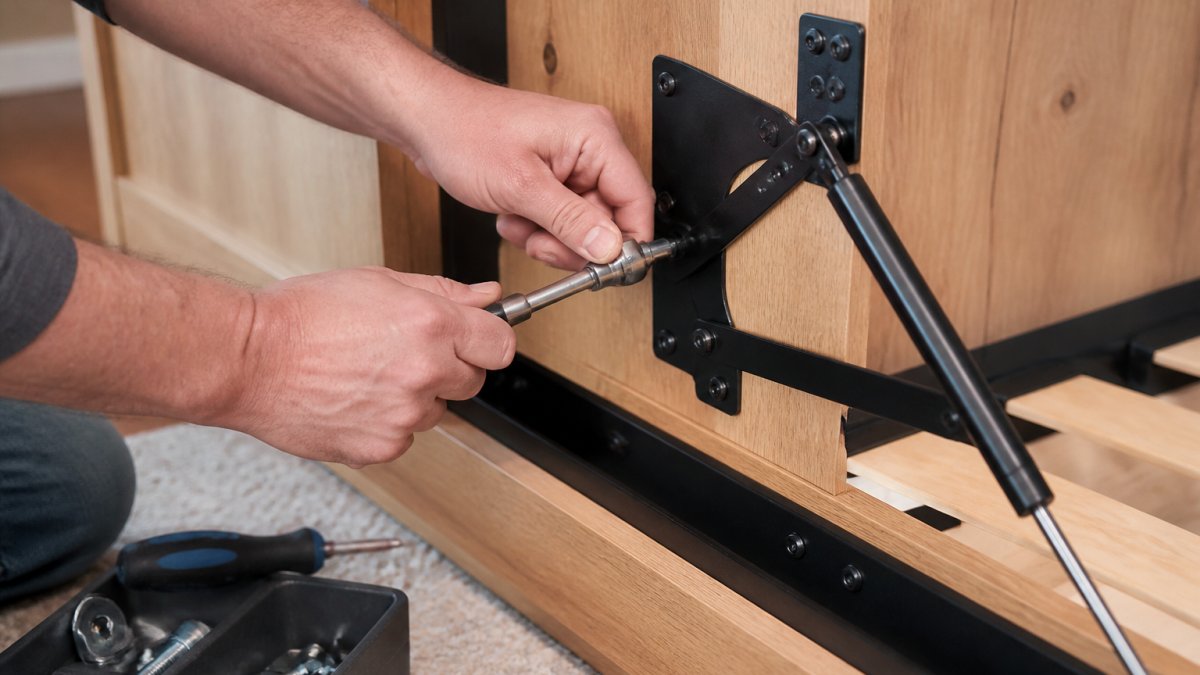
Start with the wall mounting brackets. These carry the whole load, so a loose bracket is both a noise source and a safety issue.
A few rules keep this safe:
- Never overtighten. Stop when the bolt feels snug, not when your arm says so.
- Check for stripped threads or crushed wood around a bolt hole.
- If a screw spins freely, the hole is worn and needs a longer screw or a wood filler repair.
- Do not loosen structural bolts to chase a squeak.
Test the bed after each round of tightening. Often the noise is gone before you reach the last bolt.
Choosing a Safe Lubricant for Bed Hinges and Pivot Points
Most squeaky-bed guides say "use silicone or dry-film lubricant" and stop there. A Murphy bed needs more precision because its mechanism mixes pivots, sliding contacts, tensioned lift components, and finished wood panels, and the wrong lubricant in the wrong place can cause a new problem while fixing the old one.
Start by identifying what kind of contact is squeaking. There are three types on a wall bed, and each wants a different treatment:
- Metal-on-metal pivots (hinge pins, pivot bushings, bracket joints): a dry-film PTFE or silicone lubricant. These leave a thin film that does not attract dust.
- Metal-on-wood or wood-on-wood rubbing (frame-to-cabinet contact, platform resting points): paraffin wax or furniture wax, not oil. Wax stays put and will not stain the finish.
- Tensioned lift components (gas piston rods, spring housings): usually no lubricant at all. Piston rods are sealed and lubricated at the factory; adding oil can attract grit that damages the rod seal. Spring housings should be checked for rubbing, not greased.
Where to apply, specifically:
- The main hinge pin at the pivot line, one or two short bursts, then work the bed up and down to spread it.
- The hinge plates where they meet the cabinet side, a light film only, wiped clean after.
- The leg assembly pivot if your bed has a folding leg, this is a commonly missed squeak point.
Where NOT to apply:
- Gas piston rods. The rod surface is a sealing surface. Lubricant attracts dust, dust scores the rod, and the seal fails. If a piston is noisy, it is usually a sign of wear, not dryness.
- Spring coils under tension. Grease on a spring housing traps grit and can make the noise worse.
- Any surface designed to grip, such as a locking latch or a friction stay. Lubricating these can make the bed unsafe.
- Finished cabinet faces. Overspray from silicone or oil can leave a residue that is hard to remove and can discolor some finishes.
A few products to avoid on a Murphy bed mechanism:
- Cooking spray: goes sticky and attracts dust.
- Heavy grease: traps grit and thickens in cold rooms.
- WD-40 as a long-term fix: it displaces water but is not a lasting lubricant.
Watch Out
Never lubricate a gas piston rod or spray into a spring housing. If a lift component is noisy, treat it as a wear indicator and inspect or replace it rather than greasing it.
Key Takeaway
Match the lubricant to the surface. Metal pivots get a dry-film or silicone lubricant. Wood-on-wood contact gets wax, not oil. Tensioned lift components get inspection, not lubrication. Mixing the three is how finishes get ruined and seals fail.
Padding Rubbing Surfaces with Felt, Foam, and Wax
Where two surfaces rub, padding or wax stops the friction before it becomes noise. Felt tape is the workhorse here.
Wax works well on wooden contact points. A plain paraffin or furniture wax rubbed on the rubbing edge reduces friction and stays put.
Custom Home Office and Cabinetry →
Check these common contact points:
- The frame-to-cabinet gap at the top of the hinge line
- The mattress platform resting points
- The foot of the bed where it meets the floor
- Anywhere a metal part touches wood
Replace felt pads when they compress or peel. Worn padding is a squeak waiting to come back.
Leveling, Stabilizing, and Adding Support to Reduce Movement
A Murphy bed is a cantilevered machine: the cabinet carries the load into the wall, and the leg or base carries it into the floor when the bed is down. If either path is uneven, the frame flexes, joints work loose, and you get creaks that tightening alone will not fix.
Check the cabinet-to-wall connection first
Before you touch the feet, confirm the cabinet is tight to the wall and the wall anchor is sound. A cabinet that rocks on its wall mount will squeak no matter how level the floor is. With the bed raised, press firmly on each upper corner of the cabinet. Any movement means the wall brackets or anchor need attention, stop and address that before leveling.
Level the cabinet, then the bed
Use a spirit level on the cabinet face and on the floor under the bed. Adjust the cabinet feet or add shims until the cabinet sits flat and does not rock. Only then lower the bed and check the leg or base contact.
- Cabinet rocks on the floor: shim the low foot until all feet bear weight.
- Bed dips at the foot when loaded: the leg is too short or the platform is flexing; adjust leg height or add a support block under the platform corner.
- Cabinet level but bed still creaks: the wall anchor may be loose or the cabinet may be pulling away at the top.
Understand how the lift system shares load
On a piston or spring lift bed, the mechanism is matched to a specific mattress weight. If the mattress is heavier than the mechanism was rated for, the frame carries extra load, the leg bears more weight than intended, and joints loosen faster. Check the maker's mattress weight range, most wall-bed makers publish one, and confirm your mattress falls inside it.
Support fixes to try
- Adjust the leg height so all feet bear weight evenly when the bed is down.
- Add a support block under a sagging platform corner, but do not shim so high that the platform no longer seats in its frame.
- Confirm the mattress is the right size and weight for the mechanism.
- Check that the slats or platform panels are seated and not cracked.
Watch Out
If the cabinet moves when you press its corners, or if the wall brackets show any gap from the wall, stop. A loose wall anchor is a safety issue, not a squeak issue. Have it inspected before using the bed.
A bed that sits solid, level, and correctly loaded makes far less noise than one that rocks or fights its own lift system.
When to Call a Murphy Bed Repair Technician
Stop your DIY work and call a Murphy bed repair technician when the problem involves the wall anchor, the lift system, or any cracked structural part. These are the areas where a mistake can lead to the bed coming off the wall or the mechanism failing under load.
Call a professional if you notice:
- Wall brackets pulling away from the studs or wall
- A gas piston that will not hold the bed up
- Cracked or split frame members
- A hinge that is bent, seized, or missing hardware
A technician can also confirm the bed was installed to the maker's spec, which matters for warranty coverage. If your bed came with professional delivery and installation, use that same channel for repairs.
Maintenance Schedule to Prevent Future Squeaks
A quick check every few months keeps a Murphy bed quiet and safe. The schedule below is a general guide for preventing repeat squeaks.
| Task | How Often | What to Check |
|---|---|---|
| Tighten bolts and screws | Every 3 months | Wall brackets, hinges, leg assembly |
| Lubricate pivot points | Every 6 months | Hinge pins |
| Inspect felt pads and foam | Every 6 months | Frame-to-cabinet contact points |
| Check level and stability | Every 6 months | Feet, shims, floor contact |
| Full mechanism inspection | Once a year | Pistons, springs, frame for cracks |
Keep a small maintenance kit handy: a socket wrench, a screwdriver, felt tape, wax, and a dry-film lubricant. Five minutes of checking beats an hour of chasing a squeak later.
If you are still choosing a wall bed, start with a well-built frame.

Frequently Asked Questions
Can I use WD-40 on a squeaky Murphy bed?
WD-40's standard formula is a solvent and light oil, not a lasting lubricant for load-bearing hinges. It can quiet a squeak for a few days, then the noise returns and the oil attracts dust that gums up pivot points. For a squeaky Murphy bed, use a silicone-based or white lithium grease labeled for metal hinges, and apply it sparingly to the pivot and hinge pins after tightening the hardware.
How do I stop metal-on-metal squeaking in my Murphy bed mechanism?
Metal-on-metal noise usually comes from a dry pivot pin or a loose bracket rubbing against its mount. Tighten the bolts at the pivot and mounting brackets first, then apply a safe lubricant for bed hinges to the pin and contact surfaces. If the squeak continues, place a thin felt or nylon washer between the rubbing metal parts. Replace any worn bushing or bent bracket rather than over-lubricating.
Is it safe to sleep on a Murphy bed that squeaks?
A light squeak from a dry hinge is usually harmless, but a squeak paired with wobbling, a sagging platform, or a hard-to-lift mechanism points to loose mounting brackets or a failing spring or gas piston. Stop using the bed and inspect the hardware before folding it again. If you find cracked wood, stripped bolts, or a piston that will not hold, contact a Murphy bed repair technician.
When should I call a professional instead of fixing it myself?
Call a Murphy bed repair technician if the wall-mounted frame is pulling away from the wall, the lift mechanism drops or slams, a gas piston is leaking, or the cabinet structure is cracked. These are safety issues, not noise issues. For routine squeaks, tightening Murphy bed hardware and lubricating pivots is a safe DIY job. Comfort Zone Shop provides professional delivery and installation for wall beds if you need hands-on help.
A squeaky Murphy bed is usually a small fix, but the wrong one can turn a noise problem into a safety problem. If your mechanism needs parts, professional installation, or a full inspection, Comfort Zone Shop can help. We offer solid wood wall beds and Murphy cabinets, custom-sized mattresses that fit your frame, and fast local delivery with professional installation. Call us at 727-847-3551 to get your wall bed quiet and safe again.
Related post




08
Oct

