
6 Clever Ways to Use a Storage Bed in Small Rooms
Table of Contents
- Why a Storage Bed Beats a Standard Bed Frame
- 1. Under-Bed Drawer Systems for Everyday Essentials
- 2. Convert the Frame into a Trundle Bed for Guests
- 3. The Best Under Bed Storage Solutions for Seasonal Items
- 4. Headboard and Bedside Storage for a Clutter-Free Room
- 5. Custom Mattress Fit for Storage Beds
- 6. How to Organize a Small Bedroom Around One Storage Bed
- Conclusion
- Frequently Asked Questions
Last Updated: September 13, 2026
Why a Storage Bed Beats a Standard Bed Frame
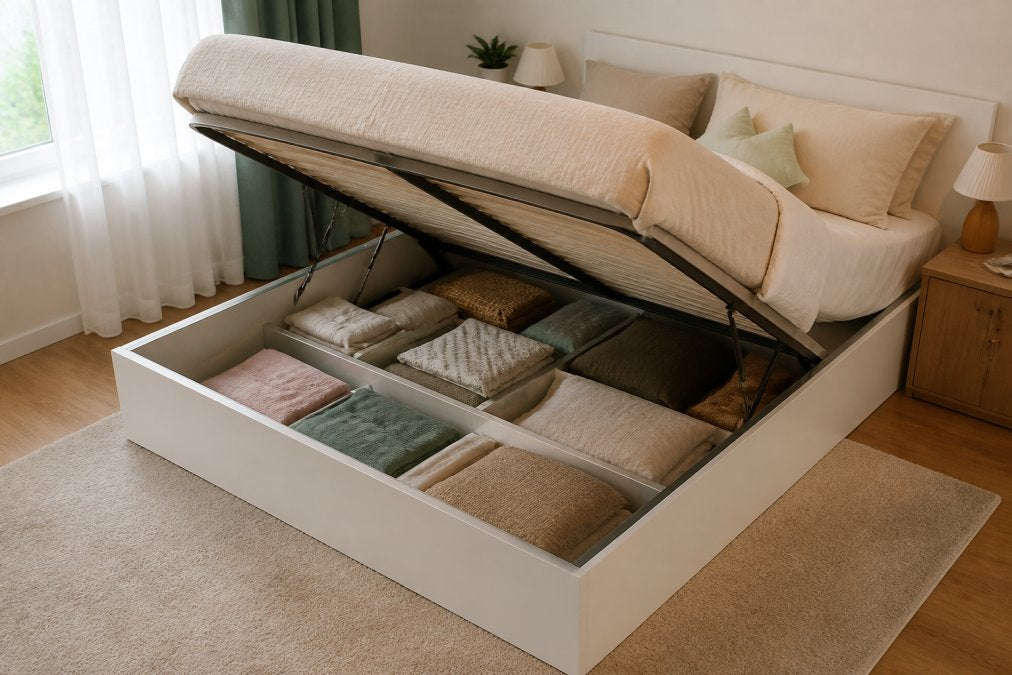
A storage bed is a bed frame with built-in compartments, drawers, or a lift-up platform that turns the space beneath your mattress into usable square footage. In a small room, it replaces a bed, a dresser, and often a linen closet at once.

A queen platform bed occupies roughly 30 square feet of floor space, and most of it sits empty. A storage bed claims that dead zone for bedding, off-season clothing, or guest supplies without adding a single item to your room. This guide from Comfort Zone Shop walks through six practical ways to put that space to work, from rolling drawer systems to trundle conversions.
1. Under-Bed Drawer Systems for Everyday Essentials
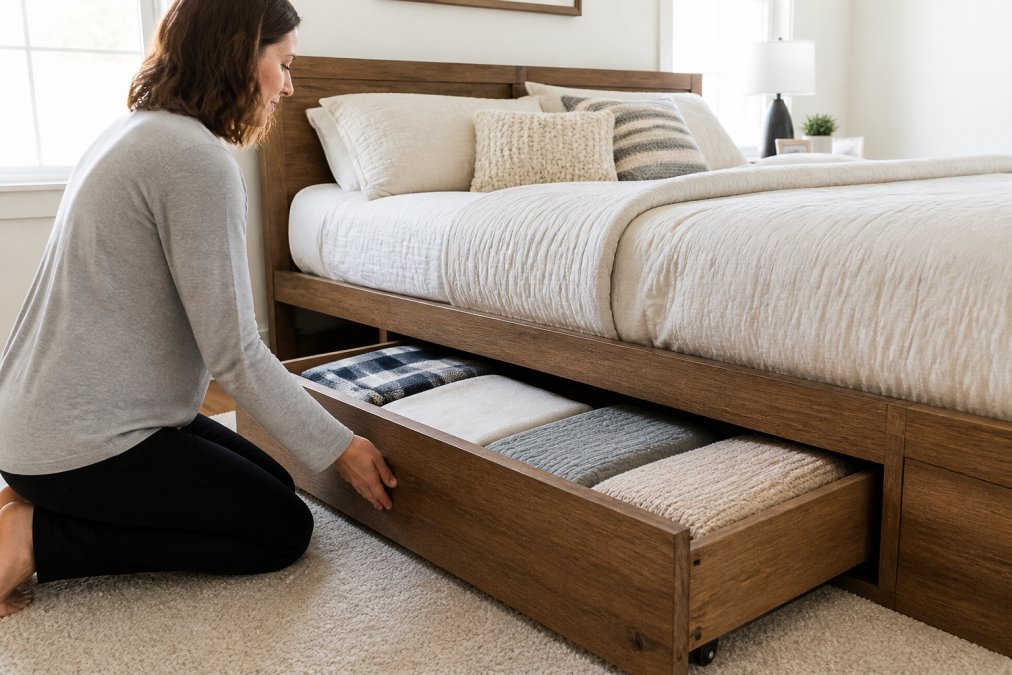
Under-bed drawer systems are the workhorse of storage bed design, handling the items you touch daily: pajamas, spare sheets, towels, and kids' toys. Match drawer depth to what you actually reach for, not to what fits.
How to Measure and Load Drawers Without Overloading Them
Measure the drawer's interior depth, width, and height before buying a single bin. A common mistake is buying bins that fit the footprint but not the height, so the drawer jams every time you close it.
- Measure interior height, then subtract 1 inch for clearance
- Weigh one full bin before loading the rest
- Distribute heavier items toward the drawer's back panel
- Keep a 2-inch gap at the top so the drawer glides freely
Weight Capacity and Structural Integrity Check
Every storage bed has a weight limit covering the mattress, sleepers, and stored contents combined, where cheap frames fail first. Check the manufacturer's stated capacity for the frame and each drawer separately. Solid hardwood handles repeated loading far better than particleboard, which sags at the drawer runners over time. If a drawer creaks when fully extended, you've exceeded its rating.
Watch OutLoading a drawer past its rated capacity cracks the runner track, not the drawer box. Once a track fails, the drawer drops and scrapes the floor on every open, and replacement often means removing the mattress and platform to access the mounting screws.
2. Convert the Frame into a Trundle Bed for Guests
A trundle bed conversion adds a second sleeping surface that rolls out from beneath the main frame, turning a one-bed room into a two-guest room without a second piece of furniture. A low platform on casters slides into the cavity under the main bed, and the mattress stores flat inside it.
The trade-off is storage. A trundle occupies the same under-bed cavity as your drawers, so you choose one or the other. If you host regularly, the trundle earns its space. If you host twice a year, keep the drawers and use an inflatable mattress instead.
Trundle Types and How They Fit the Frame
Three configurations dominate the market, and each changes how the bed gets used:
- Low-profile trundle. Sits a few inches off the floor and keeps the main bed at a standard height. Best for kids' rooms and guest rooms where the sleeper is young or agile.
- Pop-up trundle. Uses a spring or linkage to rise level with the main mattress, creating a true king-size sleeping surface when the two are pushed together. This is the better choice for older guests who struggle to rise from a low bed.
- Twin-to-king conversion. A pair of twin mattresses, one on the main frame and one on the trundle, join to form a king footprint. Measure the combined width against your room before committing, because a king footprint needs roughly 76 inches of clearance across the wall.
Measuring Before You Buy
Trundle height matters more than most buyers expect. Measure ceiling clearance before choosing a pop-up model in a room with a low ceiling or fan; a pop-up trundle plus mattress can add 20 inches or more to the bed's height when deployed. Confirm your frame's cavity depth against the trundle's stored height, since one that fits the footprint but not the vertical clearance will scrape the platform every time it rolls in.
Weight and Structural Considerations
A trundle adds a second sleeper's weight to the same frame that already carries the main mattress. Check the manufacturer's combined capacity for the frame, not just the trundle's own rating. Often the trundle is rated for one adult, but the main platform was engineered for a single mattress and occupant, adding a second sleeper can stress the side rails. If the frame creaks when both beds are occupied, the load has exceeded what the joinery was built to handle.
Watch OutA pop-up trundle's linkage is the failure point, not the mattress platform. Storing heavy items on top of a folded pop-up trundle compresses the spring mechanism and prevents it from locking level. Keep the trundle cavity empty when the bed is stowed.
Accessibility Note
For guests with limited mobility, a pop-up trundle that rises to mattress height removes the need to lower themselves to the floor and push back up. Pair it with a firm mattress edge to push against when rising. Rolling drawers on smooth casters work for almost everyone because they require only a light pull rather than a lift.
3. The Best Under Bed Storage Solutions for Seasonal Items
The best under bed storage solutions for seasonal items share three traits: they seal, they stack, and they label easily. Winter coats, holiday decorations, and extra comforters spend most of the year untouched, so protection matters more than access. Rigid bins with latching lids outperform soft fabric bags for anything stored longer than a few months; fabric breathes, which sounds good until humidity and dust find their way in. In high summer humidity, a sealed polypropylene bin keeps contents dry and pest-free.
Storage Type |
Best For |
Protection Level |
Access |
|---|---|---|---|
Latching plastic bin |
Winter clothing, bedding |
High, dust and moisture resistant |
Moderate |
Vacuum-seal bag |
Bulky comforters |
Moderate, compresses volume |
Low, resealing required |
Rolling drawer |
Year-round essentials |
Moderate |
High |
Zippered fabric bag |
Light seasonal items |
Low |
High |
Dust Protection and Pest Prevention for Stored Clothing
Dust and pests get into under-bed storage through gaps, not through the bin walls. Seal the drawer cavity itself, not just the contents.
Line the drawer base with a thin cedar or lavender sachet, and check the frame's underside for gaps where the platform meets the side rails. A strip of weatherstripping foam along the drawer's top edge closes the largest opening. Wash every item before it goes in storage, since food residue and body oils attract insects far more than clean fabric does.
4. Headboard and Bedside Storage for a Clutter-Free Room
Headboard storage replaces the nightstand entirely in rooms too narrow for side tables. A headboard with integrated shelving or hidden compartments holds a lamp, a book, glasses, and a phone charger within arm's reach. Choose closed compartments if you want the storage to disappear into the furniture, open cubbies look intentional, visible plastic bins look like a dorm room. Bedside storage works best at mattress height plus 4 to 6 inches; anything lower forces you to reach down in the dark, and anything higher blocks the reading lamp's light. If your bed sits against a single wall, a headboard with a built-in power module solves the charger problem without a floor outlet.
5. Custom Mattress Fit for Storage Beds
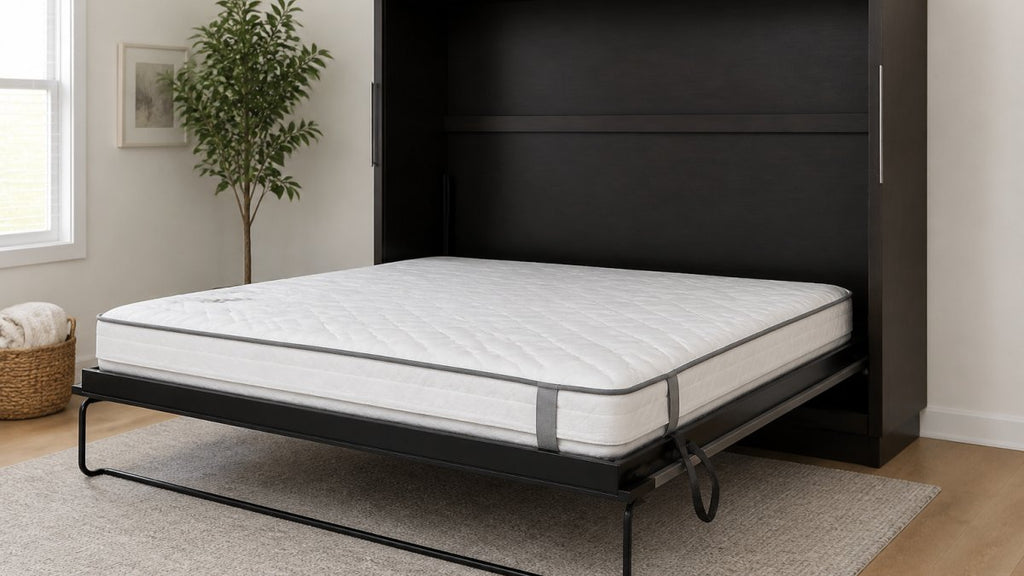
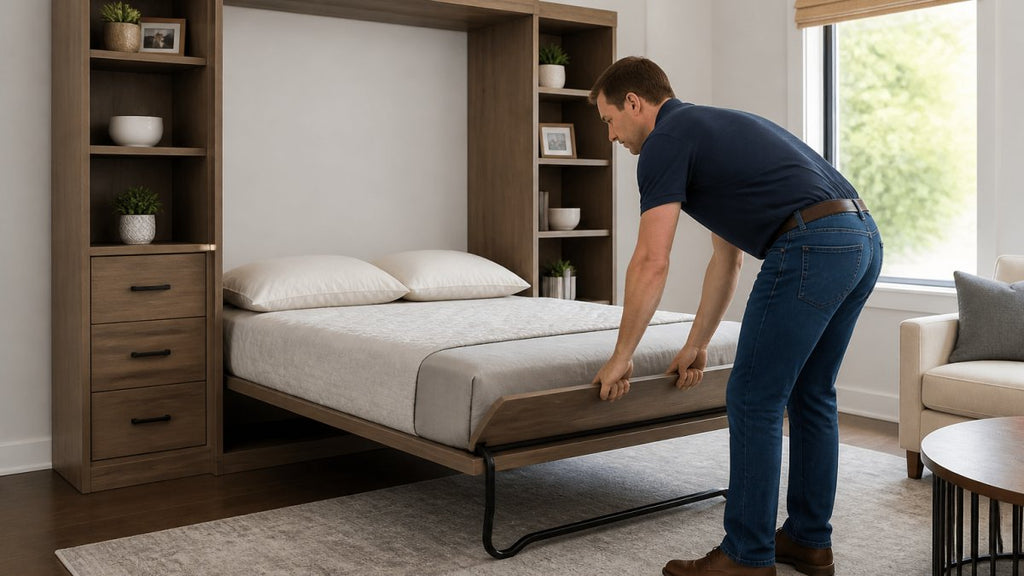
Custom mattress fit for storage beds determines whether the whole system works. Storage beds, especially Murphy cabinets and lift-up platforms, often have non-standard dimensions a stock mattress won't match. A mattress that's too thick prevents a Murphy cabinet from closing; one that's too thin leaves a gap at the hinge and makes the bed uncomfortable. Measure the interior cavity of your frame, then confirm the mattress depth range the manufacturer supports before ordering.
Comfort Zone Shop manufactures custom-sized mattresses to match unique frame dimensions, which removes the guesswork from this step. Four mattress options are available across the cabinet bed line, with warranties ranging from 3 to 10 years depending on the model.
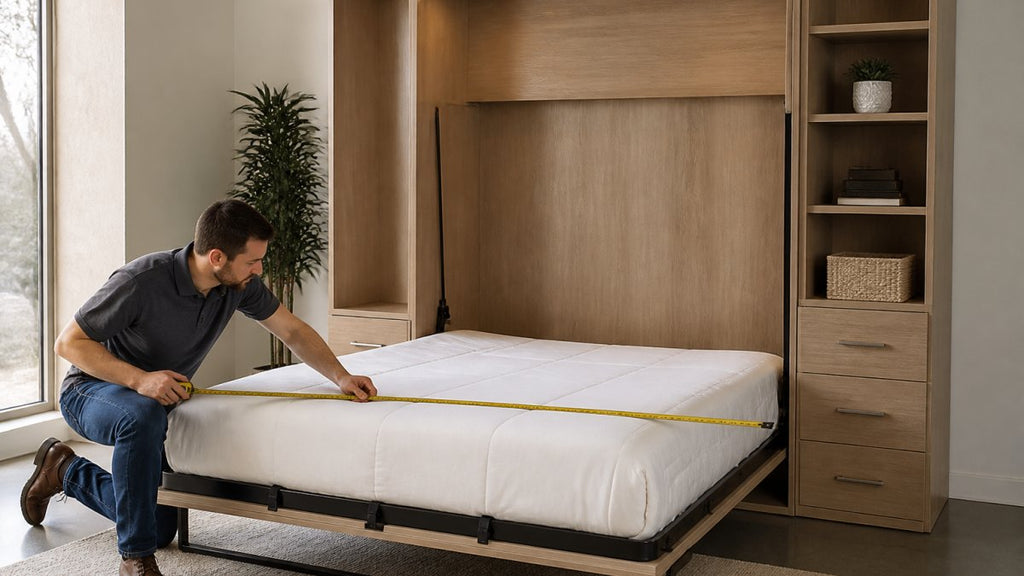
Pro TipMeasure the frame cavity at three points, not one. Cabinet and platform frames are rarely perfectly square, and a mattress built to a single measurement can bind at the corners when the bed folds or lifts.
6. How to Organize a Small Bedroom Around One Storage Bed
To organize a small bedroom around one storage bed, treat the bed as the room's primary storage unit and build everything else around it. Assign every category of possession a home inside the frame before buying a single extra shelf. List what the room must hold, clothing, bedding, paperwork, hobby gear, guests, then map each category to a compartment: vertical storage above the headboard for display and daily items, under-bed drawers for bulk, the closet for hanging clothes. A queen platform bed occupies roughly 30 square feet of floor space, and a well-planned storage bed can reclaim most of it, but only if the compartments match what you actually own.
A Concrete Compartment Map
Most practitioners find that a workable split looks like this:
- Daily-access drawers (front of frame): pajamas, socks, workout clothes, kids' toys. These get opened every day, so they belong where you can reach them without moving anything.
- Weekly-access drawers (middle of frame): spare sheets, towels, off-season layers. Opened once a week or less.
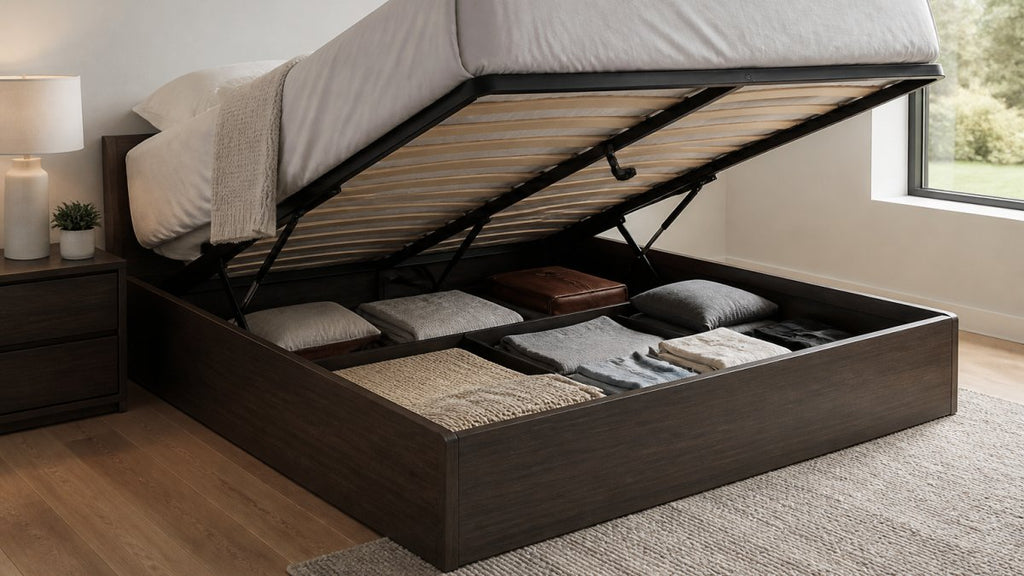
- Seasonal cavity (back of frame or lift-up platform): winter coats, holiday decorations, extra comforters. Opened twice a year.
- Vertical zone (above headboard): books, glasses, phone charger, display items. This is the only zone that should stay visually open.
If a category does not fit its assigned zone, the zone is wrong, not the category. Reshuffling compartments is cheaper than buying a second dresser.
Accessibility and Aesthetic Integration
Accessibility decides how a storage bed gets used day to day, and it is the detail most guides skip. A lift-up platform with a heavy mattress is difficult for anyone with limited upper-body strength and nearly unusable for someone recovering from surgery or managing arthritis. Rolling drawers on smooth casters work for almost everyone, including guests with mobility limitations, because they require a light pull rather than a lift. If a lift-up platform is the only option, choose a gas-strut assist rated for the mattress weight and keep the stored load light enough that the platform rises without a struggle.
Aesthetic integration keeps the storage from taking over the room. Choose one finish across the frame, headboard, and any open shelving, keep visible compartments to a minimum, and use matching bins inside open drawers so contents read as part of the design rather than clutter. The fix is not to hide the storage but to make it look like it was always meant to be there.
Key TakeawayThe best storage bed for a small room is the one whose compartments match your actual habits. A drawer you never open is just a heavier frame, and a lift-up platform you cannot lift is just a wall.
Dust, Pests, and Long-Term Maintenance
Under-bed cavities collect dust and, in humid climates, become attractive to pests, so seal the drawer cavity itself, not just the contents. Once a season, pull every drawer fully out and vacuum the cavity, the five minutes it takes prevents the musty smell that builds when air cannot circulate.
Conclusion
The hardest part of small-room storage isn't finding space, it's choosing a bed that holds up under daily use and still fits the room's dimensions. Comfort Zone Shop offers solid hardwood Murphy cabinet beds with large rolling storage drawers, a higher sleep platform, and a built-in dual power and USB module. Custom-sized mattress manufacturing means the frame and mattress fit together properly the first time, and professional delivery and installation is available so the bed is ready to use on arrival. Get started with Comfort Zone Shop and turn the space under your bed into storage you'll actually use.
Frequently Asked Questions
What can you store in a storage bed?
Most storage beds hold far more than bedding. The large rolling drawers built into cabinet beds handle comforters, pillows, off-season clothing, shoes, and hobby gear. Keep heavier items low and toward the center of the drawer to protect the frame. Avoid storing anything that needs airflow, such as damp towels, because closed compartments trap moisture. Group items by season so you only open the drawer a few times a year.
Are storage beds worth the investment for small rooms?
For apartments and condos where floor space is tight, a storage bed replaces both a bed frame and a dresser. That frees up wall space for a desk, seating, or a home office setup. A solid hardwood cabinet bed also holds up better than particleboard frames. If you are weighing options, price the bed against the furniture it removes from your room, not just the bed alone.
How do you organize under-bed storage effectively?
Start by sorting everything into three groups: keep, donate, and relocate. Store only what belongs in the bedroom. Use labeled bins or dividers inside the drawer so items do not shift when the drawer rolls. Keep daily-use items in the front and seasonal pieces in the back. Rotate contents twice a year, and wipe the drawer interior before each swap to keep dust from building up.
Can a storage bed replace a dresser?
In most small bedrooms, yes. A cabinet bed with a large rolling drawer holds roughly the same volume as a two-drawer dresser. Add bedside storage or a headboard shelf for items you reach for daily, and the dresser becomes optional. If you own a lot of hanging clothes, keep the closet and let the storage bed absorb folded items, shoes, and linens instead.
How do you choose the right storage bed for your mattress size?
Measure your room first, then your mattress. Confirm the bed's weight capacity and the mattress warranty, which ranges from 3 to 10 years.
Related post
08
Oct
30
Sep